Author: ajmaguire

  • Compelling Conflict – May 2025 Round Robin

    I am going to admit that this is the area I have grown the most in as an author.

    Having just gone through a major revision of an older work, I can see that back in my twenty’s I focused a lot on building neat worlds and having neat stuff as opposed to the more compelling conflicts that come from people.

    It’s not about earning that throne back when it has been stolen, it’s about why the character would bother. Who actually wants a throne in the first place?

    Even the power-hungry villain has a reason behind his actions. If the quest is only for power, then that quest is boring. True conflict, the stuff that we can sink our teeth into, pits characters against one another.

    It is far more interesting to know the villain wants the throne because they have a vengeance stake involved. A previous ruler rampaged through their childhood village and killed everyone they loved.

    Now our hero has the dilemma of family drama, because SHOULD they retake the throne if they are descendent of such brutal behavior?

    What it all boils down to is character.

    If the characters on the page aren’t that interesting to begin with, then we are not going to care how or why they achieve their goals. The conflict comes from within. It comes from WHO they are as people.

    Compelling conflict shows the struggle these characters have with the decisions they must make on the page. Their growth comes from that struggle.

    That said, the struggles on the page will also help define those characters. We know Frodo and Sam for who they are because of the struggle they went through to get the ring to Mount Doom. Plot and Character go hand in hand. If you skim on one, the narrative will be lacking and you won’t have a compelling conflict.

    So!

    What do I do to help create compelling conflict in my works?

    On a PLOT level, I follow “Yes, but” / “No, and”

    This is where you ask the question for each scene – Does your character achieve their goal?

    The answer is always either “Yes, but now (she has a stowaway on board her ship/he got gravely injured and is leaking vital fluids)” OR “No, and (her attempt has left the ship without power, so they’re floating dead in space with only 4 hours of air left/he accidently struck the prince so now there’s going to be a price on his head)

    See how that works?

    That’s on the plot level.

    On a CHARACTER level, I have the major players in a scene noted off to the side of my screen with their core motivations for that scene highlighted. This just helps me to remember what is ultimately at stake for that character.

    Example:

    Chapter Three – Blood of the Witch Heir – NOTES

    Dorian Feverrette arrives at Delgora Court. He is hunting the Bedim assassins who recently tried to take his life (see Chapter One). If he doesn’t succeed in locating them soon, it is quite likely that he will be assassinated.

    Elsie Delgora is hiding in plain sight at Delgora Court. She is keeping tabs on the Vicaress who murdered her family. She needs the Vicaress to stay happy and oblivious to Elsie’s machinations.

    Now we enter “Yes, but” /”No, and”

    Does Dorian succeed in his goals for this chapter? No, and he has stumbled into a bigger plot revolving around the Delgoran throne.

    Does Elsie succeed in keeping tabs on the Vicaress? Yes, but now this stupid noble boy has shown up and is making the Vicaress suspicious.

    Anyway, that’s what I do. Many thanks to both the late David Farland for his book Million Dollar Outlines, and the Writing Excuses Podcast… Because that’s definitely where I learned this from.

    Check out what my fellow authors do to help create compelling conflict in their works!

    Bob Rich https://wp.me/p3Xihq-3sY

    Belinda Edwards  https://booksbybelinda.com/blog/

    Helena Fairfax http://www.helenafairfax.com/blog

    Connie Vines http://mizging.blogspot.com/

    Sally Odgers https://behindsallysbooksmark2.blogspot.com

    AJ Maguire https://ajmaguire.wordpress.com/ (YOU ARE HERE)

    Skye Taylor http://www.skye-writer.com/blogging_by_the_sea

  • Calendar of Doom

    SO!

    I did my Calendar of Doom this week, trying to make sure all of my deadlines are still going to be met. Life often gets in the way of these deadlines, but they are doubly important this year because of the tight publication schedule.

    For example, the release of Blood of the Witch Heir is exactly 45 days away! That’s… really not that long. Especially since I am still refining it. Reminder that this is a RE-RELEASE. The original title was Witch Born and it was put out by Double Dragon Publishing an embarrassing number of years ago.

    Sadly, Double Dragon sold to a new company and I decided to get the publishing rights back to it, thinking a re-release would be super easy.

    (Insert maniacal laughter here.)

    Safe to say I was wrong. There’s nothing easy about this.

    However, I still love the story. I love the characters and the world and want to give it a decent chance out in the wild. To do so, that means editing.

    A whole lot of editing.

    But what about Nora’s final book?

    Nora and the Vampire Court is set to release in 170 days!

    And yes, that is a VERY short amount of time for a brand new book.

    It’s a panic-inducing deadline, but it is one I will keep because of the (spoiler) cliffhanger at the end of Nora and the Siren Song. I simply refuse to leave you beautiful, amazing, lovely readers hanging for longer than six months.

    Rest assured, this will be released on time. I have hit the mark in the novel where I had to re-read everything already written. (Why yes, this includes books 1-3, in case you were wondering) This is so that I do not miss anything, and so that I can add things into the early parts of the book that I have learned during the drafting process.

    This means that, by the end of May, I will have a completed draft for the editor and Alpha Readers.

    Also, in case anyone was keeping count, I have read 15 of the 50 novels I wanted to read this year. Which means I’m behind by 2 books. But I refuse to feel bad since I literally just spent a week re-reading my own novels for Nora’s series.

    I’ll catch up, I’m sure.

  • Revising Old Work – Blood of the Witch Heir

    Recently I had the publishing rights to several of my novels returned to me. This was a strategic decision made due to the original publisher selling itself to another site, which I felt wasn’t a great fit for my work.

    Before I did this, I reached out to Amazon to make sure there wouldn’t be any copywrite issues once the reversions were done and exactly what I was allowed to do with the work once it was mine to publish again. Things like if I wanted to change the title (which I did) and if I should put a notice in the front of the novel letting readers know that this is a Re-Release.

    The answer to both those questions was yes, I could change the title but it would be like releasing a whole new book so the reviews I have on the original won’t be transferable. And yes, I can put a notice in the beginning pages letting people know so they aren’t shouting at me that I stole someone else’s work. (Difficult to do there, it’s still the same author name.)

    Due to contracts and all that, the things that I COULD NOT use from my original publication was the cover art and the editing. The Publishing House paid for the editor to this work originally, and thus owned the rights to that version.

    This was fine. I have grown enough in my craft that I felt confident I could take the book to the next level.

    That said…

    Revisiting old work is hard.

    Mega hard.

    Tooth pulling hard.

    It hurts to see what I put out into the world. Not only have I grown as a writer, I have grown as a person too. Things that I didn’t blink twice at before have been unpacked and rewritten. The themes at the core of the book revolving around trust and independence and how the two have to learn in live in harmony are being highlighted better.

    On the line-by-line level, the narrative has been given a major overhaul.

    But more than that, the characters are being given the chance to breathe more. Elsie Varene Delgora is as sharp as ever, and Dorian Feverrette remains my favorite roguish nobleman. Their story is one of tragedy and triumph, despair and love, and I sincerely hope that readers walk away from it knowing that no matter how dark the path they have traveled, joy and happiness can still be achieved if we’re willing to open ourselves to it.

  • Round Robin – Crafting Fictional Settings

    Last month we discussed settings in the real world and how we transport them onto the page. This month we’re looking at fictional settings, or settings that don’t exist OR are so far in the past that you couldn’t possibly have been there.

    Since the majority of my writing takes place in fantastical worlds, or in the case of Tapped, other planets in our solar system, this is where I have the most experience. Obviously I have never been to Mars or Pluto or Europa, and I won’t lie, writing those places was a challenge.

    It was a lot of FUN, but it was challenging fun.

    So here’s my process, grown over the course of a couple decades of practice.

    First, the rough draft is always bare bones. I can’t allow myself to get hung up on describing the setting too much or I’ll never finish the book. The rough draft is also where I spent an alarming amount of time researching/staring out the window/worldbuilding.

    However, worldbuilding is its own topic. I want to get into the act of making that setting come alive on the page. And to do that, we have to skip forward to the editing process. Everything I’m about to detail is used during the Second Draft.

    The KAVS Cycle

    The late great David Farland taught a class on settings and in it he discusses what he calls KAVS. You can still access it through the Apex Writers Group online, which you will have to pay for but I highly recommend. I have been part of Apex (off and on when I could afford it) for years now.

    Anyway.

    I have my rough draft and I make 4 passes through each chapter focused on a different aspect of the KAVS cycle.

    KAVS stands for Kinetic, Audio, Visual, Smell.

    First pass, Visual. This is literally everything my character can see in their setting. Often when I am doing this pass I also have DeviantArt/Pinterest up in another screen because I need the inspiration. Sometimes I’ll even go so far as to build a mood board in Canva, but admittedly this is rare and I reserve it for settings that I circle back to often.

    I do this for characters too. Here, you can peek at Nora Grayson’s file in Pinterest.

    Also, here’s the mood board for Nora’s family home.

    Alright, some important things to note. Not everything has to be exact in these mood boards. I’m just going for the feel of a place. For example, Nora’s office is in the round room of a Victorian House, though the picture shown is obviously square. What’s important about the image isn’t the shape of the room, but the style.

    You can see that it’s more masculine in nature, which brings me to the next element in the KAVS cycle: Kinetics.

    Kinetics is anything tactile (touch, taste), any movement in the scene (swish of a cuckoo clock’s pendulum as an example) AND the emotions.

    Nora’s study is still masculine because it was her father’s office. It evokes a slew of memories for her. SO my second pass is going through how this setting makes my character FEEL and WHY.

    The why is so very important, not only for character development but because showing the history of a place is one of the easiest ways to make a setting real for the reader.

    The third pass that I do is the Audio pass. Which is self-explanatory, but let’s go ahead and get into it. We tend to react to sound in our environments.

    Example, my cat just made a chirping noise, so I turned to look at her. She’s perched on the window sill, her tail flicking, white body coiled as though she might pounce through the windowpane to get to the bird outside.

    Characters in a setting will also react to sounds in their environment, so let them. Honestly, I might do this too much sometimes, but having a sound draw the character out of an internal dialogue is a legitimate storytelling tool.

    The fourth and final pass that I do is Smell.

    Of all the senses we put into our books, I feel like smell really solidifies an environment. Foul, sweet, musky, we all have references in our minds that we can immediately draw upon when a writer says, The room smelled like pencils and leather.

    Or

    The scent of cinnamon was heavy in the air.

    Or

    The back of her throat tickled at the heavy pepper. (That one you get Kinetics and Smell all in one go.)

    The reader picks up on the smell, has a reference, and suddenly it’s real.

    Generally speaking, I do a chapter a day during my second pass at a manuscript. I know I’m not winning any races here, but by the time I’m done with that second pass I am confident enough in my story that I can send it out to my editor.

    Take a look at what some of my fellow authors do to craft believable fictional settings in their work!

    Bob Rich https://wp.me/p3Xihq-3rJ 

    Connie Vines http://mizging.blogspot.com/

    Belinda Edwards https://booksbybelinda.com/blog/

    Anne Stenhouse https://goo.gl/h4DtKv

    Helena Fairfax http://www.helenafairfax.com/blog

    Sally Odgers https://behindsallysbooksmark2.blogspot.com

    Victoria Chatham http://www.victoriachatham.com

    A.J. Maguire  https://ajmaguire.wordpress.com/ (YOU ARE HERE)

    Skye Taylor http://www.skye-writer.com/blogging_by_the_sea

  • Book Review – Heartless Hunter: The Crimson Moth by Kristen Ciccarelli

    Laying all my cards on the table here, I love The Scarlet Pimpernel. I watched every iteration I could find as it came through the silver screen, to include the TV series in 1999-2000. To FURTHER lay my cards on the table, our English teacher in the 12th grade showed us the 1982 version in class over one of those weird weeks in school.

    You know, the ones where the teachers were busy finishing up grades and didn’t want to assign anything more until they had caught up.

    I loved the hiding in plain sight. The facade put forward to make everyone else unsuspecting of the true nature of one’s movements. I loved the frightening civility covering a bloodthirsty and desperate time.

    And, of course, I loved the romance.

    So when I picked up this book I did so with a wary eye. I did not think anyone could quite grasp all of those lovely things and implement it into a fantasy novel.

    I have never been more pleased to be wrong.

    I devoured this book. From start to finish I loved it. This is basically Scarlet Pimpernel meets Witches and I am all for it. The enemies to lovers (to enemies) was weirdly satisfying. Normally the angst eats at me and I put those sorts of books down, but this one kept me turning the pages.

    There is some mild spice in this book, for those who need to be warned of that.

    Five stars. Well done.

    Here’s the PURCHASE LINK!

    Happy reading!

  • Release Day – Nora and the Siren Song

    Release Day – Nora and the Siren Song

    Hurray!

    We made it!

    Today Nora and the Siren Song has officially been released, and I am so excited for people to get to read it. Nora’s story has grown, and so has her character. I am neck-deep in drafting the fourth and final book for her series, which is due to release in October, so fans of her story will be happy to know that by the end of this year, they will have the WHOLE THING.

    No more waiting for another installment.

    No more cliffhangers. (cough, ahem, sorry/not sorry)

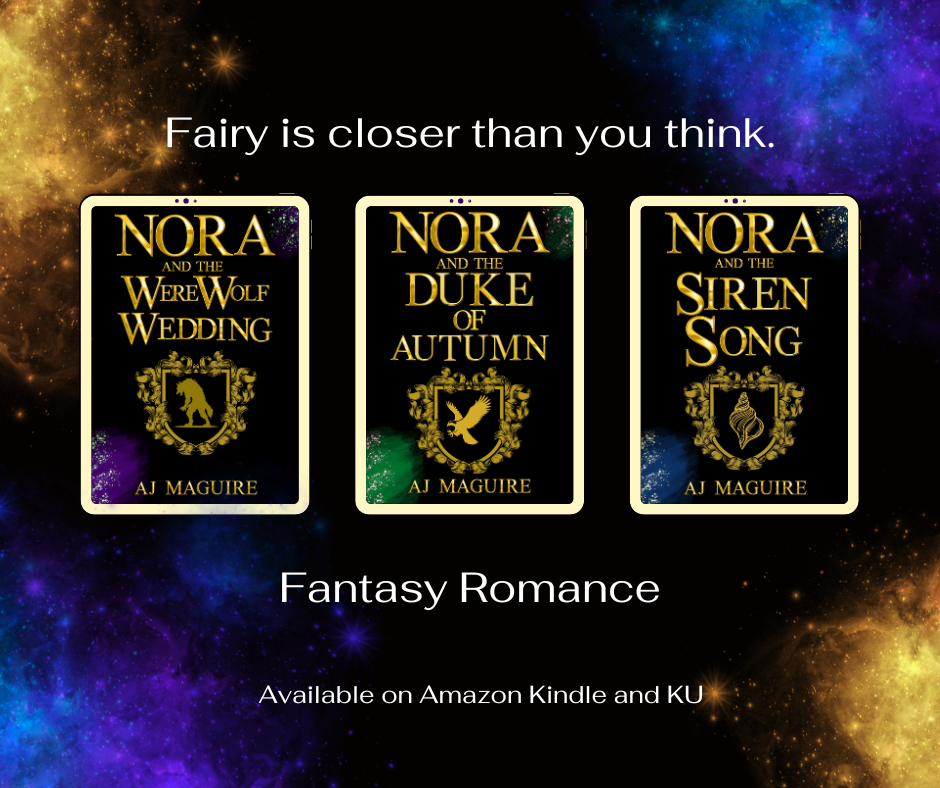
    Nora’s story has been a pure joy to write and I sincerely hope all of you have enjoyed it as much as I have. To celebrate this newest release, here are all of the pretty promotional things I’ve shoved on Instagram/Threads/X/FB.

    Because using them all just ONCE after spending 2 hours creating them feels like a waste and I want my money’s worth of Canva now that they raised their prices. Again.

  • Embracing the Pantser In Me

    In just 7 days, Nora and the Siren Song will be available to the world. Hurray! Throw confetti!

    Which means I’ve officially been alerted that I have 48 hours to make certain all those files are the right files and that I don’t have any further changes I want to make to the book. Which, honestly, induces a mild panic attack and forces me to re-read everything.

    Even though I have literally read this book over a dozen times from first draft to finished product.

    Nora has come a long way since her inception.

    I first got the idea for her books from a conversation on social media where myself and another author were fangirling over the show Lucifer. We both found it deeply amusing that Lucifer had a therapist in the show, and the conversation stretched to… What if all these paranormal romances we read about with vampires and werewolves and other said shifters/magic user suddenly had to go to couples therapy?

    What would that therapists life look like?

    Enter Nora Grayson, an empathic wizard living in Boston whose private home study sees couples from the typical vampires and elves, to the more exotic creatures hiding in plain sight of humanity.

    I made her an empath for two reasons.

    First, I love Deanna Troi from Star Trek the Next Generation. You can say what you want about me being a Trekkie or whatever, I really don’t mind. Star Trek was my mother’s favorite show when I was growing up, so I come by my geekery honestly.

    Second, because I am an empathetic person myself and I feel like this trait isn’t given center stage a lot. The ability to listen and identify the emotional state of the people around you, and then genuinely understand, feels like a skill that is undervalued in the world today.

    We’re too busy.

    We have our own problems.

    Or worse, we’re scared of people.

    I mean, who wouldn’t be given what we see plastered over the news?

    I digress.

    Nora’s first book, Nora and the Werewolf Wedding has a simple design. It’s basically Clue, but with magic and werewolves. And yes, I learned to embrace my Pantser in that book.

    Or, well, this whole series.

    Don’t know what a Pantser is?

    A Pantser is someone who writes without an outline. There is a vague idea – in this case, empathic wizard stuck negotiating a socialite wedding where at least one of the guests is murdered – and you build from there.

    Which means literally everything that happened in that first book came as a surprise.

    True story, I honestly thought Derrick’s grandfather would be the big bad guy on the page. Spoilers! He isn’t.

    There are pros and cons to embracing the Pantser side of my muse.

    First, I’ve had a blast writing. That’s a huge PRO. I sit at the computer, stare out the window for a little as the scene starts to show itself, and then the narrative tends to flow. (Assuming I’m not interrupted. Interruptions are a part of life. I do have pets, a teenage son, a husband, and general biological needs like eating.)

    However, that PRO is often checked by the CON where I literally had to build Fairy from the ground up whilst on the go. I have a handwritten notebook with all of my world building notes, many of which required that I flesh out the rules during the editing process of the book.

    I mention this as a CON because I know the world is bigger than what has been displayed on the pages and I feel like I can do better.

    Another PRO is that I am genuinely surprised by the endings when I get there. Or… things like the surprise wedding in Book 2, which is still one of my favorite moments.

    Writing this way has made it feel like this is Nora’s story and she is telling it, first to me, and then to the rest of the world. All my other books, where outlines have been heavily utilized, I was directing things more than the characters on the page.

    Sure, Jorry and Trenna both had a huge say in what happened in their stories, but it was still ME telling those stories.

    Maybe one day I’ll go back and revise their books from this new, Pantser-loving lens, but don’t hold your breath for it. Nora’s final book is still in the works. It will be out in October of this year. And I have several others novels in various stages of complete or near-to-complete that will get to see publication first.

    In the meantime, here is me, embracing my Pantser. It’s difficult, but apparently well worth the editing time I have to spend after that first draft is done.

    Nora and the Siren Song will be available on April 8th!

  • LibGen, Meta, & Me

    This week has been illuminating.

    We of the Indie Community read the recent Atlantic article and tested our names in the LibGen search bar and most of us are on there. For a quick run down, Meta used LibGen in order to download many, many, MANY books and feed those books into its AI system known as Llama. To train that AI on how to write in an engaging manner.

    Yes, it has the Nora Grayson series on there too. Not the third book, as it hasn’t reached shelves yet, but the first two are in there. I’d show you the screen shot but it’s not the best quality. You can test it out yourself at the link provided if you don’t believe me.

    So, what is LibGen?

    Library Genesis, or LibGen for short, calls itself a shadow library.

    In short, it is a pirate site. It takes data files (aka eBooks) and offers them out for free. I know a lot of people decried Amazon for taking away the ability to download eBooks onto their computers because they think they should own the book and be able to access it on any device they want but…

    BUT this is how pirate sites get our work. And no, letting someone borrow your personal copy, or even giving it away to whomever you want, isn’t the same for an eBook because an eBook file can be copied. It can be copied INFINITELY. So I support Amazon’s move here. Because it protects ME. And maybe my books wouldn’t be on these sites if those protections had been in place from the beginning.

    Why does this matter? Don’t I let real libraries have my books to loan out? Don’t I leave physical copies of my book in random places sometimes so that someone might pick it up?

    Well, it matters on two fronts.

    First and foremost, people who have my physical copies can’t download the content into an AI system so that it can learn how to write in an engaging manner. Yes, we know AI is here and it’s not going anywhere. The technology will continue to grow no matter how hard we kick and scream and scoff at it, but that does not mean we want to help it grow. And we most certainly do not want our work stolen in order to feed that machine.

    Second, pirated eBooks don’t just steal royalties from the author, they steal our ability to be seen in the marketplace. Algorithms work based on engagement. The more people click on my books, the more that algorithm shares those same books with new potential readers. The more people who SEE, the more likely it is for someone else to click on the book and investigate.

    So it does matter. Because it directly affects my ability to reach new readers.

    Before you ask, there are already lawsuits in progress regarding this. If you are an author and this is the first you’re hearing about this (unlikely, the rage is everywhere at this point) then you will want to take a look at the Author’s Guild. They have a lot of information and even a form letter you can sign if you find your books on the LibGen site.

    For those of you who read my Blog and are NOT authors, but you want to help support us, the easiest and best way to support your favorite authors has not changed.

    1. Buy their books – yes, even when on sale for free on Amazon, that algorithm helps boost us, so don’t be ashamed if you get the novels for free that way.
    2. Tell people about the books you love.
    3. Review the books on Goodreads and Amazon and Barnes & Noble, if you have the time. We all know that can be a hassle. Just clicking on the Star rating will do. I promise.
    4. Remember that you, as a Reader, are amazing. We love you. We are here directly BECAUSE of you, and your thoughts and support mean the world to us.
  • March 2025 Round Robin – Real Places

    This month for the Round Robin conversation we are discussing how we plant real life settings into our work and make them feel authentic.

    I am going to preface this by saying there is no substitute for sitting in a place and letting it settle into your bones. Yes, you can research a setting. You can look at pictures and read through interesting bits about a particular area, and you should.

    History makes a place come to life. It’s why going back to your childhood home after several years feels weird, because memories haunt you. There’s the street corner where you fell off your bike and chipped a tooth, but it’s overgrown with weeds now or the city widened the sidewalk. Or there’s the shop where you used to buy ice cream and sit with your friends that was replaced by an automotive store.

    Layering your setting with history connects that setting to the character, which in turn connects it to the reader. And yes, this is a trick you can do for world building as well, but that’s for next month. For now, understanding the history of the neighborhood/town/city your character is sitting in will help increase authenticity.

    But, and this is a HUGE BUT, it also needs to be relevant.

    People care more about the chipped tooth incident than they do the about the building in the background and the fact that it was built in 1918 as the original town hall. Unless you’re telling a ghost story and ghosts from 1918 are out haunting people. Then the information is relevant.

    Now, back to my original comment.

    There is no substitute for sitting in a place and letting it settle in your bones.

    There just isn’t.

    You can research a lot and get away with looking like you’ve been to a place, but at the end of the day you miss the stuff that natives to that area will look for. Things like the smell of the repair garage as you pass it on the street, or the difference in the air from the valley to the mountaintop. The sounds that travel.

    All of these things you can try to fake if you ask someone who lives there to tell you, but you won’t quite get it. These are things you can only truly understand if you sit down and observe with your whole self. Then record what you’ve observed after.

    That’s where the art of writing truly comes into play.

    Does this mean I’m suggesting you go everywhere you intend to make a setting in your books?

    Yes and no.

    You can visit a region and get a fairly good sense of the setting without going to a specific road/house/whatever. A beach in New England will be different from a beach in California, however, and noting those differences firsthand will be a giant boon to the writing process. So I do recommend travelling.

    Travel. Experience. Observe. Let the world sink into your bones.

    Trust me, those bones will remember when you start to write.

    See what my fellow authors have to say about writing Settings and making them authentic!

    Bob Rich   https://wp.me/p3Xihq-3r1

    A.J. Maguire https://ajmaguire.wordpress.com/ (YOU ARE HERE)

    Belinda Edwards https://booksbybelinda.com/blog/

    Helena Fairfax http://www.helenafairfax.com/blog

    Connie Vines http://mizging.blogspot.com/

    Sally Odgers https://behindsallysbooks.blogspot.com/2025/02/romance.html

    Skye Taylor http://www.skye-writer.com/blogging_by_the_sea

    Anne Stenhouse https://annestenhousenovelist.wordpress.com/

  • Boycotts, Kindle Unlimited, & Indie Authors

    Why yes, we have another controversy sweeping through the internet. It’s all over my social media feeds and still going strong. Because this actually does affect me as an Indie Author with titles on Kindle Unlimited, I’m going to go ahead and comment on it.

    Many of my dedicated readers are not writers and therefore do not have insider knowledge of how this all works. Sure, they hear snippets where they start to get outraged at how they perceive authors are treated on various platforms and, historically, things haven’t been great for us.

    However…

    For Kindle Unlimited in particular, I can tell you that I have made a decent percentage from having my titles on there. Enough of a percentage that it’s worth it to me to keep the titles on that platform – the current boycott against Amazon notwithstanding.

    I imagine once the boycott is over, we will see an uptick in people reading on KU again. Or at least I sincerely hope we do.

    The truth is, Authors have always had the short end of the stick in publishing. The BIG publishers in traditional publishing get the largest slice of the pie regardless of any advances they may hand out to their authors. It’s a business. You’re getting your name under their imprint, which they have worked hard to gatekeep in such a way that readers who frequent their titles trust that they are buying a quality product.

    That’s part of the incentive for going Traditional. You get the stamp of authority that says your work is of the quality that these professionals hold. Notice I say PART of the incentive. The marketing budget they can offer is another one, and if we’re really honest, the rise of Indie Publishing has made it so that most people know they don’t actually need that imprint’s stamp of approval to put out a quality book.

    Many Readers are catching onto this fact too.

    This is where Kindle Unlimited comes in. Readers are able to access millions of books for a set price every month, so they are more willing to give an unknown Indie Author a chance. Yes, sometimes they find a stinker that didn’t take the time to research properly, didn’t hire an editor, and (these days) maybe even used AI to help ‘craft’ the story.

    Brief Sidebar: Please don’t support AI created stories.

    For all its faults and business practices that make people cringe, at the end of the day KU has become a space where Readers can take a chance on an independent author that they otherwise would not have. For a lot of us, that chance is all we need. Die-Hard fans are made in the KU publishing space.

    Is the pricing fair to authors who publishers there?

    I mean… let’s point again at literally every other publishing outlet on the planet and recognize that the authors are almost always on the short end of the stick. With KU, at least we’re getting paid regularly for people flipping through the book. Even if a Reader puts the book down because they don’t like it, the chance was taken and we get a little money for creating something.

    Now we come to the argument of ‘going wide’ with publishing.

    This is where the author puts their books out through many sites and not just Amazon. Places like Smashwords, Kobo, and Barnes & Noble are all viable outlets for selling books and have their doors open to Independent Authors. You absolutely can ‘go wide’ and have your books available on Amazon Kindle at the same time, you just can’t have them in the KU pool.

    I have books that I published wide, and books that I published to Amazon KU. The bottom line is, I make more money focused on Amazon KU. Don’t ask me why. Don’t ask me how their algorithm works. Because I honestly don’t know. All I know is, KU works.

    Which brings me to the current boycott.

    I understand standing up for what you believe in. I’m an author. 90% of the stories we tell are all about struggling against the Giants of the world to demand the right to not only exist, but live happy and free.

    So, you do you.

    But please do it with your eyes open. If you’re doing it because you feel the authors aren’t being treated fairly, I’m afraid that’s just how the cookie crumbles in this business. Aside from buying the book directly from us, we’re always going to get the short end of the stick.

    If you’re doing it for all the other business practices you disagree with, then hey, my proverbial hat is off to you. The lack of sales for a week is a small sacrifice I can make toward your cause as well, and I’m happy to make it.

    I like to fight Giants too.