Category: Uncategorized

  • Personalized Writing Process – Round Robin Discussion

    So there I was, happily working away on my current writing project when I overhear my son talking to his Minecraft friends. I will never understand the appeal of Minecraft but, hey, he’s building things and I suppose there are worse games he could love.

    Anyway, he says; “Let’s build the castle of three kings!”

    My fingers hesitated over the keyboard.

    Castle of three kings? That’s a great title. It leaves so many questions in the air, makes me want to know what’s going on.

    Why are there three kings?

    How did they come to this shared castle agreement?

    That night, I thank my son for the idea he’s given me. He looks a little bewildered and asks; “What idea?”

    “The castle of three kings. I’m going to write a book using that title. There are just too many possibilities and I need to know where it goes.”

    My son is delighted by this and insists that there needs to be a boy named Kevin in it. Apparently he likes the name Kevin and gives me the stink-eye that says he wishes that were his real name.

    Alas, he’s stuck with what I’ve given him, but I can certainly have a character named Kevin in the book.

    That night, as I lay drifting off to sleep, the story begins to unfold for me. I see the castle with its three towers, each of equal height looming over a large courtyard. I see crypts and cobwebs and a woman wielding magic over a stone. I see the curse that keeps these people here, and Kevin as he is unwittingly thrust into their story.

    The next morning I tell my husband about it, who is unceasingly supportive and patient even though I know most of this doesn’t make sense yet.

    But I don’t write.

    Not yet.

    I keep working on my current project, letting the castle and its kings simmer in the back of my mind. During this time – which lasts months – I learn more about this curse and what it means. I see the social structure within this world and all the obstacles Kevin must face when he gets there.

    Finally, I write the first half of an outline. Not a full outline, just the first few chapters. I’ll learn more about where the book needs to go after I start working.

    I set the outline aside and continue with my current project. But when I pull up my calendar, I put a start date of March 1st. Work continues on the current project, but at night as I sleep I’m still playing with Kevin, learning his quirks and his ambitions.

    When March 1st arrives, I review the outline and finally start writing. I had a couple of false starts in February, trying to find the tone and voice of the character, but here is where I begin the rough draft.

    In the past, rough drafts have taken me six to eight months to complete. Now I’m hoping to have a completed draft of Castle of Three Kings by June 1st. At which point, the novel will be set aside for several weeks and I will work on another project before starting the editing process.

    Second drafts are where I feel like a real author. First drafts are a bit like pulling teeth these days, but once they’re done and I know the ultimate shape of the story, I can get to work.

    Between the third and fourth drafts I start hunting for places to submit the novel, but that’s not a set number. I’ve done as many as 8 drafts before and, while I can’t say it was enjoyable, it was necessary and I learned a lot about the craft through it.

    I think a lot of authors will agree with me in saying that I never quite feel done with a novel. There’s always something I can improve on, but there comes a point where I have to step back and let go. But each novel is different and I’m still learning how to get a feel for when that moment is.

    Check out what my fellow authors have to say about their personal writing process in this month’s Round Robin Discussion…

    Skye Taylor http://www.skye-writer.com/blogging_by_the_sea
    A.J. Maguire  https://ajmaguire.wordpress.com/ (YOU ARE HERE)
    Marci Baun  http://www.marcibaun.com/blog/
    Connie Vines http://mizging.blogspot.com/
    Anne de Gruchy https://annedegruchy.co.uk/category/blog/
    Helena Fairfax http://www.helenafairfax.com/blog
    Margaret Fieland http://margaretfieland.wordpress.com
    Dr. Bob Rich https://wp.me/p3Xihq-1dm
    Fiona McGier http://www.fionamcgier.com/
    Rhobin L Courtright http://www.rhobinleecourtright.com
  • The Hateful Synopsis

    Nearly every author I know bemoans synopsis writing. This is the part of our job that isn’t the red-headed stepchild, but rather the creature we keep locked in a closet, too ashamed to call it ours.

    Which I know is a horrible analogy, but we’re trying to be honest here.

    None of us enjoy this part of the process.

    We skirt around that closet door for as long as possible. Sometimes we even skip submitting to certain places that require the synopsis and move on. (Though I suggest you take a long hard look at places that do not require it before hitting that “send” button.)

    In the end, most legitimate agents and publishing houses require this 1 to 3 page summary of your 75 to 120 thousand word novel. So we find ourselves cracking the door open on that dreaded closet to try wrangling the beast that is our synopsis.

    This is not for the faint of heart.

    There are any number of agents and editors out there that have examples of synopsis writing to help us along the way. In particular, I like to frequent Writer’s Digest. They have a whole section of this stuff. Go check them out.

    Now then – assuming you’ve glanced through the sundry of articles Writer’s Digest has to offer and you’re still intimidated by the roar emitting from your personal synopsis closet – I do have one or two tips that have helped me in the past.

    Before you write the synopsis, have a separate sheet of paper (or Word document) with the following information clearly defined:

    1. Main character, their motivation, and something that marks them as unique. EXAMPLE: Tessa Pines is a veteran trying to overcome the trauma she endured in Afghanistan. 
    2. Major characters and how they intersect the main character’s life. EXAMPLE: CORDON MORANT is Tessa’s ex-fiancee and high school sweetheart. He shows up unannounced at the bookstore Tessa has been frequenting since her return home and forces her to confront both the distant past of their relationship and her more recent losses. MARISOL WILLIAMS is Tessa’s roommate at the university and a psychology student who seems to have chosen Tessa as a subject to observe and learn from. 
    3. Inciting incident. AKA – What pushes your character out of status quo and into the main story. EXAMPLE: When Marisol’s lab partner leaves her hanging with a large paranormal investigating project, Tessa finds herself volunteering to help. 
    4. Twist moments/Game Changers/Major Plot Moments. Call them what you want, there should be two or three of these in the book. These are the moments in the story that push us toward the ending. EXAMPLE: Oops, this place is really haunted and now everyone is in danger. 
    5. Climax. I’m pretty sure we all know what that means. EXAMPLE: Tessa faces off against a possessed former comrade in the middle of the investigation, who is rightly upset by her avoidance tactics throughout the book. (If this were the real thing, I’d explain exactly what happens here. No cheap withholding of information, agents/editors want to know that everything makes sense.)
    6. Resolution. EXAMPLE: Tessa admits that she needs some help facing everything that has happened – from Afghanistan to the incident at the investigation – and prepares to move forward. 

    OK. With all that information already scribbled on a separate piece of paper, you know the bare bones of what your synopsis needs. Different agents and editors want different lengths, so I write three; a one page, a two page, and a three page.

    The bare bones I have on the sheet can pretty much boil down to the one page synopsis already, so that one is easy. I just have to go in and clean it up. For the two and three pages I go in and add pertinent elements and important character moments, which tends to fill up the extra space.

    Anyway, that’s my tip. The bare bones sheet has helped me in recent years so maybe it can help you too.

    Don’t sweat the beast in the closet, guys. As hard as it is, writing a full novel is harder and you already got through that. I promise, you’ll get through this too.

  • Book Review – Indexing by Seanan McGuire

    First of all, I loved the concept of this book. The idea that fairy tales are real and that magic is constantly trying to bring them about was entertaining to the extreme.

    At least for me it was. But I grew up loving Sleeping Beauty, so that’s no surprise.

    A word of warning: this is not for younger audiences.

    While I recognize that rough language is used everywhere and every day, I am also a parent and know that many wouldn’t want their 14-year-old kids reading a book with swear words in it.

    That being said, if you’re a fantasy lover like me, you would probably enjoy this novel. In fact, I’ve already found the second book in the series and intend to start reading it soon.

    I don’t do spoilers, so I am doing my best not to gush about my favorite parts. Suffice to say, I had to look up one or two fairy tales during the reading of this book because I hadn’t heard of them before.

    One thing the author did supremely well, was the villain. I had my suspicions about said villain early on, but with all the action and with the way the villain was presented in the beginning, I had mostly forgotten about them before the reveal.

    Well done, Ms. McGuire. Well done, indeed.

    If Urban Fantasy is a favored genre for you, then I recommend taking a look at Indexing. It was a great deal of fun and I look forward to reading more from this author.

    Side Note: While our names are similar, I can promise you that we are not the same people.

  • What I Learn from my Characters – February 2018 Round Robin

    Characters are a bit like the writer’s pox. Instead of itchy red dots all over our skin, we have itchy personalities peppering our minds. Some are louder than others and we end up scratching those first because no matter how many times we’re told we shouldn’t scratch, the itch cannot be ignored.

    As we scratch, fleshing that character out on the page, their voice becomes clearer and their story apparent. Often the process draws blood, a mix of fiction and fact that bleeds onto the page until it is difficult to distinguish between character and author. Neither would exist without the other, after all.

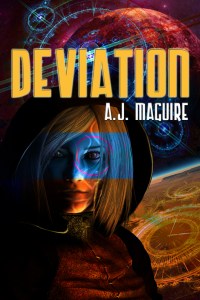
    In my novel Deviation I have two women abducted through space and time, one a writerdeviation-510.jpg and one a mother. The writer finds herself being hailed as a prophet for things she wrote in her fiction, which was a horrifying thought for both the character and me, the author.

    If you’ve read any of my work, you’ve seen the horrible things I put my characters through. I’m pretty sure most would want to kill me if they were real and standing in my apartment.

    The other character, the mother, is desperate to get home to her family. She has a young son who needs her and she has to get back.

    Midway through my revision of the novel I realized I had written my real life struggle into the plot. You see, at the time I was a new mother. My son was only months old and I felt like I was two people – a devoted mother who wanted nothing more than to see to the needs of my son, and an author who needed to carve out time to write.

    As I completed my revision of the novel, I came to an understanding that has carried me through the last ten years of my son’s life; both the writer and the mother are essential parts of who I am as a person.

    While the novel never addresses this personal journey, the ending still reminds me of the lesson Reesa and Kate taught me. I will always find a way to write, and I will always be a mother.

    See what lessons my fellow authors have discovered through their characters in this month’s round robin…

    Skye Taylor http://www.skye-writer.com/blogging_by_the_sea
    A.J. Maguire  https://ajmaguire.wordpress.com/  (YOU ARE HERE)
    Marci Baun  http://www.marcibaun.com/blog/
    Marie Laval http://marielaval.blogspot.co.uk/
    Judith Copek http://lynx-sis.blogspot.com/
    Dr. Bob Rich https://wp.me/p3Xihq-1c1
    Rachael Kosinski http://rachaelkosinski.weebly.com/
    http://rachaelkosinski.weebly.com
    Beverley Bateman http://beverleybateman.blogspot.ca/
    Rhobin L Courtright http://www.rhobinleecourtright.com

    Fiona McGier http://www.fionamcgier.com/

  • The Hardest Part of Writing…

    A few years ago I would have said that editing was the hardest part of writing. Today, however, editing is one of my favorite parts of the process because I’ve learned how to accept that a rough draft is crappy no matter what.

    296311_500604823329356_837081728_n
    So much red ink…

    Accepting that fact has freed me to laugh at myself when I find typo’s in a work, and to scratch out passages that aren’t fitting right.

    So, editing is not the hardest part of writing anymore. (At least for me, other writers may feel differently.)

    Writing the synopsis is and always will be a freak show that makes me hide under my desk. Crunching down a novel into its bare essentials and trying to make it sound interesting at the same time feels a bit like taking a potato peeler to raw skin.

    But, the synopsis only comes toward the end of the writing process. I’ve heard of people who write them first, but my endings are always up in the air when I start so that doesn’t work for me.

    I don’t subscribe to the idea that my “muse” has to be present in order for me to get work done, so catering to her (I’ve always imagined her as a glittery wood sprite hiding in my plants, don’t ask me why) isn’t a part of my daily writing regime either. I put my batoosh in a chair and I start working. Sometimes she shows up. Most of the time I’m just arranging words on the page and praying they make sense.

    10676192_782868888436280_3445750894630733710_n
    The Pest who probably ate my muse.

    Finding ideas isn’t hard either. Ideas are everywhere, I just have to pay attention.

    So what is the hardest part of writing?

    Today I’m going to say… beginnings.

    Beginnings have to engage the reader and convince them to keep reading. They have to set the tone of the story, introduce the main character, hint at the main conflict – or at least a starting conflict – and avoid backstory like the plague.

    Endings are hard too but beginnings are what make or break you.

    And nobody can agree on how to successfully begin a story, either.

    “Start in the middle of the action!”

    “No! Don’t start in the middle of the action! Give us some set up so we care about who the action is happening to!”

    “Do both at the same time!”

    “Start where the story begins.” – AKA – No prologues, please.

    Now, if you’re an author, please don’t feel discouraged. Beginnings are hard, but they are also editable. So if you begin your story and it’s not doing what you want it to, revise it on the next round.

    Sedition went through five beginnings. FIVE.

    Persona had three.

    And right now I’m dealing with a new novel that has managed to go through two beginnings already and I only started working on it this month. (Hence the blog post about beginnings.)

    So if you’re struggling with your beginning today, rest assured that you’re not the only one. We all go through it. The difference between a writer and a hobbyist is whether or not they’re willing to scratch it all and rewrite.

  • Book Release Mayhem!

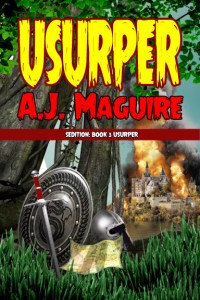
    UC front cover-sample-2Usurper has made its way to virtual shelves! You can find it on Amazon in both eBook and paperback.

    This is the third installment in the Sedition series that follows Trenna Dyngannon and her husband Nelek as they struggle to find peace between humankind and the Eldur nation.

    Fans of the novels – who may or may not have threatened to hunt me down if I didn’t stop writing other things and finish this book – will be pleased to find Nelek and Trenna in fighting shape. The quirky pair were left in exile in the second book (Saboteur) so I know a lot of you were left hanging.

    In my defense, the reason this book took so long was because I discovered that I was Saboteur-WEBtrying to fit two books into one.

    Why yes, this means there is a fourth book.

    And yes, that book is already underway. It is in the outlining phase and I’ll be rolling up my sleeves to work on it later this year.

    Sedition was my first published work so it holds a special place in my heart. I remember floundering with that first draft, trying to piece together things on 3×5 cards and make a sensible plot out of the personalities on the page.

    Sedition-WEBWell, I remember coming to terms with what a plot was in general. When I started it was just a bunch of characters doing different things that occasionally intersected. It wasn’t until I joined a writers group (The Dreamers from the Forward Motion for Writers website) that I was able to see the work as a bigger picture.

    At the time I had no idea there would be more books coming. Now, as I begin the process of ending this series, there is a part of me that dreads coming to the last page. Trenna and Nelek, and now their children, have become a part of my daily life.

    As strange as it sounds, it will be difficult to say goodbye, no matter how the story ends.


  • Naked Characters – January Round Robin (2018)

    Among the very first decisions I have to make when I come to the blank page is what point of view to use. Some people come up with a cool idea for the world their building or a new technological advancement they want to display, but for me it is always the character.

    Normally I go with third person limited, because that is what I enjoy reading. I like knowing exactly whose head I’m in and learning more about that particular character in the scene. To me this just seems orderly and natural.

    I have great respect for people who can write in the Third Person Omniscient (aka – they can be in any character’s head at any time, even in the same scene) but my brain simply can’t focus when there’s all that head jumping. Sadly, this includes reading.

    With the exception of Dune, I haven’t been able to read anything Third Person Omniscient. It confuses me.

    Third Person Limited gives me the freedom to explore multiple personalities in a given story and allows me to “zoom in” with the narrative, which I really enjoy.

    This idea of “zoom in” with the narrative is relatively new to me, in my early works I was… Well, I was winging it, to be honest.

    But to give a running definition of how “zoom” works in a narrative, anything that the character is doing (running, kicking a computer, glaring at their partner) would have the “zoom out” and anything that deals with the internal aspects (why they are kicking said computer, imagining themselves strangling said partner, and all the reasons why they have to run because they absolutely must not be late… Character B will be dead if they are late… Character B, who knows exactly how much honey to drizzle on their oatmeal and labels their socks for each day of the week and life would be sucked dry of all meaning and hope if they are dead…)

    OK, I got carried away there, but I think you get it.

    Zoom Out = Physical world

    Zoom In = Internal world.

    If you read any work of fiction you will see a dance between this “zoom in” and “zoom out.” For me, I’m still learning how to balance this out. It’s something I end up layering during the editing process, but I try to have fun with it.

    How much of my characters do I expose?

    I strip them bare. I want their naked thoughts on the page as much as possible. I want everything that makes them uncomfortable and why.

    Because that’s when I know I’ve got a real character. That’s when I know I have touched on something true. If I’m not digging into their guts then they will always be a two-dimensional bit part in a shallow story.

    Check out what my fellow authors have to say about how they reveal their characters on the page in this month’s Round Robin…

    Dr. Bob Rich https://wp.me/p3Xihq-1ag
    Connie Vines http://mizging.blogspot.com/
    Helena Fairfax http://www.helenafairfax.com/blog
    Fiona McGier http://www.fionamcgier.com/
    Judith Copek http://lynx-sis.blogspot.com/
    Marci Baun  http://www.marcibaun.com/blog/
    Anne de Gruchy https://annedegruchy.co.uk/category/blog/
    A.J. Maguire  https://ajmaguire.wordpress.com/  (YOU ARE HERE)
    Skye Taylor http://www.skye-writer.com/blogging_by_the_sea
    Anne Stenhouse  http://annestenhousenovelist.wordpress.com/
    Beverley Bateman http://beverleybateman.blogspot.ca/
    Rhobin L Courtright http://www.rhobinleecourtright.com

  • Let’s Talk About Fantasy

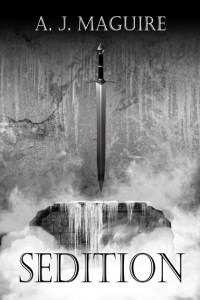
    My writing career started with Sedition, a fantasy novel about a pair of brothers trying to Sedition-WEBrescue their mother. The book went through several revisions – and so many titles it hurts my head to think about  – but in January of 2011 its story line was set in stone.

    (Mostly because the publishing house would have smacked me if I tried altering anything after the Galley Proofs were done.) 

    When I first started writing it, I was doing it for fun. I enjoyed stories and wanted to tell one, so I started writing snippets on 3×5 cards that I carried with me wherever I went.

    Fans of the novel might be surprised to learn that Trenna Croften was not the original hero. In fact, the book began with Brigetta Isleen Chridhe – the woman magically abducted from home and dropped in the middle of a political war between a King and his sons.

    I learned about Kiavana – the kingdom where the first book takes place – through Brigetta because she was just as new to the stage as I was. At the time I knew very little about writing, so I stumbled through the countryside right along with Brigetta, encountering senile knights who continually “squired” whoever happened to be the most helpful, and a prince who hid his motivations under a veneer of disinterest and materialism.

    As I began to uncover the secrets of the world I was creating, Trenna Croften emerged. In fact, her first appearance was the scene where she interrupted an assassination attempt on the eldest prince. When she asked if assassins were paid well, she made me laugh, and essentially stole the book from there.

    Saboteur-WEBOr… well… a whole series, as it turns out.
    Saboteur, the sequel to Sedition, was released in January of 2012 and in February we will see Usurper make its way onto virtual shelves.

    While Brigetta may have been reduced to a minor character in the original novel, I’m happy to report that she has a much larger role in Usurper. I had thought that writing her would be easy since I knew so much about her origins, but as it turns out I was wrong.

    For the timeline of the novels, it has been over 20 years since we last saw Brigetta and she has undergone quite a few changes. She’s a Blood Mage, for one, and for another… she married an assassin. (Because apparently I can’t get away from assassins in these novels.) Her voice is different because she has changed as a character, so I had to re-learn who she was in order to portray her correctly.

    Now, I recognize that it has been many years since Saboteur was released and I do UC front cover-sample-2apologize for that. Usurper was a joy to write, it truly was. But between school and being a full-time single-parent and working full-time and… ahem… my other novels (Is it weird I feel like I cheated by writing all that science fiction in the interim?)… I just didn’t have enough time to do it all.

    I should take this moment to mention that there is at least one other book – Warpath – that I am constructing. It isn’t on the list for this year, but will be next year. The good news is that much of Warpath is already done because part of my problem with Usurper was that I was trying to pack two books into one.


  • Year in Review – 2017

    img_0444Can you believe we’re almost into the year 2018? It’s like I blinked and suddenly my year was gone!
    2017 was a flurry of activity for me, both in my writing life and in my personal life. However, as this is my writing blog, I will concentrate on my writing victories. My friend L.J. Cohen, author of some awesome YA Science fiction (Derelict is my favorite), got me started on this annual assessment of my writing time.

    For those who don’t know the rules, this is where I look at what I projected to have done in 2017 and see what flopped and what managed to get finished. So! What did I say I wanted done in 2017?

    1)  Final edits on Usurper – Not only was this done, I got it in to the publisher and it

    UC front cover-sample-2
    Cover Art by Richard Stroud

    went through 2 more edits with in-house editors and is scheduled for release on February 1st.


    2)  2nd Edit of Dead Weight – A big green check mark here.

    3)  Begin Song of Swans – I am slowly making my way through this novel. It has been started and I am looking at a longer timeframe to get it completed in because the story is so big.

    4) 1st Edit of Ashwood – Currently I am neck-deep in revisions for this novel. A lot is changing so this is the more intensive edit and I believe I will be working on it well into 2018.

    5) Outline Inmate 87101 – Nope. Not a jot. Double Red XX Marks on this one. I didn’t even think about this novel.

    OK… So 4 out of 5 of my goals were met. I’m going to call that a win.

    What’s in store for 2018?

    Well, in the Spring I am looking at a big move and once that happens I will be looking at a lot more writing time. With that in mind, I have big plans for 2018.

    Big, intimidating plans.

    Plans that might bite me in the batoosh before the year is over, but I will do my best to get them done.

    1) Complete Ashwood edits 1-3 and begin shopping it around. This is my paranormal romance ghost story… thing. I wrote it for NaNoWriMo 2016 and enjoyed telling a love story amidst all that weird ghosty-mayhem.

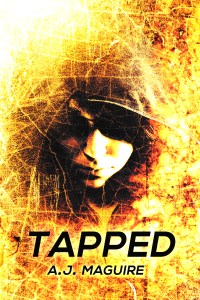
    Scorned2) Complete Dead Weight and release it the Fall. This is the sequel to Tapped. It follows our hodge-podge family of military deserters and religious refugees introduced in the first book.

    Also, there will be a 2nd Edition of the original Tapped novel released sometime in the summer. My intention is to give a Fact vs. Fiction version that has some of the research for Pluto/Europa and our solar system in the back. This is purely for fun. Nothing major will change in the story.

    3) First Draft – Song of Swans. I am calling this my long project because it is so big, but I hope to have it finished by the end of April.

    4) First Draft – The 13th Month. I cannot wait to get my hands on this book. It has been simmering in the back of my head for a while now and I will begin it June.

    5) First Draft – Inmate. This is the third installment of the Tapped Series. I will begin work on it in October and finish out the year with it.

    Also! In relation to the Tapped Series, I have begun outlining and exploring books/novellas that will span the Galactic Wars and show our intrepid Tango Five in action. I’ll know more about these as I work.

    Essentially, I’m looking at 3 first drafts and 3 completed novels, giving me a total of 6 projects done by the end of the year.

    Bring it on, 2018.


  • Memorable Characters – December Round Robin

    I knew this girl once who used to smell her soda whenever it got to the table. Pepsi, Coke, Root Beer, whatever it was, once it hit the table her nose was dipping down to get a whiff.

    When I finally couldn’t stand it anymore, I asked her why she did that and she turned an interesting shade of pink. Her answer?

    “I’m trying to smell if the server spit in it.”

    Aside from the fact that you can’t really smell spit in a Pepsi – which I pointed out – this quirk was bizarre enough that I have never forgotten it. However, a quirk does not make a memorable character – or person – because I cannot for the life of me remember her name.

    So what does make a character memorable?

    In thinking about the characters that I remember the most – Jem Carstairs and Will Harindale from Cassandra Clare’s Infernal Devices trilogy, or Nathaniel and Elizabeth Bonner from Sara Donati’s Into the Wilderness, or Laurence and Temeraire from Naomi Novik’s His Majesty’s Dragon – I realized that all these characters come in pairs.

    I understood Will because of Jem, and I loved reading about their trials together. They’re closer than brothers and their friendship was what made them who they were as individuals. I remember them not only because of their quirks – and they both had several – but because of the things they did for each other.

    As authors, we tend to hunt for that one special ingredient that will help pop the character off the page. Some illusive trait that might endear – or estrange – our created people to our readers. We’re told that faults and quirks and pitting them up against challenges they aren’t prepared for will all humanize these characters for us.

    While all those things certainly make a character interesting and could keep a reader turning pages, they don’t necessarily make them memorable.

    I think it’s the relationships that define them. Just like in life, how our relationships help shape and define who we are as people, the relationships on the page are what can make our characters really shine.

    We remember Sydney Carton from A Tale of Two Cities because he made a deep and noble sacrifice, but that sacrifice was born from his relationship with Lucie.

    Or, to go the movie route, we know Luke Skywalker because of his relationships with Han and Leia. Sure, the force is neat and we get to see lightsabers whoosh through the air, but the heart of it isn’t so much what he can do as why he does it.

    We all have complex relationships built on history and experience, and all the tragedies and triumphs we have endured together help make us who we are. It’s no different for the characters on the page.

    Thanks for visiting! Check out what some of my fellow authors have to say about what makes a character memorable in this month’s Round Robin…

    Skye Taylor http://www.skye-writer.com/blogging_by_the_sea
    Marci Baun  http://www.marcibaun.com/blog/
    Dr. Bob Rich https://wp.me/p3Xihq-18Y
    Beverley Bateman http://beverleybateman.blogspot.ca/
    A.J. Maguire  https://ajmaguire.wordpress.com/ (YOU ARE HERE)
    Anne Stenhouse  http://annestenhousenovelist.wordpress.com/
    Rhobin L Courtright http://www.rhobinleecourtright.com