For those of you who have been along for the ride, you know that I have been writing a series of books that revolve around a supernatural counselor. Or rather, a counselor who counsels the supernatural who live amongst us.
Both work, really. She is a wizard, after all.
In any case, I have fought with the defining genre almost since the moment of the book’s inception. I thought at first it was straight Paranormal Romance, but as the story grew I became convinced it was Urban Fantasy because, quite frankly, the love story isn’t the main focal point of this first book. In fact, it isn’t the focal point of the second book either. However, when stepping back and looking at the whole of the series, the love story written there actually is the focal point.
There’s just a lot of world/setting/stuff to get through in order for that love story to come to fruition.
I will be honest and say that I thought it couldn’t be Paranormal Romance unless there was a vampire-killing group who all wore leather pants and kicked some serious batoosh on the page. But I am also honest in that I am basing that assumption on a bazillion book covers. It isn’t a genre I normally read, which is weird because internet algorithms keep flashing their covers at me. The books I frequent are marketed as Fantasy Romance.
Which…
Yes, as a matter of fact, Nora’s books could feasibly be called Fantasy Romance as well. The only issue being that it is set in contemporary times and in our world, which lends itself to the Ubran Fantasy genre.
However, the setting is not a major player, which my research tells me is one of the defining elements of an Urban Fantasy. Something about that setting has to be made into a plot issue in order for the book to qualify, and I’m afraid it’s all just trimmings insofar as Nora’s books go. The main driving force behind Nora’s books are the relationships between the people.
Because she’s a counselor. And an empath.
This is what leads me to the idea that it is Paranormal Romance, even if we don’t have the love story as the focal point. Nora’s story is complicated. We learn a lot of things about bright folk living amongst humanity, the existence of Fairy, and the policing force set out to keep bright folk in line.
We’ll put it this way: it bends genres.
It mixes and matches.
It’s the beginning of a love story.
It’s an adventure.
And it has werewolves.
So it’s a lot of fun and in the end, don’t we want to have fun when we read?
For those of you who haven’t been following along, I am doing this because my up-coming novel Nora and the Werewolf Wedding features a character inspired by Deanna Troi from the Next Generation series. Deanna as an empath had a lot of power in that series, she brought to light that even the Captain of a starship sometimes needs some guidance navigating emotional waters, and the importance of confronting those emotions.
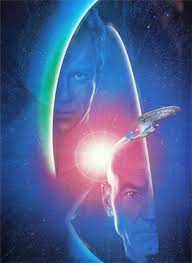
I wanted to make a story where an empath was the centerpiece instead of on the sidelines, and I fear Star Trek First Contact reinforced that desire in me. Unlike Star Trek Generations, where Deanna had a lovely scene with the Captain discussing mortality, in this next movie she is more of a backdrop character. We see she is there. She has a small scene with a drunk character where Riker is highly amused to see her in an equally drunken state, but otherwise she has nothing to do.
It is a little sad because there were a couple of opportunities in there where she might have been able to shine, but for pacing/storytelling purposes it seems she got the back seat in this one. That said, having Picard apart from Deanna, who might have been able to confront him sooner about his behavior, left some space open for Picard to have a bit of a tantrum. He got to go a little crazy precisely because Deanna wasn’t there to check him, so I can see why it was done.
I still think Deanna could have been given more opportunity to shine down on the planet’s surface with the rest of the crew and all of the stuff going on down there, but, hey, such is life. I still enjoyed the movie and the Borg Queen Lady is still creepy enough to make me squirm.
So, not that long ago I picked up Million Dollar Outlines by David Farland and I loved it. I have often struggled with Outlining versus Discovery writing because I fell into the category that once I had dreamed up the whole thing into an Outline, I no longer had the motivation to write the story. Mr. Farland’s advice to take the middle ground has been life-changing. I do still write that sketchy outline (I’ve shown pictures of it before) but especially at the beginning of a novel I feel free to toss that puppy out the window once I get going.
Like I did with Last Child of Winter recently.
No, seriously. 30% of that outline got tossed because the characters on the page led me to something a little different.
So I’m still Discovery Writing, seeing where the characters lead, but I have a rough idea of where I need this story to end. And since this book is about a Talent Show, all roads lead to the stage.
But I think the part that I loved most about Million Dollar Outlines is that he gave me space to brainstorm. He admitted to sometimes staring at a blank screen for an hour and working things out in his head, and to be frank… I always got frustrated with myself for doing that.
An hour staring at the screen with no words pouring onto the page? Such waste! Such laziness!
Except, it isn’t.
There might not be anything written down, but every single time I do it, I come away with a better grasp of the story I’m telling. This is why I keep notebooks and pens beside my computer. Because I can jot things down and circle/highlight/underline juicy bits that I need to explore later.
But when it comes to worldbuilding, sometimes things come out in the process of discovery writing too. Such as when this last week I was confronted by a Faery tradition regarding the Fates. No spoilers here, but suffice… it took me by surprise. I had been so centered on the fact that Fae folk had been forced to acclimate to living on Earth that I hadn’t really looked at all the traditions they left behind. Looking into this aspect of their culture has deepened my understanding of the world, the characters, and the story I am telling.
So, Worldbuilding and Me… I suppose this is all to say that writing is amazing and I deeply enjoy being surprised by what shows up on the page.
Happy writing, to those of you who do so. Happy Reading to everyone!
Welcome back to the Round Robin Posts! This first topic is New Beginnings – how do you motivate yourself to get back to writing when life has interrupted your flow?
I did take some time off from writing for the holidays and, as per usual, had to drag out some tricks to get back into the groove of writing. These tricks mostly include re-reading what has already been put on the page and visiting the ever-evolving outline. For Last Child of Winter, I actually made a skeleton outline before I got started and I am quite amused at how the story has changed.
I should say first that I adore outlining.
It makes me feel smart.
However, when it comes to the actual act of writing the novel, that poor outline gets burned midway through. Or in the case of this novel, it was burned by chapter three. Now I’m sitting with no outline, but a pretty good idea of what happens in the next chapter, and while I have no idea how it’s all going to come together in the end, I am confident that my characters are leading me in the right direction.
It is always exciting when the novel takes a life of its own, so do not take any of that as a complaint. I am captivated by what is happening with this story and can sense the threads are leaning toward one another correctly, but with the holidays letting my mind wander for as long as I did, a little refresher was still needed.
So here are some of the things I do to get me back into the groove.
#1 – The re-read.
This one seems self-explanatory. Nothing helps more than revisiting what I’ve already written.
#2 – Dust off the outline.
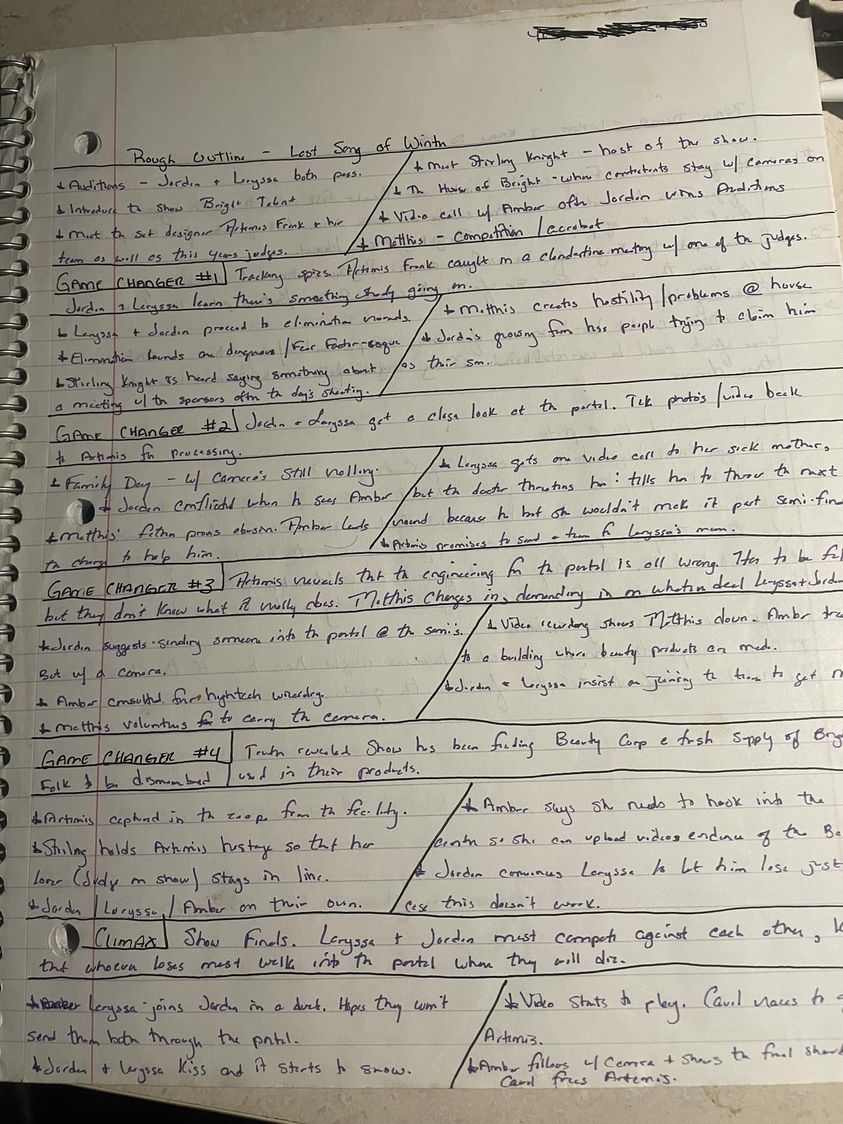
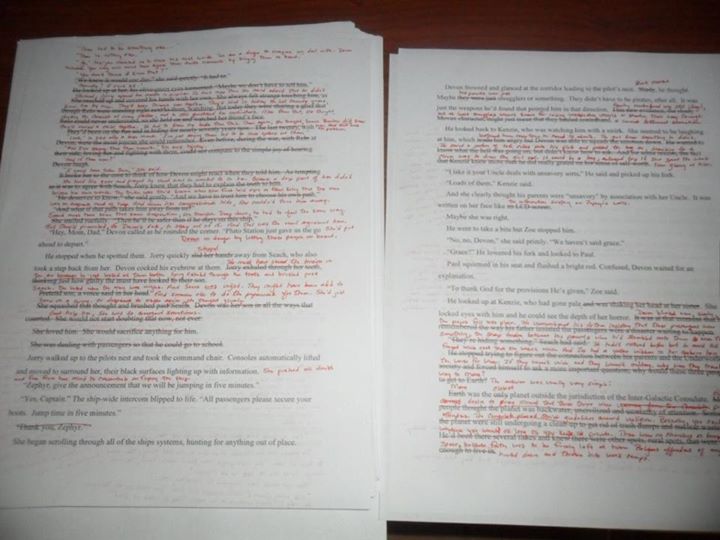
Admittedly, my outlines are precisely one handwritten page. Yes, the picture off to the side is a real example. These ones work for me, particularly when I’m in the early stages of the novel. When I go to do the first pass of editing, a more detailed outline is created for help with the synopsis.
#3 – Work on the Blurb
The blurb is that thing that goes on the back of the book. The thing that’s supposed to grab a reader’s attention and get them to pick up the book. It is forever evolving, but I know when it’s done its job if it makes me excited to get back to work. And because this was recently re-worked, I’ll go ahead and conclude the current working blurb for Last Child of Winter.
Last Child of Winter
In the aftermath of the great war in Faery, bright folk raced through the divide to live as refugees on Earth. But Old Man Winter’s death had far-reaching consequences and earth’s landscape dramatically changed. Blamed for the loss of resources and despised for crowding an already over-populated planet, bright folk carve out lives for themselves working menial labor and low-paying jobs.
With a new law on the table that could allow bright folk to vote, prejudice has never been higher. When fanatics threaten his foster father’s life, Jack Selvik takes the only path open to a mistweaver like himself and signs up for the wildly popular Bright Talent show. Pit against other bright folk, Jack must undergo several challenges to win a seat at the judges table or be forced through the only working portal back to Faery.
Check out what some authors do to get back into the groove of things!
My upcoming novel Nora and the Werewolf Wedding was partially inspired by the character of Deanna Troi in Star Trek the Next Generation. Now, if you think it’s strange that a science fiction character could inspire a series of urban fantasy novels… Well, you’re probably right, but I never claimed to be normal. And really, we have my mother to blame here because she was the Star Trek fan.
I fondly remember weekends with Star Trek marathons when my mother unfolded that super-heavy and not-quite-comfortable sofa bed so that we could all camp out in the living room. She was a single mom for the majority of my childhood, so she was asleep by 10PM, but it was fun watching her pretend like she could stay awake long enough to get the full experience.
So it makes sense that an impressionable young woman like me would become captivated by a television show where a woman sat on the bridge of a starship. But Deanna Troi was not just “a woman sitting on the bridge” either. We got to see a lot of women strutting their strengths in the movies and tv shows when I was growing up, such as Ripley (Aliens), Sarah Conner (Terminator), and Princess Leia (Star Wars).
Deanna Troi stands out because her strengths are gentleness, intelligence, and empathy.
I know that there are some conversations about her costumes on the show, but I don’t want to get into that debate. We’ve all heard it before. Suffice to say, she had a major role to play in keeping tabs on the emotions of a wide variety of races living inside that fragile spaceship. So while I’m rewatching these movies – and yes, I chose the movies instead of the actual show because of time constraints, but I’ll obviously be rewatching the show as well – I am paying particular attention to Deanna.
With that in mind, let’s dive in!
Star Trek Generations Plot Blurb from IMDb: With the help of long presumed dead Captain Kirk, Captain Picard must stop a deranged scientist willing to murder on a planetary scale in order to enter a space matrix.
First observation, I forgot Malcolm McDowell was in this movie. He has a captivating voice and makes for a fun villain, even if not the cleverest scientist. Knowing what he does about the matrix and all of its strange time travel, you would think he could have anticipated resistance from Picard and Kirk.
Now, on to Deanna’s role.
Troi’s involvement at the very beginning was quite satisfying. Being the empath that she is, she’s the one who knows immediately that her Captain has been given bad news. SPOILER ALERT – His brother and nephew have died and the grief that brings to the table forces him to confront his own mortality. However, she also senses that he needs some time to grapple with the shock on his own, so it is several scenes later before she walks herself into his room to ask him if she can help.
The scene is quite lovely and while they are interrupted by PLOT happenings, it is a nice reminder that she has a true position and job to do on this ship. Her captain was in distress and she met that distress. When he tries to brush off the deaths as, “It’s alright, these things happen.” She confronts him – gently – by saying that no, it is not alright.
We as a society often believe that grieving is a weakness of some kind, but it isn’t. Grief is a part of life. It’s one more thing that reminds us we are human and alive, and while it is painful it shouldn’t be ignored. Deanna’s presence at that moment in the storyline highlights that it is not only okay to grieve, but necessary. Even for the captain of a starship.
The rest of the movie has Deanna doing starship things. She takes the helm when the helmsman gets injured during the space battle and is understandably busy while the ship (SPOILER ALERT) goes down. The one thing I do wish the movie had more time to explore was Data and his emotion chip. Deanna was an obvious choice for him to go to while wrestling with human emotions for the first time, but I suspect the pacing of the movie would have been dramatically hindered by adding such a scene.
All in all, I deeply enjoyed this rewatch. William Shatner’s Kirk was a delight from start to finish, and while there were a couple of things that made me squint – such as Klingons bothering to take Picard prisoner only to throw him right down where he wanted to be instead of, you know, holding him prisoner as a bargaining chip, and the aforementioned shortsightedness of the villain – I am enough of a fan of the characters themselves to brush these off.
So here’s the plan… Last Child of Winter is nearly complete. It turned out longer than I intended, which I think is probably good because it means I have more I can edit out come the revision pass. In any case, my beloved husband got me a Planner for Christmas and I have plotted out the first several months of 2023.
Why am I telling this to you, gentle, kind, lovely Reader (or listener, if you prefer the podcast version)?
Because those plans include a release date!
On May 9th, 2023, Nora and the Werewolf Wedding will be out for sale. And, fingers crossed, I hope to have an audio version released at the same time. It’s a learning process with audio rights and things, but hopefully we will see them both available on the same date.
Nora’s stories are my first real leap into Urban Fantasy, and for those who have been following along, I’m sure you recognize her name. She’s only been stirring around my creative brain for three years now, after a Twitter conversation gone awry. I started her story as alternate history fantasy, based in a steampunk version of our world but her voice was too sharp and by chapter four of the rough draft I had to change it.
This was the right call because her story opened up as soon as I made the choice and it’s grown enough in my head to be an entity of its own. In fact, her second book was written in three months flat and her third is being outlined.
And really, it makes sense since Nora’s character was inspired by Deanna Troi from Star Trek the Next Generation. (More on this in a later post.) Trying to shove Nora into 1820’s Boston stymied my creative Muse, as it were, and I came to a standstill. So, even if I think Nora doesn’t wear enough leather pants to truly qualify for Urban Fantasy, this is where we are.
I suppose it does have werewolves, and that seems to be on the Urban Fantasy Checklist these days.
This is vastly different from the recent release – Paw Prints on the Wall – which is still doing fabulous and I keep hearing from readers who enjoyed it. Thank you, forever and always, to everyone who has picked up a copy.
Nora’s book is a popcorn novel. Which means it’s a lot of fantastic adventure and fun, something you can enjoy while munching on popcorn or nestled in for a rainy weekend. I poke fun at a couple of tropes, lean into some cliches because, I mean, werewolves, guys. All around, Nora’s stories are great fun to write and I am looking forward to digging into the book once more as we prepare for that May 9th release.
P.S. Totally a placeholder cover. I have another cover in the works. A better cover. The best of all covers.
The official NaNoWriMo is over, but for many of us the writing continues well into December. While it is amazing to write 50,000 words in 30 days, most novels are more than that, and my current project is no exception. However, Nation Novel Writing Month comes with some awesome winner’s goodies that always make me take a closer look at the software I use for writing.
Honestly, I love looking at all the new fangled things that software designers have thrown into the market. I enjoy the Free Trials, and only ever play with them for a day or maybe a couple of hours. Maybe it’s because of my age – I am not a young’un anymore – but while these all look pretty, my creative brain always stalls when I try to use them.
The first stories I ever wrote were done in little journals. And the ones I was particularly proud of got typed up on my mother’s electronic typewriter.
Or, one, really. I wrote a small adventure story featuring myself and my cousins getting lost in the Alaskan wilderness and I typed that one up. We had just gone on vacation to visit said cousins up in Kenai and my mind was full of the chill, rough terrain and, well, I had to capture it somehow. I’ve seen a lot of beautiful places in my life, but none really come close to Alaska.
But I digress. We’re talking about writing software here, and my general lack of adventure when it comes to switching. I made the switch from Word Perfect to Microsoft Word decades ago and I simply cannot find a system that I like better. Because of space issues and a general desire to stop killing our forests so much, I have switched from a corkboard and 3×5 cards to Scrivener.
Pest judging my writing
Because yes, Scrivener has a corkboard function that makes my creative muse happy to look at. I also use Scrivener for character sheets and world building notes. But for the actual writing process, it is Microsoft Word all the way. I can’t write on the Scrivener software because, and I know this sounds silly, I just don’t like the way it looks. Now, I also have a physical notebook beside me while I write that has a rough (single page) outline and some general notes for when I inevitably get stuck and have to review the book.
And yes, often if a scene is not coming to me, I pull out a pen and paper and handwrite the scene until I have a handle on it. I enjoy the scratch of pen on paper. Character voices are often clearer when I am handwriting too, so that is always nice.
I did check out some of the new plotting software on the market this year, but alas, these have not lasted the 14-day free trial either. I’m sure they work wonders for other writers, but I am perhaps showing my age in that I know what works for me and I would rather not muck it up. So I will stick with my Microsoft Word program and Scrivener’s corkboard for now. Maybe next year I will find the one that sweeps me off my feet, but I doubt it.
Since Paw Prints on the Wall has been released and continues to do well – thank you again to everyone who has purchased my novel – it is now my job to pick up the next project and continue working on it.
Or, well, that’s been my job the whole time. I never really stopped working on it.
It’s a never-ending juggle of time as an author. Either I’m marketing, writing, worldbuilding, or reading.
And yes, reading is an integral part of being a writer. Don’t let anyone tell you different.
But that’s a tangent for another day.
Today I want to look at how very different (and still the same) the genres are between Pawprints on the Wall and my current work in progress. Because yes, there are different tools I lean on more when I am writing Fantasy as opposed to Contemporary fiction. And honestly, Last Child of Winter is a weird mix of contemporary and fantasy, so I’m getting to use both this time around.
#1 – Graphic Texture
For Fantasy, I find that my books are heavy in the visual aspect of Graphic Texture, which I use to describe anything from sights to sounds and smells. This is because I am literally trying to make a whole new setting come alive. Yes, you’ve seen a forest before. But you haven’t seen a forest with an Eldur fortress grown out of the trees themselves. For that, I need to rely on descriptions.
And honestly, most people who pick up fantasy novels are in it for the world.
Yeah, they want to see heroes do cool stuff, but they mostly want to be transported to an unfamiliar place.
Bonus points for authors who can find the happy balance between pacing and description. I often find myself failing in that regard.
For Contemporary fiction, I still need my setting described, but I loosen the reins a bit. You don’t need to know about the history of the building the characters are sitting in (unless it’s relevant to the plot) and I don’t have to make it believable that they have paper and/or technology because I’m using what’s already in the world. I can say “smartphone” and not “flat, rectangular handheld device with a cracked screen that lit up when she looked at it.”
#2 – Characters
One of the tools that remains the same, however, is characterization. We won’t go into the debate on what comes first, plot or character, because honestly, one can’t exist without the other. I’ve mentioned before that I like to think of the first draft of a novel like a character interview. I’m exploring who they are every bit as much as the reader will when they pick up the novel for the first time. The difference is, I get to argue with them.
For any novel I write, getting to know the quirks of each character is both a struggle and a joy. I’m not sure how other authors do this, but characters come to me whole and I have to pry and nudge and watch them on the page to get to know them. I don’t build a character sheet and fashion the person I want to star in the book because every time I’ve tried, I end up not being able to write the book.
What I do instead is name three things for each POV character, and then add information I learn along the journey to their notebook page. Because yes, I still write things in notebooks with pen and paper. This trusty story-bible sits beside me until the novel is published.
What are the three things?
Glad you asked!
*What does (name) want most?
*What does (name) fear most?
*Who is the most important person to (Name)?
#3 – Pacing
This is the most significant difference between a fantasy novel and a contemporary novel. Fantasy novels are given a larger frame to work in. They can be anywhere up to 100,000-120,000 words in length and people will read them because they go into the novel expecting a quest. The worldbuilding alone takes up a great deal of space and the characters on the page are allowed to meander a bit.
For a contemporary novel, readers expect the pace to be faster. Yes, things foul up the character’s plans and such, but the time to get from beginning to end of a novel is much less. They are between 75,000-85,000 in length, so the frame to write the story in is smaller. So you can’t drag on about every pet the character ever owned from youth to adulthood, you have to pick the relevant ones that both drive home the point of the story and keep the pace moving.
The rest of the toolbox is still open, of course. I can’t sacrifice setting just because it’s contemporary, and just because I have more space in a fantasy novel to write in doesn’t mean I should use it all. Each story is different and there’s no one-size fits all for how to go about crafting it.
Trust me.
I’ve tried concentrating on the 3-Act Structure and all that. It’s important to know how that works, so don’t get me wrong, you should absolutely know these things about writing because it is a part of the writer’s toolbox. But, for me anyway, it is not helpful to look at that stuff until I’m writing the second draft. For the first draft, which is where I’m at with Last Child of Winter, I can only plot things out 2 or 3 chapters in advance, and oftentimes I get it wrong and have to fix it as I go.
In the end, this is a craft. And it’s art. So I just take a deep breath and try to learn who my characters are and what they have to teach me.
There was a time I swore I would never write First Person POV outside of my own journal. To me, the lines between author and character blurred far too much, which is likely because my first attempts at writing were done in this vein. Back in the 6th Grade – yes, that’s when I first started scribbling stories down – it was easy to write that way because I was the hero.
Peeping out the window during the storm.
I was the warrior princess scaling the mountainside, intent on visiting the wizard.
I was the dragon slayer.
And the character had no true development because my still-developing brain was focused on the adventure and not the true story. Because at the heart of every story is a character who must grow in some way. If that growth does not happen, you have cool set pieces and neat action sequences, but no real story.
That isn’t to say I haven’t tried first person POV since abandoning it as an endeavor of my youth. Persona’s first drafts were done in the first person. I’m not sure why I changed it, other than I thought a requirement of “real stories” that it be in the third person limited.
Two decades later and I’m sitting before my computer, writing in first person POV with a character named Nora Grayson who is most assuredly her own person. While I have given her empathy as her superpower because I am a deeply empathetic person, that is really the only thing that I can point to and say for certain it came from me. And she is growing.
Not only that, but I find her delightful.
So delightful that I am far and away over my projected word count. I enjoy lingering with her late into the evening, when I should have closed up my laptop and called it a day. The entire world she is seeped into is a place I want to visit, which admittedly isn’t difficult because who doesn’t want to visit the land of Fairy?
Point of View is just another tool in the writer’s toolbox, and I’m glad to have finally learned this lesson. I cannot imagine Nora’s books without her clear voice on the page, and while there are arguments to be made that adult novels steer away from the first person, what it ultimately comes down to is what story you’re telling. When taken as a whole, this series of books could not be told without Nora as the central “I” shown on the page.
(A brief peek into this odd-ball brain of mine since the beginning of the current work in progress.)
Me: Alright! It’s an urban fantasy about a marital counselor to the supernatural. Werewolves, vampires, and all those magical creatures! It’ll be great.
Internal Editor: You can’t be serious. Urban Fantasy is full of women in tight leather pants running around killing things.
Me: Well, Nora is a counselor so she won’t wear tight leather pants unless she wants to.
Internal Editor: You need more romance. Romance sells.
Me: It’s all about romance! She’s a marital counselor so she’s helping people reconnect.
Internal Editor: Readers want to see her happy too, not just the people she’s helping.
Me: I’ve got that covered. Derrick King is the romantic interest for her.
**Several weeks into the project**
Me: I should change this to alternate history steampunk.
Internal Editor: That doesn’t sell.
Me: I don’t care. I like the premise, I like the 1890’s…
Internal Editor: They didn’t have marital counseling in the 1890’s.
Me:….
Internal Editor: Research if you like. I’m not even sure women could vote back then. The clothes are weird too.
Me: (after some research) Maybe she’s just an empath and a counselor and the rules for Fairy are vastly different than the mundane?
Internal Editor: Still doesn’t sell. Even if you manage to make this believable.
Me: If I cared about what sells better I’d be writing straight romance novels with all the steamy scenes that make standing in the same room as my mother difficult.
**Makes the change from Urban Fantasy to Steampunk Alternate History**
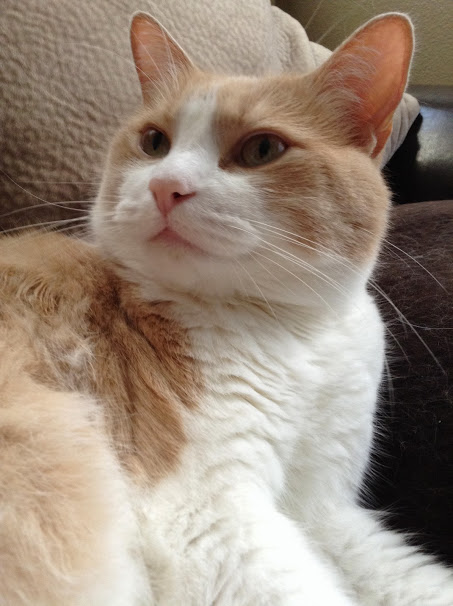
The Orange Beast
Internal Editor: We’re nearly done!
Me: Maybe I was wrong. I can’t feel this setting. Maybe I forced this steampunk business and broke the whole story.
Internal Editor: The outline looks fantastic. You can worry about that on the next pass.
Me: But if I stop and go back, alter it all to be urban fantasy again…
Internal Editor: Tempting, but you’re so close to the end, you should finish first and then go back.
Me: And every time I read the blurb it feels like Urban Fantasy.
Internal Editor: Probably because you wrote the blurb when you still thought it was urban fantasy. Finish the book. Tell the story.
Me: Steampunk alternate history doesn’t sell. If I want to sell this, I should make it young adult. And I can’t have a marital counselor as the main character in a young adult novel.
Internal Editor: … Just tell the story you want to tell, the way you want to tell it.
Me: How would this even be marketed? Did I just waste the last four months of my life on a novel that has nowhere to go?
Internal Editor: It’s only a waste if you quit.
Me: I should just tell the story.
Internal Editor: The way you want to tell it.
Me: Alright then, 1890’s Boston alternate history steampunk. Adult. Because even when I was a young adult, I absolutely did not understand young adults.
Internal Editor: Back to work, lady!
Me: Deep breaths. Just tell the story the way I want to tell it.