Blog

  • Round Robin Blog Posts – Social Issues in Fiction

    I’m so happy to be joining the Round Robin Blog Hop this month. This month’s topic discusses social/current event issues that are important to me and how, when, or if I allow them to seep into my fiction. 
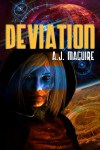
    Deviation-510Let me start off with admitting that I definitely allow social issues to be addressed in my fiction. Anyone who has read my work, particularly my science fiction, will have noticed this for certain. Deviation, for example, has the very blatant conversation about women’s rights. Tapped is the start of a much larger conversation on religion that will be spanning several novels. The Abolitionist (which I’ll start later next year) is fairly self-explanatory.

    All of these issues are very important to me and I believe that every author has the responsibility to Scornedsay something with their fiction.

    However …

    I also believe that every author has the responsibility to thoroughly research, understand, and clearly provide counterpoints to any social issue they address in their writing.

    I shy away from making my personal opinions known here on the blog because honestly, I hate fueling the fire for these sorts of debates. They’re pointless and detract from the more important social issues that we should be spending our energy debating and attempting to fix … like homelessness, children living in poverty, the fact that some employment applications (or other legal forms) still ask for your “ethnicity” and therefore support a racist social structure, or the shameful amount of people going hungry everywhere …

    But all of those things I can and do address in my writing. I “address” them, but I do not answer them because honestly, if I’ve written it right then I won’t have to.

    Readers don’t need me to tell them poverty is bad, they already know it. My job as an author is to help somehow bridge the gap between the Reader and that poverty, to help them experience it so that they understand why poverty is bad.

    This is terribly idealistic of me but I truly believe that we can change the world. Books can change the world. Stories can change the world. Authors … can change the world. Not by telling the world what to think, but by exposing these issues for what they are and bringing them forward in a terribly intimate way.

    Have a look at what some of my fellow authors believe in and write about in today’s Round Robin Blog Hop …

    Skye Taylor  http://www.skye-writer.com/blogging_by_the_sea
    A.J. Maguire  https://ajmaguire.wordpress.com/ (YOU ARE HERE)
    Beverley Bateman  http://beverleybateman.blogspot.ca/
    Margaret Fieland  http://www.margaretfieland.com/blog1/
    Marci Baun  http://www.marcibaun.com/
    Victoria Chatham  http://victoriachatham.webs.com/
    Connie Vines  http://connievines.blogspot.com/
    Bob Rich  http://wp.me/p3Xihq-vQ
    Rachael Kosinski  http://rachaelkosinski.weebly.com/
    Helena Fairfax  http://helenafairfax.com/
    Judith Copek http://lynx-sis.blogspot.com/
    Rhobin Courtright  http://www.rhobinleecourtright.com/

  • Authors Who Inspire Me

    My son knelt beside the sofa, his Lego toys spread out on the cushions as he created little stories involving Star Wars and Batman and the occasional Ninja, while I curled up nearby with a book. It was a familiar book, a favored volume with yellowed pages and a cracked binding from too much use, and I had chosen it in spite of the many unread novels surrounding it.

    I’ll get to those other novels another day.

    For now, I’m content to relive a story that has managed to stay with me for over a decade; Sara Donati’s Into The Wilderness. 

    I’ve read other works by Donati as well, but this one is my favorite. There’s a richness to it that draws me in, a vivid depiction of life in another time and complex characters all fighting for what they want, and I can get fully engrossed in its pages.

    This is a book that inspires me. It challenges me to be a better writer and reminds me that being an author is not merely about telling a story, but about the art of telling a story. Donati knows the art of language, as does Diana Gabaldon and Cassandra Clare.

    I’m sure there are others but these are the authors who inspire me. I find that when I read them, my own work improves. Not because I’m emulating them or anything, but because they remind me to focus on my word choices, on the internal conflicts of my characters, and on the setting in which those characters live.

    I know that there are more books in the world than I could ever read in this lifetime, but there is something to be said about re-visiting a work that you love.

  • Missed Deadlines and Fighting the Muse

    I know there are a lot of writers out there that just go with the flow, throwing out however many words a week at sporadic intervals, relying on their Muse to get them through.

    Wait, you actually thought you'd be writing today?
    Wait, you actually thought you’d be writing today?

    I envy these people. I imagine their Muse sitting right beside them, nagging them at all hours of the day to get their work done because there’s sooooo much more to be done.

    My Muse …

    My Muse is that fat, lazy cat licking herself in the corner. She really couldn’t be arsed to move herself, let alone nag me about anything. If I relied solely on her, I would never get anything done.

    So I have to make deadlines. Deadlines motivate me, force me to go to the corner and pick up the lackadaisical Muse and pester her until something resembling a plot starts to show up. This is why first drafts take me so long and why editing has become my favorite thing ever, because editing relies more on style and craft than it does on my capricious Muse.

    This is also why a missed deadline drives me to hiding in a make-shift couch fort, gorging myself on chocolate.

    Now then, I have missed several deadlines for Persona. At first this was because of the Great Avocado Incident of 2014 wherein I managed to stab myself through the hand.

    Yes, I really did that. Yes, I lost feeling in three of my fingers on my left hand and the Doctor’s weren’t sure if I’d ever get it back. It was awful, I tell you; awful.

    However, it is now nine months into 2015, I have full functionality with my left hand (hurray!) and I have still managed to miss nearly every deadline I’ve given myself with Persona.

    Why?

    Several reasons …

    1. Because I missed the first deadline.
    2. Because I MISSED THE FIRST DEADLINE.
    3. Because life happens sometimes and there were family issues I needed to attend to.
    4. BECAUSE I MISSED THE FIRST DEADLINE.
    5. Because this is the single hardest piece I have ever written.

    I think you get the point. While there were other elements that got involved here, the main problem is that I let that first deadline slip away from me. I lost my momentum, my drive, and it took forever to get it back.

    So if you’re like me and your Muse is a fat orange cat whose back is constantly turned to you, make deadlines.

    And then KEEP those deadlines. Your couch fort and chocolate will only sustain you for so long.

  • Owning Your Craft – Sedition Version

    I began reading Sedition to my son recently. He’s seven now and the whole Fantasy world of Dyngannon seems to appeal to him.

    Sedition-WEBThat or he just really likes the sword on the cover. I’m pretty sure much of the story is over his head but, he picked it and all. (Don’t worry, we read picture books before we settle in for a chapter of this one.)

    In any case, it’s been nearly six years since that book was first published and Trenna Silvanus remains one of my most popular characters. I get loads of commentary from people wanting to know when the next segment of her story is coming out (soon, I promise) and … yes, this does make my little writer’s ego fluff up in pleasure.

    That being said …

    If Sedition weren’t already published I would be doing a major overhaul on it.

    The dialogue is hard to get through in places. There are dozens and dozens of peripheral characters whose involvement in the story itself could be richer – sometimes shorter, but richer in content at least. The exposition is clunky. The narrator’s voice bounces (particularly in regards to Brenson and Nelek, which I’m going to blame on the fact that I wasn’t handling the male POV right).

    The one bright, shining light in the book so far (and we’re only in Chapter Seven) is that Trenna really is likable. She’s spunky, tough, and has a sense of humor that exerts itself in some of the oddest places.

    Why am I telling you all this?

    This book is out for sale. What sane writer points out the flaws of their own work in a public forum? Who’s gonna go out and buy this thing now?

    Honestly?

    Because any sane, professional writer also owns their craft.

    I own the fact that the book I wrote nearly ten years ago (NOTE: it did not get published as soon as it was finished, it took a long time to find a home) is not as strong as the books I’m writing now.

    I own that my personal style has changed with every book I’ve written.

    I own the mistakes that are in Sedition just as much as I own the things I did right.

    What did I do right?

    Trenna.

    In fact, the main cast of characters were done right; Nelek, Brenson, Faolan, Marsali, Brock. They have individual voices, concerns, arguments, and motivations. And while I remember it was complicated to the max trying to get all those individuals out into the open without making a 300,000 word book, it worked out in the end.

    So this is me owning my craft. Maybe I’ll start working on a 10 year anniversary edition of Sedition and clean up some of my mistakes.

    Maaaaybe.

    Probably not, though. Because after Usurper is done there’s at least one more book in this series. And the Tapped series has at least 4 main books with several novellas in the queue. And I have a Civil War/Western that has been simmering on the back burning for a while now. Annnnnd … my Dragon Noir.

    You get it. There’s lots going on in my head. But hey, if there’s enough interest maybe I will.

  • Working with Historical Timelines – Persona Version

    WWII is heavily documented. I have volumes and volumes of historical content that have helped me better understand how and why events took place throughout the war.

    No, really. Volumes.

    I also have several Documentaries on DVD which have helped shed some light on the timeline forAJMaguire-PersonaCover-1280h Persona and the general feel of what was rationed and what was needed and how transportation worked and …

    You get it.

    All this history is wonderful. I love history. It makes me all giddy inside to research it.

    The feeling I get when I find something within my research that perfectly fits the story and adds another level of authenticity is … Well, it’s better than a stack full of York Peppermint Patties. (And I do so love York Peppermint Patties.)

    I also hate history.

    Discovering something in my research that contradicts the story-line I’ve created is frustrating to the extreme. I research as I go, so there tends to be a lot of revision precisely because of this.

    Example: 

    The original opening scene for Persona had Megan on a plane. But it was discovered that planes were generally only used for transporting military personnel and often the wounded for relocation, so it was more likely that she would have been on a passenger ship.

    Insert weeks of research hunting for a passenger ship that, for plot purposes, had to be sunk. Eventually I found the SS Ceramic and there was much rejoicing.

    Today I find myself in a similar pickle. The outline that I have ends Megan’s story on a very particular date because (without going into too much detail and spoiling the whole book) things happened on that date, in that place, and it brings her story a certain sense of cohesion.

    However …

    That date is several months away from the current chapter.

    There are a couple of ways I can handle this and, as an author who really, really doesn’t want to miss another deadline with this particular book (seriously, I’ve passed several of them already and I’m not even sure why. I’m normally very strict with deadlines) I need to make my mind up by Sunday.

    1. I can rearrange the timeline of the whole book, extending Megan’s stay and bringing things closer to what I want. (Not a bad plan, though a moderate amount of work.)
    2. I can slow this chapter down, be all artsy-crafty-clever with the passage of time. (I’m not very good at this sort of thing, though. It’s an area I need to improve on.)
    3. I can ignore the historical timeline. (I don’t like this plan. I did all the research for a reason, after all.)
    4. I can stretch out the inevitable scenes at the end (which I can’t explain for fear of spoiling things) and lengthen Megan’s time in a very bad place. (Not sure I like this plan either because it draws out the tension too much at the end.)

    So many choices. 

    As an author these sorts of problems happen all the time. And I imagine when I tackle my Civil War story (likely sometime next year) that I’m going to have a lot of these timeline problems show up.

    The core of the issue is that I want to have that authenticity, the reality of what happened integrated seamlessly into the work, but I also want to tell Megan’s story. Megan is fictional. Her story is about who she is as a person, not what happened during WWII.

    With that in mind, option 3 becomes more visible. Although I’ve done the research, the research is not the book, and I think that’s really what I have to keep in mind here.

    Megan is the story.

    As the author, I have to decide which option tells her story best.

  • Hurting Your Characters – Persona Version

    Me: I really don’t want to kill Character A.

    Internal Editor: Then you really should.

    Me: But he’s so important to the main!

    Internal Editor: Then you really, really should.

    Me: Maybe he can just be seriously wounded?

    Internal Editor: You know better. The very fact that you want this character to survive so badly proves the impact that their death will have on the novel.

    Me: I hate you.

  • Writing While Unmotivated

    I know there are lots people out there who just plain won’t write if they do not have the proper inspiration. They follow their creative muse and lean heavily on the concept of being an artist, and those things are true. Writing is an art and yes, sometimes you just plain don’t want to write.

    I’m not talking about those moments when life steals your writing time. I’m talking about those moments when you sit down at the computer for your designated 2-3 hours of writing time and just don’t want to do it. The words feel stale in your mind, feel stale when you get them on paper, and you think that a thousand other authors could write this better than you are right now.

    How do you push through that?

    Well, I imagine it will be different for each person but I can tell you a couple of things I’ve learned about myself.

    1) These moments do not last for only a day.

    If I allow it, this feeling of drudgery can last for months at a time. So when I discover myself stuck in one, I have to take measures immediately. Sometimes this means going for a walk, cleaning the house, going to the gym or jumping in a pool. Anything where my brain can wander wherever it wants.

    2) Rely On Craft

    Yes, it does feel like I’m slogging through my work when I’m in this particular mindset. Yes, I groan and grump and get only a little bit of progress done on my manuscript. But the truth is, if I write anyway then I find myself looking at the work through the mindset of my craft, instead of the mindset of my muse.

    Yes, it’s hard.

    However, when I look at the work through the mindset of my craft I generally find a solution that would never have occurred to me any other way. It zooms the creative lens out and forces me to think outside of the character and onto the book as a whole, which produces a far stronger book.

    The awesome thing about relying on my Craft, is that eventually something sparks and the inspiration snaps back into place. It might take several weeks, but it’ll get there and I’ve learned to have faith in that.

    3) Read

    When I start feeling unmotivated, I start reading anything and everything I can get my hands on. Fiction, Nonfiction, News, Poetry, literally anything in my path I will read. This not only stores new concepts and story ideas somewhere in my subconscious, but it makes me a better writer when that motivation finally does return.

    4) … And this is going to sound terribly geeky … Play a Genre specific game

    If I’m writing a science fiction, I will play wither Star Wars or Star Trek. If I’m writing fantasy, I play Dungeon Siege. Historical Fiction … well, I haven’t found a game for that one but I do watch tons of WWII movies and documentaries. My creative mind soaks up the visuals of those games (and/or movies) and often bounces me right back into wanting to write again.

    And that’s it. Those are my four steps to getting back into the swing of things. Generally, I do all four. They aren’t a guarantee that my muse will start working again quickly, but I know that eventually it’ll come back. The main focus is that I keep writing regardless because I know that my Craft is capable of moving forward.

  • World Building – Graphic Detail Edition #1

    Right now the boys (one mine, one his friend who stayed over for the night) are fixing the cushions on my sofa. They made a fort to sleep in for the night and my living room was a mess of brown pillows and mismatched blankets that I had to step over to get to my computer. There’s also a plastic Bat-Cave sitting near my fake fireplace with the Millennium Falcon parked right next door.

    All the evidence of a night well spent with two 7 year-old’s.

    The world we live in is not static. There’s color and shape and the blatant trace of human contact embedded in our environment. And while there is something to be said about a writer allowing room for the reader’s mind to build a particular setting in their own imagination, these details are also integral to telling a story right.

    We’ve all heard the “show, don’t tell” mantra told over and over again.

    “I want to feel the ocean spray on my face!”

    “Let me taste the apple! Don’t just tell me he bit into the apple!”

    But I’m going to tell you to stop.

    Don’t write hoping to make your reader feel the ocean spray, or taste the apple. These are not helpful in telling your story. It’s actually really distracting and can draw your reader right out of the story. And the last thing you want is for your reader to be jolted out of the story.

    Instead, let’s alter that mantra; show what is affecting your character.

    Your character walks into a room – what impacts them the most? What jolts them? Based on who they are, what would they notice first?

    I’m going to use Megan Shepherd from my current WIP, Persona, as an example.

    Early in the book she comes to the home of Victor Von Buren, a very austere Naval Captain. When writing the scene where she first enters his home I have to consider not one but two voices – Megan’s and Victor’s.

    Even though Victor isn’t present, he has left his fingerprints on his home. So as Megan is wandering through different rooms (which, I confess, I might have been giving a slight homage to the Von Trapp family in Sound of Music) she is not only reacting to the room itself, she’s reacting to the man who lives there.

    A writer’s job isn’t to just paint a vivid picture in the reader’s mind, it’s to make that picture important. It doesn’t matter if they feel ocean spray on their face, what matters is the emotion that can be hooked onto it.

  • Cork-Board Mayhem & Camp NaNoWriMo

    Well! It’s more than halfway through the year and I am nowhere near where I wanted to be in terms of deadlines. So! I got to rearrange my cork-board and took a great deal of time deciding what project was going to come after Persona  — because yes, I am still working on that one.

    The re-writes for Persona’s ending have been challenging. I am stepping outside of my comfort zone and delving into far darker territory than I am used to. However, in reviewing the outlines and watching it progress I can honestly say it is a far better book now (even in its incomplete form) than it was when I started.

    Because the mood has been so dark, I have been working on Usurper on the side. Trenna and company always tend to make me laugh, so it’s been a nice counter-balance. That said, with Camp NaNoWriMo having officially started, I’ve decided to use the month of July and the Camp as a means to try and push Persona over the finish line.

    This means my cork-board has to be re-arranged and Usurper will be left to the side until August. I only have a little left on Usurper anyway, so this should work out just fine.

    Fun things!

    Super fun things!

    For the first time ever, I’m going to submit one of my novels into the Epic Award Contest. I might actually submit both Deviation and Tapped, since you’re apparently allowed to do that. We’ll see, though.

    And now … in celebration of the 4th of July … Here’s some free content straight out of the pages of Usurper …

    Brigetta tilted the bowl over with one finger, barely listening to the fight in the corner.  A gooey, glumpy substance filled the bowl, looking oddly doughy.  She wasn’t a cook, but Bree would bet someone had been trying to cook something before they were called away.  By process of elimination, she determined either the General Herself had been attempting the feat, or the woman’s daughter was to blame for the culinary catastrophe before her.

    A body crashed into the table, sending it scooting across the room toward the open hearth.  Bree had just enough time to withdraw her hand before Faxon threw two blades at the ill-fated Eldur man.  An instant later she heard the small daggers hit their marks and suppressed a shudder.  The meaty, visceral sound of a blade sinking into skin wasn’t something she thought she could ever get used to.

    The Eldur blood in the air was a welcome distraction.  She felt the slowly dying beats of their assailants heart strum against her skin as magic was released from the man.  Like glistening sand in the sun it hovered in the air, waiting.  Magic knew what she could do with it, that it had been summoned for a purpose, she only needed to give it the command.  What she was about to do, however, was far more dangerous than she cared to admit.

    Faxon moved to retrieve his blades, nodding to her as he crossed the room. “Now or never, Bree.”

    Sighing, she closed her eyes and focused.  With one hand she beckoned the magic closer, pulling it toward her face, toward her eyes.  Reciting the commands first in her mind and then out loud, Brigetta automatically translated the language inherent to all Eldur.  The language of the high born nobles, whose bloodlines traced back to the first Eldur King; a language seldom taught anymore; the gremoth.  Many of the high born knew of it, but not how to speak it.  Only the Blood Mages had kept it intact, guarding the words in a jealous attempt to maintain some sort of power in Dyngannon.

    “Caraloomessa act all et teh,” Bree repeated, wafting the magic still closer.

    Warm light filtered past her eyelids, an odd tickling sensation running over her eyelashes, and then she traded her sight for the vision of a low-flying hawk.  Magic itself picked which hawk.  The odd twist to Blood Magic was that it often had its own ideas of what should be done.  The magic in use only knew she’d wanted something in the air, something close by that could give her a clear view of the island, and it had accepted the price of her own vision for a time.

    The only problem was that she wasn’t certain how long magic would keep her eyesight.  She could be rendered blind for months if it so chose.

    Shoving that worry firmly aside, Brigetta concentrated on the hawk’s vantage.  It wasn’t far from the little cabin they were standing in, flying disconcertingly close to the treetops.  Bree wavered and reached out for something to steady herself on.  Faxon’s hand clasped her own and she felt him step closer.  His body heat warmed her left side and she tried to relax.

    Because she had only traded sight, the vision came with no sound.  This made things even more disorienting, since she could still hear everything in the room, to include Faxon’s quiet breathing.  Exhaling, Brigetta battled the weird sense of vertigo and focused more.

    The bird turned in a wide circle, scanning the forest floor in search of food.  Unfortunately for the hawk, its hunting grounds were being intruded upon.  Bree counted Kaden, the Duke, the General, the Human boy named Troy and the reckless girl who had been in the tavern.  The five of them were moving steadily toward the clearing that held their cabin, which confirmed for Brigetta that she’d chosen the right place.

  • When Life Steals Writing Time

    Life happens.

    Loved ones get married, move home, move away, die. People get sick or injured or stab themselves in the hand whilst coring an avocado. Cars get towed and unexpected bills show up in the mailbox. While the average human being sees all of these things as hiccups to their days/months, the writer discovers them to be the greatest thief of all.

    Because they steal our writing time.

    In some cases, such as the injury or death of a loved one, they steal our very desire to write. The creative drives shut down and we avoid the work in progress in order to deal with the trauma in front of us. I’m not going to touch on those moments. Those … have to be lived through. There’s just no “one-size fits all” way to try and get back into the groove of writing after personal tragedy.

    But for everything else – weddings, moving, change of jobs, family things – I’ve learned a trick or two to keep my work in progress foremost in mind.

    1) 3×5 cards are your friend

    For the last little bit I’ve had to go back to my Army days and tote 3×5 cards around with me. One card a day had to be filled, whenever I could fill it throughout the day. Yes, you need a clear filing system for these, and generally by the end of the week I was transcribing them all to the computer.

    2) Let something go

    In this case, I had to let the blog go for a bit. For various reasons. (That is obviously changing now.)

    3) Forgive yourself

    Writers have this habit of beating themselves up when they can’t reach the desk for a day. There’s a rule out there that says you have to write every day and whatnot, and while that’s partially true – you really should write as often as you can – in a world of single parents, full time jobs, family crises and such it doesn’t always happen that way.

    So …

    Forgive yourself.

    Remember that even if you didn’t make it to the computer that day, the experiences you live in your day to day life are just as important as the time you spend writing. Because it gives you content.

    4) Scrivener is the best

    I only recently received Scrivener as a gift for Christmas and I have to admit I kinda love it. The virtual corkboard helps me keep track of the details I want to remember in future chapters and the physical descriptions of each character and … yes. Scrivener is awesome.

    5) Sleep is not an option

    At least for me it isn’t. I have to have enough rest to recharge my brain or I just can’t function. I end up staring at the computer screen until it blurs and I pass out. Not even coffee can manage to dent the fog of sleep deprivation for me.

    And that’s it … Those are the things I’ve managed to learn about my personal writing habits versus the world around me. Maybe something in there can help someone else.

    Hopefully.

    Happy writing!