Tag: Authors

  • Let’s Talk About Brand

    So there’s this thing in the writing business where people say writers need to have a “brand” to rely on. Something to shove at a reader so that the reader knows what to expect whenever they pick up a book written by that author.

    James Patterson readers know that the plot is going to move fast and it’s going to twist in ways you don’t expect. I remember from his class that he said he wanted people to know when they picked up a book of his that “the pages would turn themselves.”

    And considering how many books of his frequent the bestsellers lists I think we all can attest that he’s definitely made his name a brand.

    Brandon Sanderson also has a brand name to him. When I pick up a Sanderson novel I expect unique magic, intricate plots, and deep fantasy that can transport me.

    When I read Diana Gabaldon I expect rich characters and enlightening history and a more visceral reading experience than I can get anywhere else.

    Now then … as an author I have to ask myself exactly what “brand” I might be presenting. I find this highly annoying because, as much as I can recognize the trademarks of other authors, I’m really clueless as to my own. And from what I’ve heard from other authors, they feel the same way.

    On my website I have “Writing Mayhem” as the tagline.

    Why?

    Well … because I love the word “mayhem” and wanted to use it. And because my life as an author feels full of mayhem. I write everything from Science Fiction to Historical Fiction. My Fantasies range from Epic to Steam Punk.

    My muse just can’t seem to commit to any one genre, which makes “branding” me quite difficult.

    I could try finding that one common denominator between all the books and banking on that … Which would be the characters. In all my books to date, the focus is always on the individual character on the page and the struggles they face.

    But again … how do you “brand” that?

    A.J. Maguire – Character Tormentor … A.J. Maguire – “The characters will grab you by the throat and demand you free them.”

    … Yeah … No thanks.

    In all seriousness, and after many years of trial and error, I’ve come to understand that “brand” is a conscious decision.

    I have two releases scheduled for this year; the novelette “Torven” and the historical fiction Persona.

    One is a fairy tale.

    One is a “who am I” story based in WWII.

    What “brand” do I hope to attach to them both?

    I want readers to trust that if they pick up one of these books they’re going to get a good story.

    How do you brand that?

    Well, I’m still not sure. But when I find out, you’ll be the first to know.
     

  • Prepping for Launch

    Gutter space and margins … check.

    Cover art … check. (FYI, Chris Howard is still a genius.)

    Back blurb … hmmm … that’s gonna change a couple more times, I’m sure.

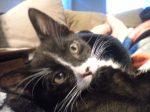
    (Pause to remove new kitten from the desk. He’s too curious for his own good and he’s constantly attacking my hands while I’m using the mouse. I’ve decided to call him Nuisance even though he’s my son’s pet.)

    Font size and spacing for both print and ebook versions … check and check.

    Re-read the manuscript for the zillionth time and STILL find a typo on page 96 … ugh, check.

    Dedication … aw, that’s easy … totally check. DSCN5894

    Acknowledgements … er … hmn. That one’s a little more tricky. I’ll probably add a few people before the December launch date.

    IMG_0051(Pause again because kitten is now attacking my ankle and his little kitten claws hurt. Try to convince him that he should be playing with Pest, my cat, who eyes me with frank disgust but … everyone’s gotta compromise here.)

    Go back to my regularly scheduled writing … I’m on chapter 10 of Dead Weight now, so it’s coming along nicely. I’m not sure I’ll make the three month deadline for a first draft, but I’ve had to swap between writing on the computer and writing by hand a couple of times so I won’t feel bad if I stretch it for another month.

    Four months to write a rough draft isn’t too bad.

    And really, I’m not JUST writing a rough draft, as evidenced by all the book preparation I’m doing. Persona will be my second attempt at launching a book on my own and I’m trying to remember all the mistakes I made last time — such as working while under the influence of cold medication and accidentally launching the book 2 weeks early.

    And forgetting to adjust line spacing for the print version, leaving one truly massive novel that cost an arm and a leg to ship.

    And not justifying the text.

    And … er … so many other things.

    Here in the next couple of weeks I’m supposed to start marketing for Persona, letting people know the exact date it will be out (December 6th 2016) and what the book is about (historical fiction/romance/women’s fiction/ … this one I probably need to narrow down a bit more).

    Which means that, on top of all of the above, I have to research venues (blogs, magazines, etc.) that might be willing to host me and give me a second to promote the novel before it comes out and during the first two weeks of its launch.

    … I think I’d rather have the kitten attack my ankles some more.


  • Killing the Hero

    I’ve killed off characters in my books. There are several in particular who I mourned as the author, and still others who I really hadn’t noticed. It seems to be a popular past-time in fiction to strategically murder personalities that we, the readers or viewers, have fallen in love with.

    I know everyone hated to see Coulson go in Marvel Avengers, myself included. But then, Joss Whedon has made a name for himself as one of those directors who has no qualms offing a beloved character for the sake of driving up tension. But, of course it’s more than that.

    Yes, the tension goes up, but it also has a profound effect on all the other characters on either the page or the screen. As storytellers, we’re told this is good. And in part it is. Life is not without loss, and storytelling is an art that is at its heart about life in all its gritty, beautiful detail.

    However …

    It’s becoming a cheap trick.

    Without spoiling dozens of popular stories across several venues (TV, Movies, Novels) I can say that I have seen no less than 7 traumatic deaths in the last couple of years alone. Some of them I even knew were coming at the very start of the story, which is a problem in and of itself.

    As a storyteller myself I have to sit up and take notice. While I understand the impact a death like that has on the story-line and on the other characters, I have found myself sitting back as a reader/viewer feeling cheated and manipulated by the author/director.

    This should alarm us.

    We are becoming desensitized to this sort of story mechanic. That’s not to say we can’t keep using it, but more to say that we must be very, very careful when we do. If we must kill off a beloved character, then it has to hit our emotional buttons on every level. It has to mean something both to us as authors and to the story itself, or our readers will feel the cheapness of it.


  • Art vs Craft

    Next week is my last week going through Dead Weight’s outline. The last three weeks have been a fun exploration of this story and what I want it to say and I’ve learned a great deal. I highly doubt James Patterson will ever peek at this blog, but if he does he should know he has my eternal gratitude. That section of his class alone was worth the admission price.

    Exactly what have I learned in this process?

    Well … I’m sure we all know that every writer is different and the way they get words onto paper is going to be personal at some level. There are people who shun outlines completely and there are people who can’t start a novel without them.

    Personally, I couldn’t start a novel with an outline but at around the three quarter mark in the book, I couldn’t finish one without an outline either. So at that point I would stop, go back and make a complete outline of the book so that all the subplots and things could tie together.

    There’s nothing wrong with any of that.

    But somewhere in the middle of this process with the outlines I took a new ownership of this story. It was always mine. The characters and the plot and the theme I had in there was all my content, but I only had a flimsy handle on it. Like it was driving itself and I was just interpreting what needed to be said (or misinterpreting in some places.)

    Going through the outline again and again, challenging myself to tighten chapters, to focus on what is actually supposed to be revealed through each scene and character and twist, not only made my understanding of the story better but gave me a sense of control that wasn’t there before.

    Writers walk a fine line between Art and Craft and I think sometimes we lean too heavily on “art.”

    “Art” is when you just can’t find the inspiration to get words on paper. Yes, of course we need inspiration. The problem is that we bum around and say we just don’t have the right “mindset” to work that day instead of actively seeking that inspiration.

    “Craft” is when you sit down at your computer at your given writing time and, shocker, you start writing. It’s better if you have inspiration and art on your side when you sit down to craft, but it’s not a guarantee.

    The trick is getting “craft” to really direct your “art” and, in my case at least, this experiment with outlines has done that.

  • Editing Outlines

    Alright, so I was intrigued by the idea of editing an outline before you’ve gone in and started your story. Normally I get one outline done and then I have to edit it midway through the book to compensate for all the extra things I’ve learned about the characters and little subplots that have cropped up during the drafting process.

    So!

    Imagine my delight when, on my third draft of Dead Weight’s outline, my Muse woke up and fixed something I hadn’t even noticed was broken. It changes 80% of the book, adds tension, drives home the concept of what a tapped soldier is, and reminds everyone (including me) just how far the Consulate has gone in its hunt for power.

    And the best part?

    I’m not cringing about having to go back and re-write a ton of words. Because they haven’t been written yet. 

    On top of that, my excitement for actually getting to the writing part of this book has increased exponentially. And I still have 3 weeks left of Outline edits to go.

    Because I want to cash in on the inspiration I’ve got going on right now, I’m going to go ahead and start writing little snippets here and there. The next few passes at the Outline are going to focus on character reactions/motivations. I’ve got a solid plot foundation under me now and I just need to tweak who recognizes what and things.

    In the meantime, I’m using Camp NaNoWriMo to get caught up on some other works. Residual Haunting, for example, is in a tragic state of nearly-complete. And in other announcements, I managed to get Persona prepped and ready for print-launch.

    As with all my books, I do try the traditional market first. There were a couple of nibbles from agents and the like with Persona and, while I intend to send out another volley of queries within the month, I also wish to make sure I get at least one book out a year.

    So unless Persona gets picked up in the interim, we can expect a launch date sometime in December. (Imagine me throwing all sorts of confetti and jumping up and down in excitement. This poor book has been in the works for a couple decades now. It’s time it sees the light of day.)

    To everyone else who’s working hard at their Camp NaNoWriMo stuff … Good work! Keep going! Get words on the page! You’re six days in and all the world is at your fingertips.


  • The Side Project

    My cork board hasn’t changed since January. According to my calendar I should be on Chapter 9, not Chapter 4, of Dead Weight. That big leap I had at the beginning of the year is now completely gone.

    But you know what?

    I really don’t care.

    Because I’ve been working. Granted, I haven’t been working on what I said I’d be working on at this point, but it’s still words on the page.

    In fact, it’s over 10,000 words of that lovely fairy tale story I began for my son. He’s enjoying it still, by the way, and it is nearly complete. I should have the full novella by the end of this month. At which point I’ll set it aside for a couple of weeks before doing a round or two of edits and then I intend to put it out for free/super cheap/whatever I can get Createspace to do there.

    But I haven’t just been writing on this thing. I also opted to take James Patterson’s Master Class on writing and slowly made it through the 22 lessons there.

    Why no, I’ve never written a suspense novel before, but that doesn’t mean that things within the suspense genre can’t be planted into the genres that I prefer writing. In particular, I took away from this class a very distinct outlook on Outlines that I will, at the beginning of April, implement with Dead Weight.

    Since I’m only on Chapter 4 there I don’t feel like I’ll be shooting myself in the foot starting over with the Outline and doing it the “Patterson” way.

    For those who have been toying with the idea of taking a Master Class like this one, I’m going to go ahead and give the “two thumbs up” and encourage you to do so. There are some things you’ve heard that you’ll hear again, but in the end it’s got some nuggets in there that you can certainly use.

    In the meantime, I’ll be posting some of the Fairy Tale on the website and things because … well … it’s fun. And you can’t beat free.

  • Video Games vs Reading

    Among the many hats that I wear, I am the proud parent of an extremely creative little boy. Some time ago I got him a Wii for Christmas, but the motor wore out so he was game-less for quite a while – unless he went to his friend’s house.

    After observing my son in both states – gaming vs. not-gaming – I have come to accept this as part of the culture we live in now. For his birthday he was given a handheld game system so that he could play while waiting for me to get done with certain necessities (like work).

    And then his father got him a PS3 and, to be honest, my son uses it more for Netflix than anything else. I would balk at this but he chooses British shows far more often than I expected (thank you Doctor Who and the like) so I feel like I’m not having to regulate everything he’s doing.

    However … Netflix is not a good book. And games are not good books.

    Plainly – visual media is not a good book that really allows you to grow by digging into to the mindset of another person and walking in their shoes for a while. It’s a proven fact that people who read are far more empathetic to the world around them than people who don’t.

    Reading fiction is, to be frank, not just about learning character tropes and getting a larger vocabulary. You’ll get those things, of course, but the larger and more profound effect reading has on us is a deep connection to humanity.

    Yes, the characters are made up.

    But the reactions – if they’ve been done right – are utterly true. Sometimes the settings are fake, but the human nature on the page is not. And reading about them helps us to understand both ourselves and the world around us.

    How then do we find the balancing point between allowing our kids to enjoy the visual media prominent in our culture and the clearly necessary act of reading?

    My son recently grumped about having to shut the game off and sit for his designated reading time and, as any writer-parent should be, I was quite alarmed. But I couldn’t take away his game system and make reading a punishment, that would be counter-productive.

    My solution was a trifle unorthodox, I’m sure. And anyone who is a parent but not also a writer would find it difficult to do, but I’ll share it anyway.

    I began to write a classic fairy-tale story for my son. And I told him about it.

    This, of course, has meant quite a lot of work on my part because it means I need to have written every single day. Because every day, at the end of his reading hour (or sometimes at the beginning) we read the progress of the story together.

    Sometimes he reads it from the beginning, out loud, to me. Other times he just wants me to read it (I apparently make a good wolf-voice.) And at the end he is always speculating about what he thinks is going to happen in this tale. He engages and asks questions about the main character and is, as far as I can tell, deeply interested.

    When it’s finished I’ll likely publish it as a stand-alone novella, though I admit that is mostly so that he can hold it in his hands as an actual book instead of a spiral notepad.

    Will this make a life-long reader out of my son?

    No. Not just one book. It can never be just one book that does it. But it’s a start.

  • Marketing and Me

    Recently I met with another local author and had one of those Zen moments where I had to decide exactly why I write. This author was very well put together, had her spiel (aka, pitch) memorized and gave every outward appearance of success. She looked, in a word, classy.

    Flash to me … in my jeans and nondescript shirt, sporting a pair of Nike’s that are starting to get a hole in the toe. In my defense, this was a social function I’d taken my son to and a friend of mine decided I needed to make this acquaintance right then and there, so it wasn’t like I knew I was going to be meeting anyone in a professional capacity.

    That being said … this other author had a much better handle on the business of writing than I think I’ve ever had, which is what brought about the Zen moment.

    Driving home from the function, feeling not a little discouraged, I began to wonder exactly what set me apart from her and was not surprised when I came to the conclusion that she just plain knows how to market herself better than I do. She’s confident in herself and her writing.

    I’m confident that I can get through anything the world throws at me but when it comes to my writing I know that I am constantly improving, so the confidence isn’t quite there. Sedition was fun to write but Saboteur was a more solid book because I had learned a lot about style and craft between the two books. (Even though fans seem to like Sedition more, which I find curious.)

    Enter the Zen moment …

    I made the decision a long time ago that I write because I have to write, because if I don’t write my brain will explode, because there are a zillion stories floating through my mind that need to come out.

    I write because I love it.

    It’s the process that I find fulfillment in, not the sales.

    This doesn’t mean I don’t hope to sell a whole gob of books one day and secure a much brighter future for myself and my son, it just means that I will continue to do the minimum amount of marketing. Things like this blog and light conversations with interested readers, and memberships with organizations that don’t require too much money (Hello, single parent here) are all things that I can do without cutting too much into the writing time.

    At some point I imagine I’m going to have to change this decision but for right now this is what fits for me.

  • Throwing Confetti! (AKA – Persona’s Re-Write is done!)

    Technically I started this book over a decade ago while working at a Clinic & Hospital. I toted it around in a notebook and copied pages off for my mother since typing on the electric typewriter (shut up, I couldn’t afford a computer back then) took more time than I had.

    Yes, she still has those copied pages buried in a closet somewhere and no matter how much I beg her, AJMaguire-PersonaCover-1280hshe refuses to use them for kindling.

    Mothers, you know?

    Anyway, seven drafts and a decade later I finally, finally have a completed story.

    Many will remember that the original re-write was posted online, chapter by chapter, in 2013 but I hired an editor (like you do) and he loathed the ending so much I had to re-think what I was trying to do with this particular story.

    After many nights with mint-chocolate-chip ice-cream, pouring over his notes and sketching outlines (there were at least a dozen before I came up with the one I used) and after an agonizingly long rehabilitation process from the avocado incident in 2014 (I know how to properly core an avocado now, so there’s no worry for me stabbing myself again) I have learned a great deal about the writing process through this one book alone.

    First, I learned that editors are worth their weight in gold. Yes, they’re expensive, but I don’t regret the money I’ve laid out.

    Second, and this is going to sound weird, but I work better with Courier New font during the draft process and then turning it into Times New at the end. It’s just a quirk of mine.

    Third, sticking to a single point of view is hard. At least for me it is. But forcing myself to do this brought the character into more detail, forced me to dig deeper and really explore who she was and how she felt about what was happening.

    Fourth, I must be careful of what I’m reading while I’m in the drafting process because my personal style begins to mimic the style of what I’m reading.

    Fifth, I am a romance author. I may have Fantasy and Science Fiction and, now, Historical Fiction under my name but in the end, I am a romantic and I want to see my characters find someone who will support and build them up as people. The romance may not be the focal point of the story, but it is there and I refuse to be ashamed of that anymore.

    Now then, this does not mean I’m going to start writing straight romance novels. I can’t. I tried that once and ended up with Witch-Born.

    It just means that I’m not going to shy away from it anymore.

    Love is an integral part of human life.

    I mean, even Star Wars has romance in it.

    I can write things like that. I enjoy writing things like that, so I’m going to.

  • The Querying World and Why I Bother

    Alright, so I’ve edited another book nearly to completion. Persona will be absolutely, totally, and finally finished if not next week, then definitely the week after. Some of you will remember I started its major overhaul/re-write in the summer of 2013 by posting chapters once a week, but since then I’ve let the work get passed between not one but two editors – both of whom I am supremely grateful to.

    In the wake of their suggestions I have had to dig deeper into the story itself and I confess, I’ve learned so much about theAJMaguire-PersonaCover-1280h craft of writing just from this one book that I honestly don’t feel ashamed by the length of time it’s taken me to complete it. I’ll probably write another “What writing Persona has taught me” post but for today I’m going to concentrate on the next phase in Persona’s journey … The Query.

    Honestly, that word makes my palms sweat, and my palms don’t normally sweat.

    Query.

    It’s been almost 2 years since I’ve written a query letter and my brain is overwhelmed by all the do’s and don’ts you can find out there.

    Introduce myself or the work first?

    Work first, of course, they don’t care about me unless they like the work.

    How the H-e-(double hockey sticks) do I write an elevator pitch again?

    Oh, wait … wasn’t there a formula? (Blank) meets (Blank) in this (insert brilliantly creative jargon here) that will leave you …

    Authors Note: I’d like to say I made that formula up but I’m pretty sure you can still find it on some movie pitches out there.

    Suffice to say, I’m terrified.

    Which is silly since the worst these people can say is “No thank you” or just plain “No” and really, I’ve got six novels out for sale now. You’d think I’d be over it or something.

    But, as every writer who’s submitted their work before knows, “No thank you” somehow twists itself inside our heads to become … “You should never write another book.” “Your work is crap.” “Don’t bother anymore.” “Nobody likes you.”

    Or my personal favorite; “You should go eat worms.”

    Which … now that I think about it … probably reveals a lot about my childhood than anything else.

    I need therapy.

    But I can’t afford therapy so I write. And when I finish writing I have this crazy notion other people might want to see it, which loops me back to the Query Phase and the vicious cycle continues.

    Why do I bother with this?

    With the publishing industry the way it is, I can easily self-publish and move on. I did that with Tapped, after all.

    But … I did that with Tapped because I didn’t want to compromise on certain elements of the novel. I wrote it, and I’ll be writing all of its series, with a distinct purpose in mind (to investigate and convey the affects of religion on a social and personal level) and I recognized at the very beginning that the concept was risky and likely wasn’t going to sell.

    So my motivations with self-publishing Tapped were not because I simply gave up on the traditional market, which means … I can’t do that with Persona.

    Which means I have to at least try with Persona.

    Which means … I have to query.

    Again.

    ….. Excuse me, I need to go eat a gallon of chocolate to prepare my fragile ego.