I hope everyone is having a lovely Thanksgiving weekend here in America. The past few years have been rough. The effects of COVID are long-reaching, from losing loved ones to losing jobs, and the world is still limping along, trying to find its feet again.
It’s better this year for many of us.
I am grateful for that.
I am grateful for many luxuries that some people cannot afford, from candles to warm blankets to the food in my cupboards.
I am grateful for my husband, who makes me laugh every day. And for my son, who has grown taller than me and finds this fact quite entertaining.
I am grateful for books and bookstores and authors who plug away at their craft every day so that I can visit new and exciting worlds.
And I am always, always grateful for Readers. Not just the ones who pick up my work, but readers across the globe who pick up anyone’s work and explore what it means to be human through the written word. And I don’t care what genre you prefer either.
You enjoy romance novels? Great! So do I!
Prefer Young Adult? That’s amazing! Some of my favorite books are categorized there!
Don’t listen to the snobs who insist that you should be focused on one type of book over another. They’re absolutely wrong and they can come fight me for it if they want. In a world that is increasingly digital, where you can flick through TikTok/Facebook/Twitter or choose a streaming service to get your stories on a screen rather than in book form, it is beyond wonderful that you choose to read a novel instead.
Now, I enjoy movies and shows as much as the next person. So don’t get me wrong. I never would have discovered the Grishaverse were it not for Shadow and Bone on Netflix. (Which, by the way, Thank you Netflix for producing this one! My husband and I devoured several novels because of this.)
What else am I grateful for this year?
Honestly, the list is so long I’ve been writing it down in my journal all month. But suffice, I am counting my blessings this Thanksgiving.
Happy Thanksgiving, everyone. I hope you are equally blessed.
Since Paw Prints on the Wall has been released and continues to do well – thank you again to everyone who has purchased my novel – it is now my job to pick up the next project and continue working on it.
Or, well, that’s been my job the whole time. I never really stopped working on it.
It’s a never-ending juggle of time as an author. Either I’m marketing, writing, worldbuilding, or reading.
And yes, reading is an integral part of being a writer. Don’t let anyone tell you different.
But that’s a tangent for another day.
Today I want to look at how very different (and still the same) the genres are between Pawprints on the Wall and my current work in progress. Because yes, there are different tools I lean on more when I am writing Fantasy as opposed to Contemporary fiction. And honestly, Last Child of Winter is a weird mix of contemporary and fantasy, so I’m getting to use both this time around.
#1 – Graphic Texture
For Fantasy, I find that my books are heavy in the visual aspect of Graphic Texture, which I use to describe anything from sights to sounds and smells. This is because I am literally trying to make a whole new setting come alive. Yes, you’ve seen a forest before. But you haven’t seen a forest with an Eldur fortress grown out of the trees themselves. For that, I need to rely on descriptions.
And honestly, most people who pick up fantasy novels are in it for the world.
Yeah, they want to see heroes do cool stuff, but they mostly want to be transported to an unfamiliar place.
Bonus points for authors who can find the happy balance between pacing and description. I often find myself failing in that regard.
For Contemporary fiction, I still need my setting described, but I loosen the reins a bit. You don’t need to know about the history of the building the characters are sitting in (unless it’s relevant to the plot) and I don’t have to make it believable that they have paper and/or technology because I’m using what’s already in the world. I can say “smartphone” and not “flat, rectangular handheld device with a cracked screen that lit up when she looked at it.”
#2 – Characters
One of the tools that remains the same, however, is characterization. We won’t go into the debate on what comes first, plot or character, because honestly, one can’t exist without the other. I’ve mentioned before that I like to think of the first draft of a novel like a character interview. I’m exploring who they are every bit as much as the reader will when they pick up the novel for the first time. The difference is, I get to argue with them.
For any novel I write, getting to know the quirks of each character is both a struggle and a joy. I’m not sure how other authors do this, but characters come to me whole and I have to pry and nudge and watch them on the page to get to know them. I don’t build a character sheet and fashion the person I want to star in the book because every time I’ve tried, I end up not being able to write the book.
What I do instead is name three things for each POV character, and then add information I learn along the journey to their notebook page. Because yes, I still write things in notebooks with pen and paper. This trusty story-bible sits beside me until the novel is published.
What are the three things?
Glad you asked!
*What does (name) want most?
*What does (name) fear most?
*Who is the most important person to (Name)?
#3 – Pacing
This is the most significant difference between a fantasy novel and a contemporary novel. Fantasy novels are given a larger frame to work in. They can be anywhere up to 100,000-120,000 words in length and people will read them because they go into the novel expecting a quest. The worldbuilding alone takes up a great deal of space and the characters on the page are allowed to meander a bit.
For a contemporary novel, readers expect the pace to be faster. Yes, things foul up the character’s plans and such, but the time to get from beginning to end of a novel is much less. They are between 75,000-85,000 in length, so the frame to write the story in is smaller. So you can’t drag on about every pet the character ever owned from youth to adulthood, you have to pick the relevant ones that both drive home the point of the story and keep the pace moving.
The rest of the toolbox is still open, of course. I can’t sacrifice setting just because it’s contemporary, and just because I have more space in a fantasy novel to write in doesn’t mean I should use it all. Each story is different and there’s no one-size fits all for how to go about crafting it.
Trust me.
I’ve tried concentrating on the 3-Act Structure and all that. It’s important to know how that works, so don’t get me wrong, you should absolutely know these things about writing because it is a part of the writer’s toolbox. But, for me anyway, it is not helpful to look at that stuff until I’m writing the second draft. For the first draft, which is where I’m at with Last Child of Winter, I can only plot things out 2 or 3 chapters in advance, and oftentimes I get it wrong and have to fix it as I go.
In the end, this is a craft. And it’s art. So I just take a deep breath and try to learn who my characters are and what they have to teach me.
As of October 28th, Darkside of Bright has a completed first draft. Calculating how long this took, it was about 4 months of work start to finish, which isn’t bad at all. There are things I am still debating changing but for now, it is going into a virtual corner to sit and simmer while I work on something else.
And because National Novel Writing Month begins TOMORROW, I will be participating as a Nano-Rebel again. Because my brain needs a break from the act of Drafting.
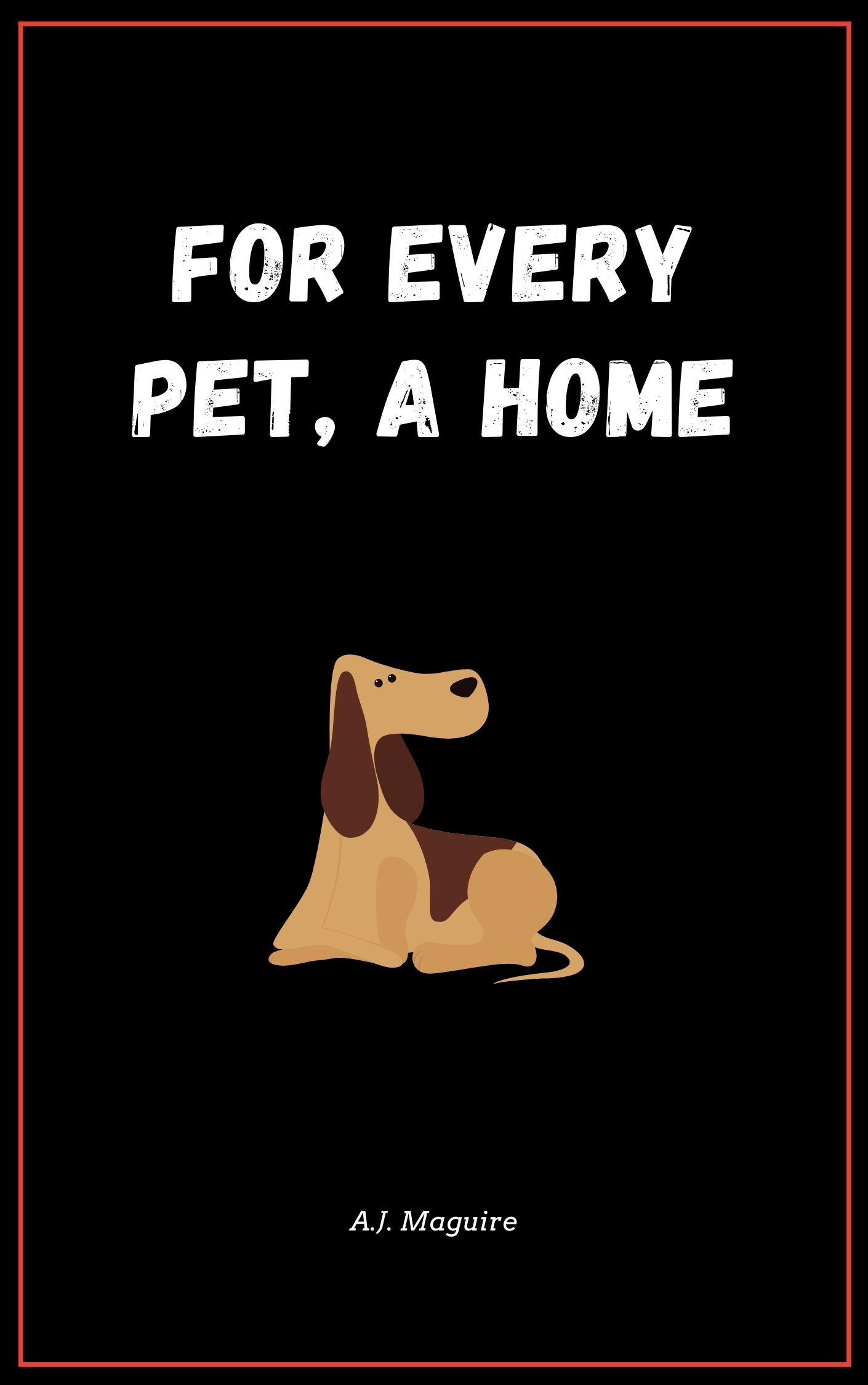
So I will be editing my Shelter novel. Which has a new title; For Every Pet, A Home.
I’m not married to that title.
For now it will do.
It is, quite obviously, about an animal shelter. And yes, it draws off personal experience having worked in one, but no it is not a biography. It is also 100% different from anything I have ever written. It’s modern. It deals with right now. It doesn’t have ghosts or magic or any such thing in it.
Unless you count the magic a dog possesses when they put their chin in your lap.
It’s about faith and relationships and the lessons we learn by simply caring for a creature that needs our help. My time at the shelter was precious to me and I deeply admire all the people who can work in that field for the long term. It is, quite frankly, the most difficult job I have ever done – and I was in the Army.
The emotional toll it takes to greet that animal who is being surrendered for the first time, who is scared and lost and doesn’t understand what is happening, still makes my chest squeeze tight sometimes. This is not a job for the faint of heart and I do pray that this book, once it is completed, is a proper salute to animal shelter workers across the globe.
(A brief peek into this odd-ball brain of mine since the beginning of the current work in progress.)
Me: Alright! It’s an urban fantasy about a marital counselor to the supernatural. Werewolves, vampires, and all those magical creatures! It’ll be great.
Internal Editor: You can’t be serious. Urban Fantasy is full of women in tight leather pants running around killing things.
Me: Well, Nora is a counselor so she won’t wear tight leather pants unless she wants to.
Internal Editor: You need more romance. Romance sells.
Me: It’s all about romance! She’s a marital counselor so she’s helping people reconnect.
Internal Editor: Readers want to see her happy too, not just the people she’s helping.
Me: I’ve got that covered. Derrick King is the romantic interest for her.
**Several weeks into the project**
Me: I should change this to alternate history steampunk.
Internal Editor: That doesn’t sell.
Me: I don’t care. I like the premise, I like the 1890’s…
Internal Editor: They didn’t have marital counseling in the 1890’s.
Me:….
Internal Editor: Research if you like. I’m not even sure women could vote back then. The clothes are weird too.
Me: (after some research) Maybe she’s just an empath and a counselor and the rules for Fairy are vastly different than the mundane?
Internal Editor: Still doesn’t sell. Even if you manage to make this believable.
Me: If I cared about what sells better I’d be writing straight romance novels with all the steamy scenes that make standing in the same room as my mother difficult.
**Makes the change from Urban Fantasy to Steampunk Alternate History**
The Orange Beast
Internal Editor: We’re nearly done!
Me: Maybe I was wrong. I can’t feel this setting. Maybe I forced this steampunk business and broke the whole story.
Internal Editor: The outline looks fantastic. You can worry about that on the next pass.
Me: But if I stop and go back, alter it all to be urban fantasy again…
Internal Editor: Tempting, but you’re so close to the end, you should finish first and then go back.
Me: And every time I read the blurb it feels like Urban Fantasy.
Internal Editor: Probably because you wrote the blurb when you still thought it was urban fantasy. Finish the book. Tell the story.
Me: Steampunk alternate history doesn’t sell. If I want to sell this, I should make it young adult. And I can’t have a marital counselor as the main character in a young adult novel.
Internal Editor: … Just tell the story you want to tell, the way you want to tell it.
Me: How would this even be marketed? Did I just waste the last four months of my life on a novel that has nowhere to go?
Internal Editor: It’s only a waste if you quit.
Me: I should just tell the story.
Internal Editor: The way you want to tell it.
Me: Alright then, 1890’s Boston alternate history steampunk. Adult. Because even when I was a young adult, I absolutely did not understand young adults.
Internal Editor: Back to work, lady!
Me: Deep breaths. Just tell the story the way I want to tell it.
I love when the heroes have to battle against all odds and sacrifice all of themselves to reach the end goal. And I love when that end goal is “life as we know it” or Armageddon.
And I love the hero who is plucky and normal but housing some extraordinary power. The “chosen one” or the “you were born to be this” trope. I eat that stuff up when it’s done well.
Sometimes even when it’s done poorly. We can call them popcorn novels for me – great fun but not a lot of substance to them.
The problem is, as a writer, I know it’s cliché.
I know the moment my character reaches a height that she couldn’t possibly have reached on her own, that I’ve crossed into the “chosen one” trope, and while every single fiber of my being is buzzing with delight because I LOVE those stories, I have to yank myself back. Or at least tailor things to try to disguise this trope.
Trenna in my Sedition series – and in that first book particularly – was a chosen one trope. I tried to disguise it with magic amnesia and the fact that she was the General of an army, but it’s there if you look hard enough.
Elsie Delgora in my Witch-Born duology was clearly a chosen one trope – especially in the final novel – but I tried to disguise it with birthrights. This was likely not as well disguised as I’d hoped, but I do still love that first novel… probably because I love the cliché.
And today I’m staring at the final chapters of Darkside of Bright, struggling with the desire to make poor Nora Grayson more than an empath counselor. There are things to like with both versions of the character, and in truth there is a path that I can take where her story becomes a series and more is revealed about her origins with each book, but the writer in me is still conflicted.
What’s so wrong with letting her just be Nora? Draw on the empath, on her ability to read and understand relationships and their complexities, and I get a story about relationships and how they shape us as people.
Let her be more, and I can still get that story about relationships while also opening an adventure that drives into the heart of Fairy. BUT, I fall into the trope hard. So hard it will undoubtedly be mentioned by reviewers. Not that I should permit reviewers to dictate what and how I write, but that’s a whole different conversation. Suffice, even my own inner critic would be on top of this one, sneering at the “unoriginal” “just like all the other books on the shelf” plotline.
At this moment, I am reminded of Stephen King. In his book On Writing, he admits that many people criticized him for writing horror. They asked him why he would waste his talent on that genre, and yet, here he is still writing horror. Because that’s what he loves.
I’m certainly not in the same league as Stephen King, so please don’t think I’m comparing myself to him. But you know what? Even cliché’s and character tropes are a part of a writer’s toolbox. They only go wrong if you’re not paying attention to crafting your novel.
So I’m going to take that trope and play with it. We’ll see where it leads. Maybe only people like me will love it, or maybe I’ll nail it. Either way, it’ll be fun to write.
As of this evening my novelette “Torven” has a completed rough draft. Given its very small length (16006 words) I have been toying around with the idea of giving it away for free or really, really cheap (after it’s gone through a rigorous editing) which has led me to the normal marketing spiel/debate.
I’ve been here before. Often.
In fact, I’d like to say I’ve dipped my toes into murky depths of marketing since Sedition was first published five years ago. (Five years? Really? Sheesh.)
I have not, however, really committed to a marketing plan. Up until this point my focus was on my craft, wanting to just write the next story and grow as an author, and while none of those goals have changed (and never will, because that’s the whole point of taking ownership of your craft) … I can say that I am going to step intrepidly out into the realm of marketing.
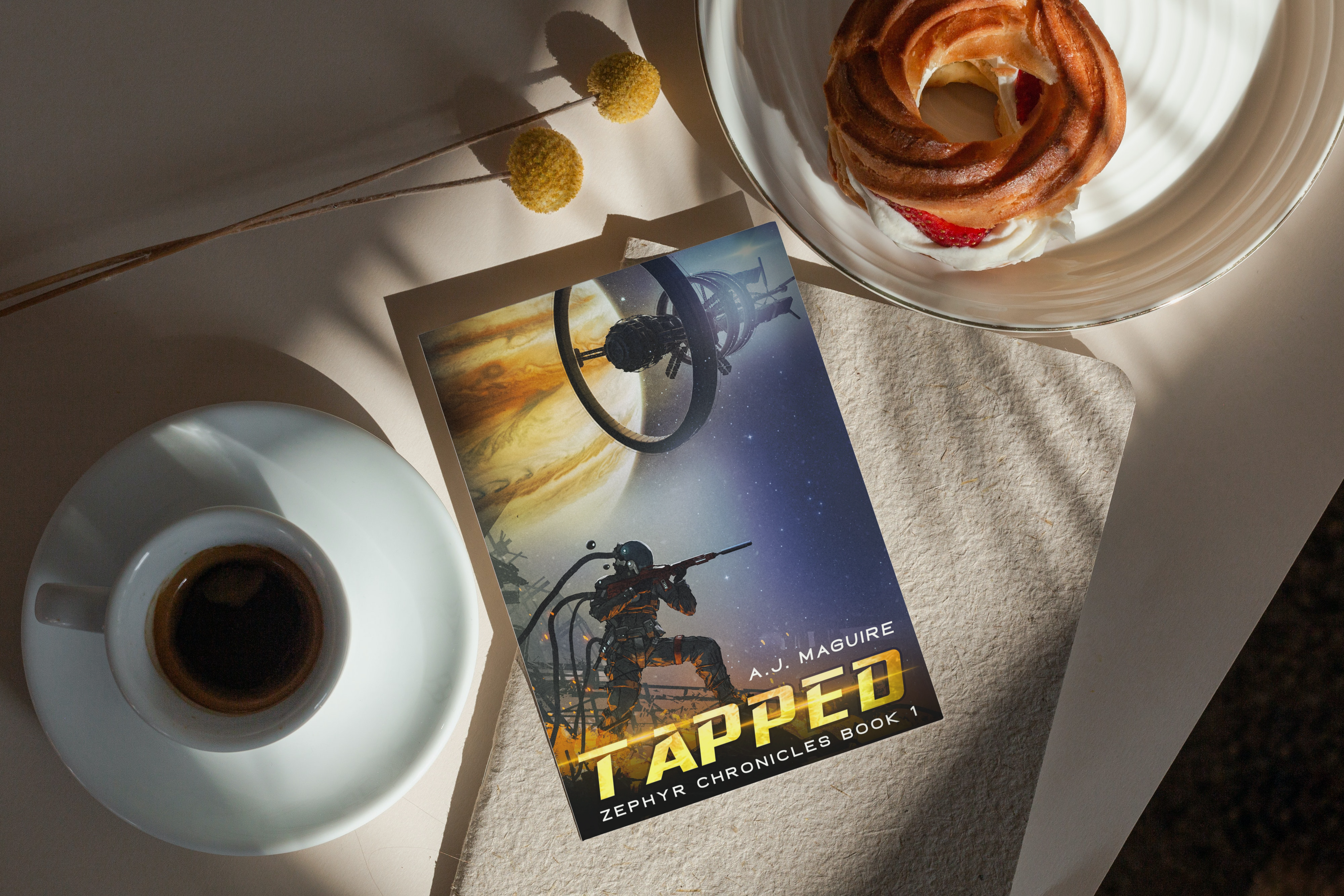
I started, quite comically, with a giveaway of Tapped today on Amazon. The giveaway lasted all of an hour, which … really showed me how bad I am at math. (5 books + every 5th entrant wins = about an hour’s worth of giveaway time. Just in case anyone else needs this information.)
But I learned a great deal about what I want to do in the future. I’ve set up a pretty little timetable to follow for marketing – when I want to do what promotions and at what sites – and even color-coded it … because I’m a geek like that.
I am also in the process of revamping my website … with help because I’m really not great at it.
As to writing itself …
With “Torven” done I can go back to Dead Weight, the sequel to Tapped. I’ll be revamping the outline based on the things I learned in James Patterson’s Master Class (still an awesome thing and if you write, you should check it out.)
Basically, I’ll be going over the outline once a week through the month of April. Start to finish. Tightening the plot. Adding elements of the suspense genre into my science fiction … basically implementing everything Mr. Patterson set out to teach me in 22 lessons.
I’m excited.
It’ll be fun.
And I’ll record all the mayhem here because I can … and maybe it’ll help someone else down the road.
Technically I started this book over a decade ago while working at a Clinic & Hospital. I toted it around in a notebook and copied pages off for my mother since typing on the electric typewriter (shut up, I couldn’t afford a computer back then) took more time than I had.
Yes, she still has those copied pages buried in a closet somewhere and no matter how much I beg her, she refuses to use them for kindling.
Mothers, you know?
Anyway, seven drafts and a decade later I finally, finally have a completed story.
Many will remember that the original re-write was posted online, chapter by chapter, in 2013 but I hired an editor (like you do) and he loathed the ending so much I had to re-think what I was trying to do with this particular story.
After many nights with mint-chocolate-chip ice-cream, pouring over his notes and sketching outlines (there were at least a dozen before I came up with the one I used) and after an agonizingly long rehabilitation process from the avocado incident in 2014 (I know how to properly core an avocado now, so there’s no worry for me stabbing myself again) I have learned a great deal about the writing process through this one book alone.
First, I learned that editors are worth their weight in gold. Yes, they’re expensive, but I don’t regret the money I’ve laid out.
Second, and this is going to sound weird, but I work better with Courier New font during the draft process and then turning it into Times New at the end. It’s just a quirk of mine.
Third, sticking to a single point of view is hard. At least for me it is. But forcing myself to do this brought the character into more detail, forced me to dig deeper and really explore who she was and how she felt about what was happening.
Fourth, I must be careful of what I’m reading while I’m in the drafting process because my personal style begins to mimic the style of what I’m reading.
Fifth, I am a romance author. I may have Fantasy and Science Fiction and, now, Historical Fiction under my name but in the end, I am a romantic and I want to see my characters find someone who will support and build them up as people. The romance may not be the focal point of the story, but it is there and I refuse to be ashamed of that anymore.
Now then, this does not mean I’m going to start writing straight romance novels. I can’t. I tried that once and ended up with Witch-Born.
It just means that I’m not going to shy away from it anymore.
Love is an integral part of human life.
I mean, even Star Wars has romance in it.
I can write things like that. I enjoy writing things like that, so I’m going to.
I’m so happy to be joining the Round Robin Blog Hop this month. This month’s topic discusses social/current event issues that are important to me and how, when, or if I allow them to seep into my fiction.
Let me start off with admitting that I definitely allow social issues to be addressed in my fiction. Anyone who has read my work, particularly my science fiction, will have noticed this for certain. Deviation, for example, has the very blatant conversation about women’s rights. Tapped is the start of a much larger conversation on religion that will be spanning several novels. The Abolitionist (which I’ll start later next year) is fairly self-explanatory.
All of these issues are very important to me and I believe that every author has the responsibility to say something with their fiction.
However …
I also believe that every author has the responsibility to thoroughly research, understand, and clearly provide counterpoints to any social issue they address in their writing.
I shy away from making my personal opinions known here on the blog because honestly, I hate fueling the fire for these sorts of debates. They’re pointless and detract from the more important social issues that we should be spending our energy debating and attempting to fix … like homelessness, children living in poverty, the fact that some employment applications (or other legal forms) still ask for your “ethnicity” and therefore support a racist social structure, or the shameful amount of people going hungry everywhere …
But all of those things I can and do address in my writing. I “address” them, but I do not answer them because honestly, if I’ve written it right then I won’t have to.
Readers don’t need me to tell them poverty is bad, they already know it. My job as an author is to help somehow bridge the gap between the Reader and that poverty, to help them experience it so that they understand why poverty is bad.
This is terribly idealistic of me but I truly believe that we can change the world. Books can change the world. Stories can change the world. Authors … can change the world. Not by telling the world what to think, but by exposing these issues for what they are and bringing them forward in a terribly intimate way.
Have a look at what some of my fellow authors believe in and write about in today’s Round Robin Blog Hop …
I know there are lots people out there who just plain won’t write if they do not have the proper inspiration. They follow their creative muse and lean heavily on the concept of being an artist, and those things are true. Writing is an art and yes, sometimes you just plain don’t want to write.
I’m not talking about those moments when life steals your writing time. I’m talking about those moments when you sit down at the computer for your designated 2-3 hours of writing time and just don’t want to do it. The words feel stale in your mind, feel stale when you get them on paper, and you think that a thousand other authors could write this better than you are right now.
How do you push through that?
Well, I imagine it will be different for each person but I can tell you a couple of things I’ve learned about myself.
1) These moments do not last for only a day.
If I allow it, this feeling of drudgery can last for months at a time. So when I discover myself stuck in one, I have to take measures immediately. Sometimes this means going for a walk, cleaning the house, going to the gym or jumping in a pool. Anything where my brain can wander wherever it wants.
2) Rely On Craft
Yes, it does feel like I’m slogging through my work when I’m in this particular mindset. Yes, I groan and grump and get only a little bit of progress done on my manuscript. But the truth is, if I write anyway then I find myself looking at the work through the mindset of my craft, instead of the mindset of my muse.
Yes, it’s hard.
However, when I look at the work through the mindset of my craft I generally find a solution that would never have occurred to me any other way. It zooms the creative lens out and forces me to think outside of the character and onto the book as a whole, which produces a far stronger book.
The awesome thing about relying on my Craft, is that eventually something sparks and the inspiration snaps back into place. It might take several weeks, but it’ll get there and I’ve learned to have faith in that.
3) Read
When I start feeling unmotivated, I start reading anything and everything I can get my hands on. Fiction, Nonfiction, News, Poetry, literally anything in my path I will read. This not only stores new concepts and story ideas somewhere in my subconscious, but it makes me a better writer when that motivation finally does return.
4) … And this is going to sound terribly geeky … Play a Genre specific game
If I’m writing a science fiction, I will play wither Star Wars or Star Trek. If I’m writing fantasy, I play Dungeon Siege. Historical Fiction … well, I haven’t found a game for that one but I do watch tons of WWII movies and documentaries. My creative mind soaks up the visuals of those games (and/or movies) and often bounces me right back into wanting to write again.
And that’s it. Those are my four steps to getting back into the swing of things. Generally, I do all four. They aren’t a guarantee that my muse will start working again quickly, but I know that eventually it’ll come back. The main focus is that I keep writing regardless because I know that my Craft is capable of moving forward.
Every book teaches me something. Even the books I hate teach me what I want to avoid in my personal writing.
I might rage about certain aspects of the story or throw the book across the room when I’m done with it (if I have it on hard copy instead of Kindle, of course) but in the end I always learn something.
Perhaps the most humbling moment is when I pick up a novel that I wrote years ago and see, quite clearly, everything I did wrong. There’s nothing more heartening or heartbreaking than that moment.
Heartening because it means I’m growing as an author and my craft has improved. Heartbreaking because the text I loved so much back then … I kinda loathe now.
I’ve come to expect this moment in the writing process so when I picked up Persona to begin editing I had myself braced for impact, you know? But sometimes the “impact” is really a “click” in the brain that recognizes a broader problem and I sit back and go … “Oh, I get it now!”
The proverbial light coming on in the brain.
The moment in school when algebra suddenly made sense.
Or, in this particular case, the realization that my text isn’t breathable. It isn’t livable. The character might be sympathetic, a woman I admire and want to emulate in my real life sometimes because she is so kind and she does overcome her own fear while facing down terrible circumstances, but the narrative itself doesn’t breathe.
I’ve identified this as a “lens” problem.
A “lens” problem in the writing world is a matter of distance between the character and the narrative. In this case, my lens was too tight on Megan and I wasn’t taking into account the setting, tone, or secondary characters.
On the one hand, this makes Megan very clear as a character but it also makes the world feel flat.
So!
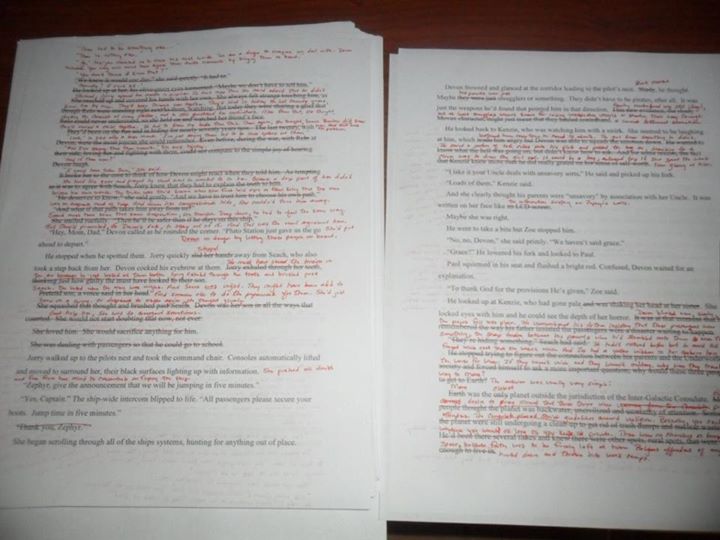
I’m adding to my writing toolbox today and throwing the “narrative lens” in there as a means of bringing the world and setting to life. Don’t get tunnel-vision with the character because the character is informed and influenced by the world around them.