Tag: fiction

  • Character Auditions – WE Master Class Blog

    Two weeks ago I mentioned the Writing Excuses Master Class put out a few years back. This is a free class that you can access via audio or transcript on the Writing Excuses website and I recommend it to anyone and everyone who enjoys the writing process.

    Moving along in the course, I have my initial idea: a new app that can be downloaded directly into our consciousness goes horribly awry. Famous fictional characters bleed into our victim’s minds and take over, bringing new life to some of the more heinous creations in literature as well as the heroes meant to catch them.

    I recognize that I’m going to be reading a lot of classics to widen my scope of literary characters I can choose from. The low-hanging fruit, in this case, would be Sherlock Holmes and Moriarty and I think I’m going to go ahead and use those two, if only as introductory players that help the narrative get moving.

    The next assignment was character auditions, which is a new concept for me. Normally the character comes before the idea, and the plot grows out of what I know about them. This is an organic process that I have enjoyed over the last decade of writing, but I’m going to admit that I enjoyed doing character auditions.

    The act of trying different voices helped broaden my understanding of the idea as a whole. From the surly detective who has to figure out which character is infecting which avid reader, to the dirt-poor boy who hacked his way into downloading the app, I was able to explore different ways this story could go.

    In the end, I was stuck between two choices, which I will share now.

    Detective Josephine Margot, first person POV. When writing out her first 500 words, I got a Blade Runner/Johnny Mnemonic feel to the narrative that I liked. She’s a cynical woman who gets called to a murder scene on a prominent college campus, which she is equal parts annoyed about and relieved to be working. Because as long as she’s on this case, she doesn’t have to be downtown at her brother’s wedding.

    Makenzie Leeds, third person POV. When writing her first segment, I got a lot more humor, which I enjoyed because I always enjoy humorous voices. Also, I grabbed the low-hanging fruit and had her infected with Sherlock Holmes. In this scenario, she’d downloaded the app as part of an extra credit assignment and found herself plagued with an additional voice in her head.

    I may bounce between the two before I settle, depending on what the assignments show me in the coming weeks. Until then, I’ll play around with Jo and Kenzie and see if maybe I can blend them together.


  • August Round Robin – Creation of a Writer

    When we last visited the subject about what prompted our writing careers, I mentioned an assignment from the sixth grade where the teacher read the opening of a story and then told us to write what came next.

    While I still consider that assignment the launching point for my love-affair with the written word, there were other influences too. I’ve always been a dreamer, letting stories play themselves out in my head, but I didn’t always love reading.

    Or at least, I didn’t love finishing a book. I liked getting started, being introduced to impossible worlds with magic and mayhem, but I didn’t always connect with the characters on the page. When that happened, my happy brain took off and made the story my own, adding characters that I enjoyed better.

    I suppose that could be seen as an early form of fanfiction, but I was in grammar school so I can live with that. And really, I didn’t start writing them down until that fateful assignment in the sixth grade.

    I really should track that teacher down and thank her.

    Throughout high school, I kept a special notebook that held all sorts of stories in it. Mostly fragments, scenes that came to me in the middle of class that entertained me. It wasn’t a full novel, not even a short story because there was no structure to the notebook.

    To look at it now, it seems a testament to my own personal attention deficit disorder. A scene begun on page five was interrupted by a series of scenes about an earthquake rattling the school, forcing me to become the hero and help lead my fellows out of the rubble.

    So what got me from that chaotic fictional buffet to full novel writing?

    To be honest, I think it was my mother’s electronic typewriter. And I know mentioning that archaic bit of machinery is likely to date me, but I’ll own my age for the day.

    One of my earliest stories was written after we visited family in Alaska. I loved the cool air and rugged mountains and vast seascapes that we saw there and, per typical youthful exuberance, commemorated the visit in fiction. As with everything back then, I focused on the people in my life, so the main characters were none other than myself, my brother, and my cousins.

    But what I remember most about writing it, was sitting at the absurdly large desk in the living room and pressing the keys on that typewriter. Something about the whirring-snap sound it made every time I hit a letter filled me with absolute glee.

    There was a permanence to the story I was writing. It was there in the whirr-snap of every letter, my own personal mark in the world.

    This is probably why I have a very noisy keyboard. It may not have the same whirr-snap sound of the typewriter, and I can delete things almost as quickly as I write them now, but the sense of accomplishment is still there.

    Check out what my fellow authors have to say about what started their writing careers in this month’s Round Robin…

    Connie Vines http://mizging.blogspot.com/
    Victoria Chatham http://www.victoriachatham.com
    Skye Taylor http://www.skye-writer.com/blogging_by_the_sea
    Judith Copek http://lynx-sis.blogspot.com/
    Dr. Bob Rich https://wp.me/p3Xihq-1ke
    Beverley Bateman http://beverleybateman.blogspot.ca/
    A.J. Maguire  https://ajmaguire.wordpress.com/ (YOU ARE HERE)
    Fiona McGier http://www.fionamcgier.com/
    Margaret Fieland http://margaretfieland.wordpress.com
    Rhobin L Courtright http://www.rhobinleecourtright.com

  • Violence in Writing – July Round Robin

    Anyone who’s read my writing can tell you that I use violence a lot in my work.

    We don’t call it that, though.

    We say it’s “action-packed” and full of conflict because the word violence tends to connote negative things. And really, it should.

    As a parent, I find myself repeating the mantra that it is never all right to hit, that there are better ways to solve our problems. Because I don’t want to visit my son in prison one day.

    But in my writing, the violence runs rampant.

    My first novel, Sedition, starts with a duel in a tavernesque place. My second novel, Witch-Born, starts with an assassination attempt on the main character’s life in the middle of a crowded cafe.

    Deviation begins with a hold-up in a bookstore.

    Granted, those are all early works and there are a lot of things wrong with them. I really held to the “in medias res” concept and I recognize that it’s hard to care about a character being shot at if you don’t know who they are.

    These days I try to focus on how the violence affects my point of view character in any given scene. While it was fun following Dorian Feverrette through the steampunk world of Magnellum as he hunted witch-assassins, I can admit that I never stopped to consider what sort of man that made him.

    The truly interesting heroes are the ones who commit to violence and are then affected by that violence. We see them walk a tightrope between wanting to live in peace and needing to fight for that peace.

    This tightrope holds a great deal of tension and opens up the character for deeper development. I’m still trying to find the right balance between action and the effect that action has on the character, but I hope to learn it soon.

    Check out how my fellow authors work with violence in their novels.

    Dr. Bob Rich https://wp.me/p3Xihq-1i2
    Victoria Chatham http://www.victoriachatham.com
    Connie Vines http://mizging.blogspot.com/
    Anne Stenhouse  http://annestenhousenovelist.wordpress.com/
    A.J. Maguire  https://ajmaguire.wordpress.com/ (YOU ARE HERE)
    Marci Baun  http://www.marcibaun.com/blog/
    Skye Taylor http://www.skye-writer.com/blogging_by_the_sea
    Fiona McGier http://www.fionamcgier.com/
    Anne de Gruchy https://annedegruchy.co.uk/category/blog/
    Rhobin L Courtright http://www.rhobinleecourtright.com

    Judith Copek, //http://lynx-sis.blogspot.com/

  • What I Learn from my Characters – February 2018 Round Robin

    Characters are a bit like the writer’s pox. Instead of itchy red dots all over our skin, we have itchy personalities peppering our minds. Some are louder than others and we end up scratching those first because no matter how many times we’re told we shouldn’t scratch, the itch cannot be ignored.

    As we scratch, fleshing that character out on the page, their voice becomes clearer and their story apparent. Often the process draws blood, a mix of fiction and fact that bleeds onto the page until it is difficult to distinguish between character and author. Neither would exist without the other, after all.

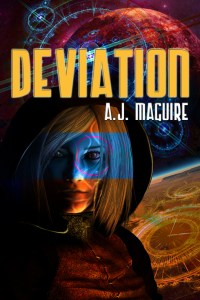
    In my novel Deviation I have two women abducted through space and time, one a writerdeviation-510.jpg and one a mother. The writer finds herself being hailed as a prophet for things she wrote in her fiction, which was a horrifying thought for both the character and me, the author.

    If you’ve read any of my work, you’ve seen the horrible things I put my characters through. I’m pretty sure most would want to kill me if they were real and standing in my apartment.

    The other character, the mother, is desperate to get home to her family. She has a young son who needs her and she has to get back.

    Midway through my revision of the novel I realized I had written my real life struggle into the plot. You see, at the time I was a new mother. My son was only months old and I felt like I was two people – a devoted mother who wanted nothing more than to see to the needs of my son, and an author who needed to carve out time to write.

    As I completed my revision of the novel, I came to an understanding that has carried me through the last ten years of my son’s life; both the writer and the mother are essential parts of who I am as a person.

    While the novel never addresses this personal journey, the ending still reminds me of the lesson Reesa and Kate taught me. I will always find a way to write, and I will always be a mother.

    See what lessons my fellow authors have discovered through their characters in this month’s round robin…

    Skye Taylor http://www.skye-writer.com/blogging_by_the_sea
    A.J. Maguire  https://ajmaguire.wordpress.com/  (YOU ARE HERE)
    Marci Baun  http://www.marcibaun.com/blog/
    Marie Laval http://marielaval.blogspot.co.uk/
    Judith Copek http://lynx-sis.blogspot.com/
    Dr. Bob Rich https://wp.me/p3Xihq-1c1
    Rachael Kosinski http://rachaelkosinski.weebly.com/
    http://rachaelkosinski.weebly.com
    Beverley Bateman http://beverleybateman.blogspot.ca/
    Rhobin L Courtright http://www.rhobinleecourtright.com

    Fiona McGier http://www.fionamcgier.com/

  • The Character-Driven Plot


    IMG_1186
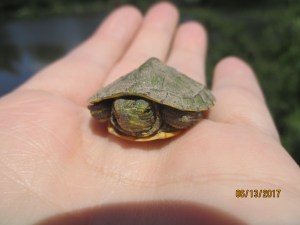
    Here’s a baby turtle for the heck of it.

    I began writing Song of Swans several months ago and was determined that it would be more character-driven than my other works. I wanted to get into the depths of my characters, to follow them and find out what happens via their actions.


    This means that my outline has been smacked around quite a lot. I am currently on chapter five, but the things happening in it are things I meant to have in chapter three.

    There are some people who would say that if it is truly character driven then I wouldn’t need an outline at all, I would just discovery write (aka – go by the seat of my pants) but I have found that I need an outline in order to get to the finish of a book.

    SO!

    For those of you fellow Outliner’s who might be reading this … I learned a trick that I thought I would share.

    You see, once I finish writing the chapter – the actual chapter, not the outline – then I go through and I highlight all the things that have happened to my character and make a note of it in the margin. Then I go through everything that’s happened and I write down in my OUTLINE for the next chapter the things that still need to be addressed.

    Example …

    Cassy steals something in chapter 1. She isn’t a thief so there was already a debate about taking said item, but in the end her curiosity and hunger won out. MARGIN NOTE: Item has not been fully investigated yet.

    Chapter 2 has her on the run, trying to get someplace safe before she opens said item and

    IMG_0853
    And some baby geese, too.

    sees her loot. Unfortunately, she gets caught. MARGIN NOTE: Cassy got knocked on the head pretty good and likely has a mild concussion. ITEM STILL NOT INVESTIGATED.


    Basically, anything highlighted in the margins of the previous chapter needs to be addressed in some fashion during the next chapter. Even if I don’t want to answer it yet, I have to at least mention it somewhere in the narrative.

    This has had an unexpected benefit. While I might moan about the fact that I’m two full chapters longer than anticipated at this point, the flow is remarkable. I had always meant for the characters to get to where they are now – currently huddled in a cave, suffering from shellshock – but what is happening on the page is far deeper and makes more sense than what I had originally outlined.

    Another thing I’ve had to do is take a step back, breathe, and really put myself in the room with my characters, to let them lead and show me what happens next.

    As an author with several published novels under my belt, it seems strange that I would only just now be coming to this point in my writing, but it’s true. And the difference is undeniable.

  • Weather and World Building

    img_0486
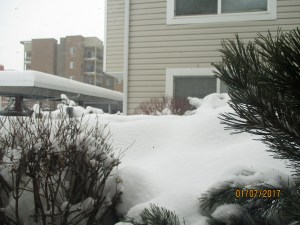
    So much snow.

    It seems that Mother Nature has decided to kick off 2017 with a laugh. My son has not been back to school since leaving for Christmas break and we’re both getting a trifle antsy about that.

    I got stuck in the snow twice already and we just got even more, which is just … glorious.

    But as with everything, this brings to mind writing problems and techniques. Specifically weather patterns.

    Weather has an impact on characters and setting and even plot in a novel so it’s important to pay attention. Currently I’m world building for a novel tentatively titled Swans, which is a High Epic Fantasy … if you want to get technical.

    As I was world building I came to a mountain range and at first I envisioned tons and tons of snow because … I’m currently surrounded by the stuff. But then I remembered that scene from Lord of the Rings where they’re climbing the mountain through the snow and Legolas is leaping lightly on his elegant elf feet and snow is matting in Gandalf’s manly beard and …

    img_0482
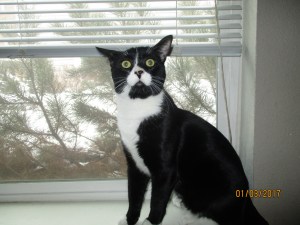
    Nuisance looking quite unsure about the snow

    Yeah.

    I think just about every fantasy novel takes a walk through waist deep snow on a summit somewhere.

    Well, not every one. But certainly a lot of them. And while it might be a beloved cliche, it’s also something I want to try to avoid. I don’t want readers thinking; Same old, same old. Girl hasn’t got an original thought in her head.

    So!

    I changed some of the weather patterns for the novel. Not tons, but enough to make it different (I hope).

  • Problem Characters and How to Negotiate

    Since beginning Usurper I have had one character in particular who troubles me; Evaliana Auliere Dyngannon.

    Nice long name, I know. She goes by Liana, for obvious reasons. Who wants that mouthful every time you’re being spoken to?

    Liana and I constantly have issues, which I know makes me sound insane but I’m an author so I’m allowed. (I hope.) But when push comes to shove, every time I try to write in her point of view I end up hating the scene.

    Loathing the scene.

    It’s too shallow.

    There’s not enough oomph to the character.

    I don’t know her the way I know Trenna (her mother) or Nelek (her father) or even Kaden (her brother). She’s this … anomaly outside of her family.

    Or inside it, however you want to look at it.

    She is … angsty.

    And I hate angsty.

    Seriously, I avoid angsty with all my power.

    But as I’m going through this edit I’ve come to the understanding that … I’m going to have to deal with angst. In order for Liana to be a three dimensional character on the page, she has to be allowed to explain why she’s so … arrrgh! About everything.

    So …

    I keep her scenes fairly brief.

    I just have to. For my own sanity.

    Until she grows up and gets over herself, she has a limited word count. (This is part of the reason I don’t do the Young Adult market all that well, can you tell?)

    In return, I let her angst all she wants for that limited word count.

    And then, once the angst has been written/edited/dealt with in some manner, I get chocolate.

    Boom.

    Those are my negotiations … with my fictional character … who only lives in my head and on the page …

    Yeah, I know how crazy it sounds.

  • Round Robin Discussion – Scarring your characters

    This month for the Round Robin topic we are talking about emotionally scarred characters. The questioned posed is; “What mental, physical or spiritual wounds or scars have you used in your stories?”

    The truth is … we all have scars. Whether they’re big or small or whatever, we have them. They define us as people. And the same should be said of any fictional character.

    Now as a writer I don’t sit down with a particular “scar” in mind for the characters I’m dealing with. It’s really a discovery process for me. But once I’ve discovered that particular “wound” in my character’s personality I make sure to highlight it during the editing process and really draw it out.

    Because being a writer is really being a student of humanity. We’re here to show what it is to be human and touch on subjects, both painful and joyful, that are often too complex to be fully expressed.

    But which scars have I actually used?

    Well, Trenna Dyngannon (Sedition series) had a serious issue with her mother that was really brought out in the second book of the series; Saboteur. Basically there was neglect and self-worth issues that Trenna had to battle through, which I found very interesting given how very strong Trenna is as a character.

    One wouldn’t expect someone like Trenna Dyngannon to feel a sense of inadequacy, but due to close contact with her mother she finds herself struggling to remember that she isn’t actually defined by what her mother does or says.

    In the Tapped series, both Seach and Jorry are deeply scarred by the fact that they had to abandon their former Captain. Relo’s absence is a deep burden for both of them given that they know exactly what has been done to him at the clutches of the government.

    On top of that, Jorry and Seach are haunted by things that happened during the war. Moments that they wish they could forget, and truly traumatic orders that they found themselves bound to follow. This particular scar carries through the whole series (I’m in the middle of writing the second book now) and, inevitably, will come to a crisis point where they have to make a decision to either fight again, or try to find some other way to change the galaxy as they know it.

    But perhaps the most noticeably scarred character of mine is Reesa Zimms from the book Deviation. Reesa is a science fiction novelist who has used her writing as a means of therapy for herself (no, this is not even remotely autobiographical, I promise) and in the book … well … let’s go ahead and give a snippet. I haven’t done one of those in ages.

    “I’m dying, Matt,” she whispered.

    She felt him move to her side, felt his knuckle graze her cheek, and heard him sigh.  “David is very good at what he does.  You should have a little faith,” he said.

    Opening her eyes again she met his gaze. “And why should I be spared from a fate I forced onto the whole female race?”

    He frowned, gently pushed a lock of hair behind her ear, and made a thoughtful hum.  She waited for his answer, praying it would be right.  She needed him to have an answer, to have some form of redemption for her.  Perhaps justice was served in her death, but even death-row inmates were given a chance at clemency, weren’t they?

    A final prayer, a last wish, she thought.

    “I think we’ve come to the matter of your own motivations, Reesa,” he said. “Tell me why you really wrote the books.”

    Her heart might have stopped at the sudden wash of pain.  She certainly wished it would.  Fixing her gaze on the juncture between wall and ceiling above them, she was transported through her memory, to the small clinic exam room when she was eighteen years old.  Her mother’s voice rang loud in her ears, calling her irresponsible and thoughtless, convincing her that a child would ruin eight years of modeling competitions and progress.  And in her hand, Reesa could still feel the coarse, politely brown paper bag of contraceptives she’d been given after it was all over.

    Matt made a soft, soothing sound and wiped the tears from her face.  Reesa closed her eyes, unwilling to look at him as she made her confession.

    “I wrote a book where everyone was as ugly as I felt.”

    Take a look at what others are saying about scarring their characters!

    Skye Taylor http://www.skye-writer.com/blogging_by_the_sea
    Victoria Chatham http://victoriachatham.blogspot.ca
    https://bobrich18.wordpress.com/2016/08/27/the-wounded-healer
    Rachael Kosinski http://rachaelkosinski.weebly.com/
    Anne Stenhouse  http://annestenhousenovelist.wordpress.com/
    Helena Fairfax http://www.helenafairfax.com
    A.J. Maguire  https://ajmaguire.wordpress.com/ (YOU ARE HERE)
    Fiona McGier http://www.fionamcgier.com/
    Rhobin Courtright http://www.rhobinleecourtright.com
     

  • Confronting Reality

    In the last couple of weeks I’ve revisited Les Miserables. I do this every now and then because the story is rich and the music is beautiful and, while supremely tragic, it confronts a profound reality that forces me to stop and think about my life.

    Each time I revisit the story I find myself connecting with a different character, be it the greedy inn-keeper or the criminal on the run or the single-minded officer, and each time I sit back and ask myself how I can make such vivid, real characters in my own fiction.

    This time, however, I came to the conclusion that I can’t make such characters because I am unwilling to break my own heart.

    For example, Fantine and Cosette.

    As a mother, I can’t imagine being separated from my child for any real length of time. The very idea squeezes something in my chest and I have to shove it away. Moreover, as a daughter I cannot imagine losing my mother while she is so far away.

    It hurts to even think about it.

    Comparatively speaking, I have lived a very charmed life. My parents may be divorced, but they are both alive. I may be a single parent, but my son is healthy and strong and full of adventure.

    How then does someone whose life has been so blessed even begin to settle into the mindset of a character who has had none of these things? How do I push past the heartbreak to really hear the character and what they have to say?

    Beyond my own cowardice at living in so dark a place for the length of time it will take to write this sort of character, there is a fear that I will get it wrong.

    Rather than writing a character whose tragedy draws readers into the same introspective state that Les Miserables manages to give me, I fear that if I attempt writing this way that my own pity for these characters will shine through and thus cheapen the whole experience.

    Yes, what happens to Fantine is pitiable, but you never lose sight of who she is in the story.

    And that’s the balance I am trying hard to find as an author. I need to be able to confront the ugliness of the world without losing the beauty in the people. And in order to do that, I have to put my big-girl pants on and be brave enough to break my own heart.


  • Killing the Hero

    I’ve killed off characters in my books. There are several in particular who I mourned as the author, and still others who I really hadn’t noticed. It seems to be a popular past-time in fiction to strategically murder personalities that we, the readers or viewers, have fallen in love with.

    I know everyone hated to see Coulson go in Marvel Avengers, myself included. But then, Joss Whedon has made a name for himself as one of those directors who has no qualms offing a beloved character for the sake of driving up tension. But, of course it’s more than that.

    Yes, the tension goes up, but it also has a profound effect on all the other characters on either the page or the screen. As storytellers, we’re told this is good. And in part it is. Life is not without loss, and storytelling is an art that is at its heart about life in all its gritty, beautiful detail.

    However …

    It’s becoming a cheap trick.

    Without spoiling dozens of popular stories across several venues (TV, Movies, Novels) I can say that I have seen no less than 7 traumatic deaths in the last couple of years alone. Some of them I even knew were coming at the very start of the story, which is a problem in and of itself.

    As a storyteller myself I have to sit up and take notice. While I understand the impact a death like that has on the story-line and on the other characters, I have found myself sitting back as a reader/viewer feeling cheated and manipulated by the author/director.

    This should alarm us.

    We are becoming desensitized to this sort of story mechanic. That’s not to say we can’t keep using it, but more to say that we must be very, very careful when we do. If we must kill off a beloved character, then it has to hit our emotional buttons on every level. It has to mean something both to us as authors and to the story itself, or our readers will feel the cheapness of it.