Tag: Novels

  • Writing in the First Person POV

    There was a time I swore I would never write First Person POV outside of my own journal. To me, the lines between author and character blurred far too much, which is likely because my first attempts at writing were done in this vein. Back in the 6th Grade – yes, that’s when I first started scribbling stories down – it was easy to write that way because I was the hero.

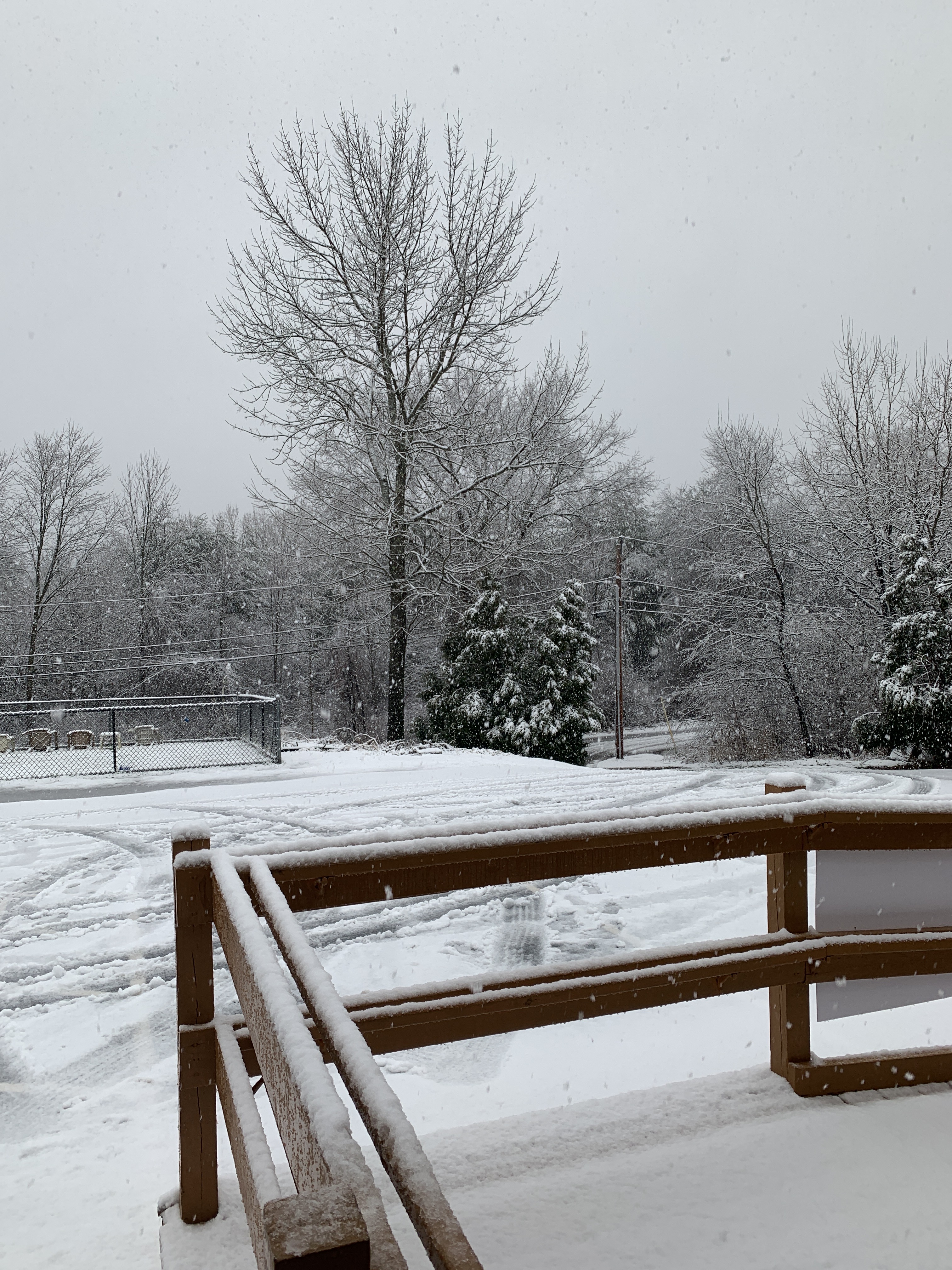
    Peeping out the window during the storm.

    I was the warrior princess scaling the mountainside, intent on visiting the wizard.

    I was the dragon slayer.

    And the character had no true development because my still-developing brain was focused on the adventure and not the true story. Because at the heart of every story is a character who must grow in some way. If that growth does not happen, you have cool set pieces and neat action sequences, but no real story.

    That isn’t to say I haven’t tried first person POV since abandoning it as an endeavor of my youth. Persona’s first drafts were done in the first person. I’m not sure why I changed it, other than I thought a requirement of “real stories” that it be in the third person limited.

    Two decades later and I’m sitting before my computer, writing in first person POV with a character named Nora Grayson who is most assuredly her own person. While I have given her empathy as her superpower because I am a deeply empathetic person, that is really the only thing that I can point to and say for certain it came from me. And she is growing.

    Not only that, but I find her delightful.
    So delightful that I am far and away over my projected word count. I enjoy lingering with her late into the evening, when I should have closed up my laptop and called it a day. The entire world she is seeped into is a place I want to visit, which admittedly isn’t difficult because who doesn’t want to visit the land of Fairy?

    Point of View is just another tool in the writer’s toolbox, and I’m glad to have finally learned this lesson. I cannot imagine Nora’s books without her clear voice on the page, and while there are arguments to be made that adult novels steer away from the first person, what it ultimately comes down to is what story you’re telling. When taken as a whole, this series of books could not be told without Nora as the central “I” shown on the page.

    Happy Writing, everyone.
  • Happy December!

    With NanoWriMo 2021 officially over, I can report that during the last 30 days I not only managed to edit one novel to its completion, but two. And then I started working on a third.

    Because why not?

    The two novels I edited took about a week and a half a piece, with dedicated writing times that ran past dinner and forced me to get creative with feeding the family. (One must never, ever besmirch their slow cooker.)

    This success has led me to prepping for the infamous #PitMad that will happen on December 2nd. I will admit that this is my first real attempt at the Twitter party. I want to say I tried once before with Melody of Bones, but didn’t fully understand the rules. I only pitched it once that day and apparently you’re allowed 3 pitches per book during the allotted timeframe.

    For those who are unaware of #PitMad, you can find all their information here.

    I only recently learned of this neat little Twitter party last year or so, but I’m sure there are more people out there who hermit themselves away as much, if not more, than I do. If you’re one of them, I promise to report my findings for this party and you can decide for yourselves if you want to join in the next one.

    To all who participated in NanoWrimo this year, I salute you. Win or lose, words got on the page. Maybe they’re bad words and you only keep 10% of what you wrote, but the page isn’t empty. Let’s work with that.

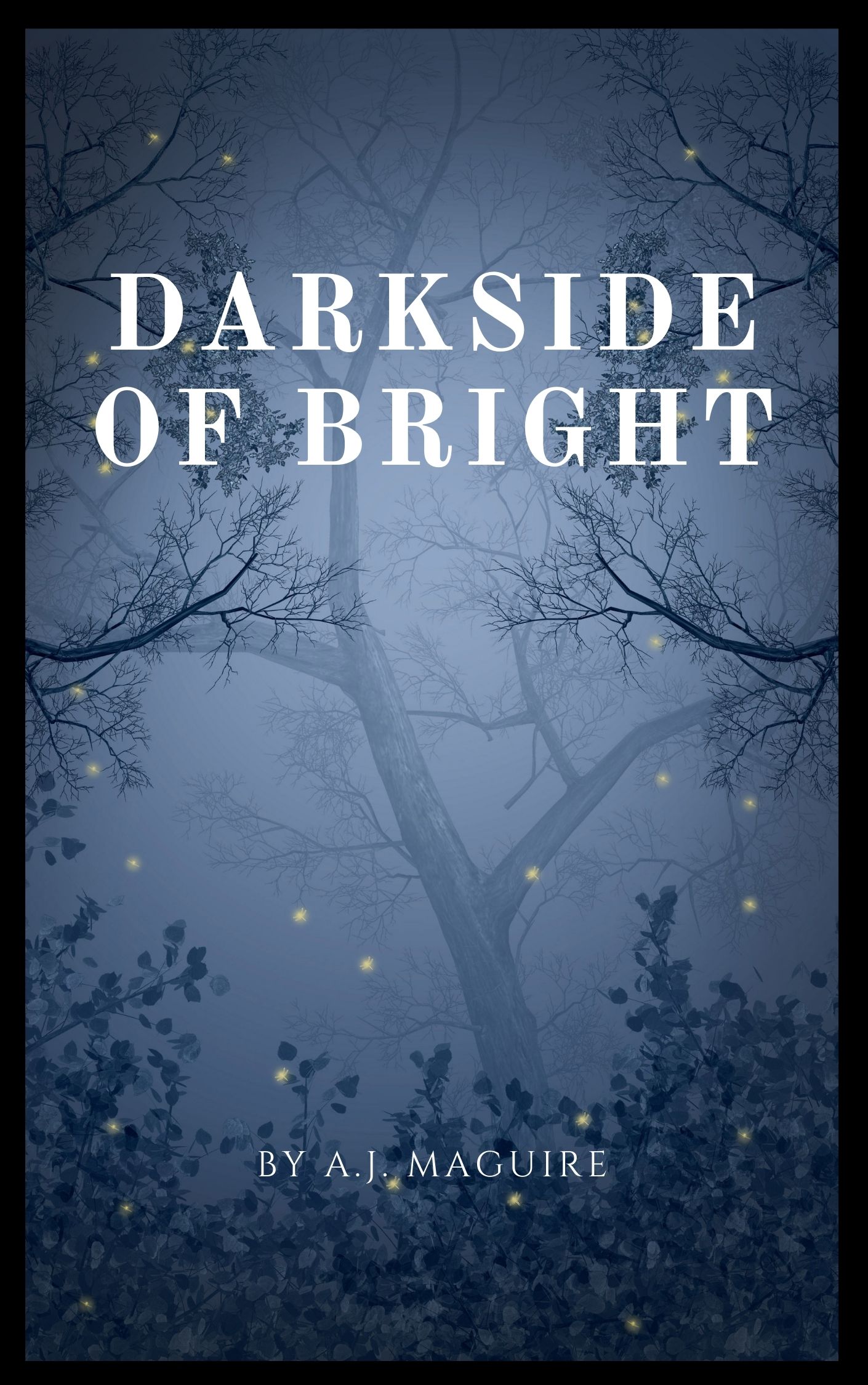
    Oh, and just for the fun of it, here are the “placeholder covers” I used during Nano. (Yes, I’m still in a love affair with Canva. Eventually the novelty will fade.)

  • Abandoning or Embracing Cliché’s

    I love high stakes stories.

    I love when the heroes have to battle against all odds and sacrifice all of themselves to reach the end goal. And I love when that end goal is “life as we know it” or Armageddon.

    And I love the hero who is plucky and normal but housing some extraordinary power. The “chosen one” or the “you were born to be this” trope. I eat that stuff up when it’s done well.

    Sometimes even when it’s done poorly. We can call them popcorn novels for me – great fun but not a lot of substance to them.

    The problem is, as a writer, I know it’s cliché.

    I know the moment my character reaches a height that she couldn’t possibly have reached on her own, that I’ve crossed into the “chosen one” trope, and while every single fiber of my being is buzzing with delight because I LOVE those stories, I have to yank myself back. Or at least tailor things to try to disguise this trope.

    Trenna in my Sedition series – and in that first book particularly – was a chosen one trope. I tried to disguise it with magic amnesia and the fact that she was the General of an army, but it’s there if you look hard enough.

    Elsie Delgora in my Witch-Born duology was clearly a chosen one trope – especially in the final novel – but I tried to disguise it with birthrights. This was likely not as well disguised as I’d hoped, but I do still love that first novel… probably because I love the cliché.

    And today I’m staring at the final chapters of Darkside of Bright, struggling with the desire to make poor Nora Grayson more than an empath counselor. There are things to like with both versions of the character, and in truth there is a path that I can take where her story becomes a series and more is revealed about her origins with each book, but the writer in me is still conflicted.

    What’s so wrong with letting her just be Nora? Draw on the empath, on her ability to read and understand relationships and their complexities, and I get a story about relationships and how they shape us as people.

    Let her be more, and I can still get that story about relationships while also opening an adventure that drives into the heart of Fairy. BUT, I fall into the trope hard. So hard it will undoubtedly be mentioned by reviewers. Not that I should permit reviewers to dictate what and how I write, but that’s a whole different conversation. Suffice, even my own inner critic would be on top of this one, sneering at the “unoriginal” “just like all the other books on the shelf” plotline.

    At this moment, I am reminded of Stephen King. In his book On Writing, he admits that many people criticized him for writing horror. They asked him why he would waste his talent on that genre, and yet, here he is still writing horror. Because that’s what he loves.

    I’m certainly not in the same league as Stephen King, so please don’t think I’m comparing myself to him. But you know what? Even cliché’s and character tropes are a part of a writer’s toolbox. They only go wrong if you’re not paying attention to crafting your novel.

    So I’m going to take that trope and play with it. We’ll see where it leads. Maybe only people like me will love it, or maybe I’ll nail it. Either way, it’ll be fun to write.

  • Week 4 – Camp Nano 2021

    I shall open with a small confession.

    I have an amazing husband. He not only works full time, but he enjoys spoiling me with expenditures that I would normally not afford myself. For instance, a year’s worth of Master Class where I can listen to Neil Gaiman chat about storytelling is not something I would permit myself to buy unless it was for my birthday or a holiday.

    Granted, I have many other options for authors and creators to learn from with this year’s long subscription that I fully intend to take advantage of but I would be lying if I didn’t mention it was Neil Gaiman’s name that prompted me to ask for it.

    What does this have to do with my Camp Nano progress?

    Everything! And… nothing.

    During my lunch breaks, I have been listening to one lesson at a time and while I do lean heavily on the idea that there is no better teacher than experience (aka – you learn to write by writing and reading) there is something to be said for listening to the experience of others. And what I have been gleaning from Mr. Gaiman’s class has mostly been permission to explore, to trust your instincts and write that first draft because it doesn’t need to see the light of day until I’m ready.

    Basically, permission to fail. In the failing, I can stand back up, dust the prose off, and find those parts of my characters that are truly interesting.

    We authors tend to be terribly critical of ourselves, and it is so difficult to ignore that sniping little (or loud) voice as we’re working on the first draft of a tale. Mr. Gaiman’s class has been a comfort during my lunches to the point that my Nano board shows I get more words on the page in the afternoon than I do in the morning. It has been a pleasure and I highly recommend it and his books.

    Certainly his books. Stardust being my favorite, with Sandman a close second and the Norse Mythology vying for a place as well. If you do the Norse Mythology, go to audible. Let him tell you the tale himself. It’s amazing.

    WIP Word Count:: 51265 (In case anyone really wanted to know. Technically I’ve won, but the novel isn’t finished yet so I refuse to count it.)

    To my author friends out there, go forth and write! Enjoy the writing! Fail and look for the interesting bits!

    To my fellow Nano’ers, we’ve got this!

  • Killing Darlings

    I’m not certain who first coined the phrase that writers must “kill their darlings” but I find myself staring down the barrel of my proverbial gun today. With my shelter book finally completed – yes, that only took me all of COVID and then some to finish – I am on to the next project!

    Or, projects, really.

    For the entire month of May I have opted to work on Story Bibles, Outlines, and World Building for the Werewolf Wedding novel and Tango Five, the third installment of the Tapped Series.

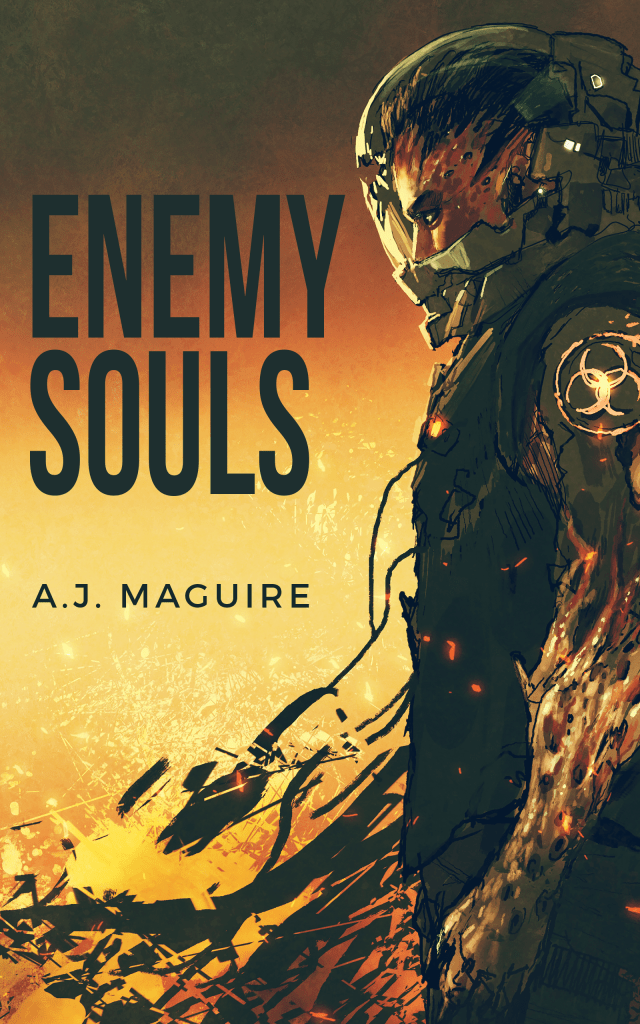
    For my dear, lovely readers who have showered me with their love of Enemy Souls, I thank you. And I am deeply grateful that the book delivered a satisfactory story! This was the second installment of the Tapped Series and I am excited to be working in the science fiction realm again, preparing for the third novel. And, as I often do, I have begun reading the series from the first book onward, taking notes to reference technology and character development.

    I do already have a vague story bible written in respects to the Tapped series, but I have found that nothing prepares me better for writing the next book, than reading the ones that came before. I’m not sure how other authors who work with series of novels handle this portion of the process, but this is what works for me. Even if I do cringe sometimes, recognizing that I have learned so much more about the craft of writing since the first book was published.

    Available at Barnes & Nobles and Amazon!

    So where does Killing Darlings come into all this?

    Well, for the Werewolf Wedding novel, if you must know. For fans who have been following along this whole time – by the way, I love you all and I hope you keep reading and adventuring and reading some more – you will remember a novel by the title Melody of Bones. Also known as my dragon novel.

    After a great deal of debate, I have decided to kill this novel. It is, in fact, a little darling.

    A two-plus-year darling that I have nursed and attempted to sell and simply gotten no where with. But the really cool elements of the novel fit perfectly into the story I am telling with Nora Grayson, and I know that both stories will be told better by doing a Dr. Frankenstein move and piecing them together.

    Does it hurt?

    Yes.

    Egads, yes.

    I love Prudence Alturas and her tragic tale as an exiled dragon.

    But if I do this right, I’ll get to tell her story better than my first attempt.

    So here is me, pulling the official trigger and killing off a darling. I hope to have a new draft completed by the end of July, with several more novels waiting to step up to the plate.

    For my fellow authors out there, I hate to say it but… they saying is right. Sometimes we really do have to kill our darlings.

  • The Courage It Takes

    Writing is not for the faint of heart.

    When I started this whole writing thing, I was a child who thought it was great fun. One assignment from a teacher in the sixth grade opened the world of fiction to me and I played around with all the fantasy, making shallow stories that grazed through fluffy adventures without digging into the scary stuff.

    Dragons were scary enough for my 12-year-old mind.

    It is only now, sitting some thirty years later, that I have come to understand the perils of a writer’s life. Nevermind the hours of labor that go into every story, that is an expected price every author must pay for quality work. Nevermind the outlines that get trashed, or the characters who drive the story in an unexpected direction, or the false starts. Nevermind the criticism bound to find us, or the false praise we must learn to ignore. These are all part of the job.

    The true peril of a writer’s life is exposing truth. We must be honest with ourselves about who we are, about the world we live in, and about humanity in general.

    In the movie Shadows in the Sun, a young man is sent after an author who wrote one novel and then produced nothing more for many years. When confronted with why he had not written anything else, his response was something along the lines of; “I had nothing more to say.”

    This has stuck with me.

    I do understand that some novels are meant for fun. There is nothing inherently wrong with fluffy adventures. If I want to stay in the shallows and play there, I am welcome to do so. And so is everyone else, for that matter.

    But I have found that each novel I have written has drifted further and further from those shallows. Maybe this is due to age, or maybe it’s a natural progression that every author encounters as they produce new novels. Either way, I have come to a novel that is drastically different from anything I have written before.

    This past month I have retreated from this novel, because the coward in me doesn’t want to go through it. I am confronted with the choice to turn the novel toward the fluff, or to brace myself and continue on its current path.

    Do I want the novel to say something?

    Am I brave enough?

    To my fellow authors who have been where I am sitting today, I salute you. And I hope you will meet me on the other side of this thing, because whether or not I am brave enough, it seems that I am diving in.

    For those of you who are currently fighting with their novels, trying to decide if they too are brave enough to make this dive, I cannot make that choice for you. But remember that there is nothing wrong with playing in the shallows if that is what you enjoy most. When you’re ready, the depths will be waiting for you too.

  • Casting the Book

    Recently I began reading a new book from one of my favorite authors. I had been looking forward to this book because it was revisiting 1800’s London and the author had done a beautiful job describing that time period. I also love the fantastical elements of the world she created. Urban fantasy is fascinating to me and I am attempting to write within that subgenre (unsuccessfully at present) so anything I can learn from novels like this is welcome.

    But…

    I began reading this novel several months ago and have yet to finish. Normally I consume these books in a day or two, so I had to sit back and as myself what was going on.

    After careful inspection, I have to say that the novel is too full.

    Too many personalities on the page.

    Or rather, too may point of view (POV) characters to follow. The original books were full of personalities, but the selection of POV characters was more narrow, and thus less overwhelming. It’s not that I’m lazy as a reader and want the selection smaller because I can’t keep them straight, it’s because I grow frustrated when the POV only skims the surface of a character’s problems and then moves off to the next scene.

    I have seen the question “How many characters is too many” within writer groups a lot, and I have to admit that I never paid it much mind. The world is full of people, after all, and it seems silly to limit the number of personalities in a book. However, I would submit that you should always, always cast your point of view characters with care.

    I think it was Dan Wells of the Writing Excuses podcast (and a brilliant novelist in his own right) who said that you choose your point of view character for any scene as the character who is in the most pain. But there’s a pretext to this – the character has to already be established as a POV within the novel.

    Meaning that if we’ve never been in Susie’s POV before, but suddenly we are because she had her leg broken, then that is generally not acceptable. Instead, you go to the next best POV character who has already been established in the narrative. Example – Susie’s mother was established early on as a POV character, and seeing her daughter in pain would be an acceptable alternative to leaping into a character whose voice hasn’t been heard in the novel before.

    I know that there are novels out there with numerous point of view characters. And without getting into the difference of third person limited versus third person omniscient, I would like to point out that my issue with the current novel I am reading is more geared toward a feeling of being rushed.

    The scenes do not delve deep.

    They do not allow me to settle into the skin of the point of view character long enough to enjoy them.

    And part of me can’t help feeling that the reason behind this shallow characterization is because the author was stretched thin between their cast.

  • Chagrin – Tempering the Writer

    A while back I finished my 3rd and I’d hoped final revision of Song of Bones/Melody of Bones/that dragon story I always wanted to write but kept putting off. My stubborn brain insisted it was complete, that I had told the story the best way I knew how, and that it was time to set it free. Since I’d written the synopsis in the middle of the process, I waited a scant two weeks before I started submitting to agents and editors.

    Without, you know, re-reading more than the first pages required for the submission process.

    I can hear the rest of you writers out there cringing.

    And you’re right.

    After thirteen unsuccessful submissions I fell into that funk we all get at rejection. Because, you know, rejection is painful. I know editors and agents hate to do it, too. I think most of what makes the whole process bearable is knowing that they are in that socially awkward position where they must say; “No, thank you.”

    Unless, you know, you get that editor/agent who enjoys tossing rejections like snarky confetti, but those are few and far between.

    Mercifully, I stopped submitting after thirteen. And I know some of you are going to point to James Patterson’s 42 rejections before he sold that first novel, but I promise you this was the right move. Because six months after I sent that first submission I opened up the manuscript again and realized how much I’d gotten wrong.

    My dragon culture was not fully fleshed out. The first chapter was trying to cram too much information without enough characterization. And I was struck with the fact that I needed to keep the novel centralized in one setting rather than trying to fly between continents.

    My Muse seemed to be snickering at me from the corners of my writing space.

    I had broken that cardinal rule of writing – Thou shalt wait at least three months before picking up the work in progress.

    If I’d given myself the time and space, I could have saved myself and the agents/editors who I submitted to a lot of awkwardness. I could have saved myself from a little of that funk of rejection.

    I say a little because I know in its completed form that Melody of Bones/Song of Bones will still be rejected by those agents/editors who do not feel it is a good fit for them.

    I am so grateful that I gave myself the time I needed with Enemy Souls. (That novel hit shelves on September 8th and is doing quite well! I am supremely pleased by the reception it has had and should be working on the third installment of the Tapped series during National Novel Writing Month this year.)

    Dear writers, learn from my mistake. Put that manuscript away. Give it fermentation time. And, of course, read the thing before you start submitting it.

    Trust me, you’ll thank yourself later.

  • The 3/4 Mark – May Round Robin

    This month’s round robin is open for a bit of interpretation. The main thrust of the question is how you maintain continuity from start to finish in a novel. Which brings me to the title of the post – The 3/4 Mark.

    Over the years, I’ve discovered that my personal writing process requires a break in the rough draft that comes about the 3/4 mark. This is the point where I stop writing and I go back and start revising from the start, making little notes along the way.

    I know a lot of people will boo and hiss at this, saying I need to get the first draft done and then go back and edit lest I suffocate my creative muse.

    However, I’ve found that this process fuels my muse more than hinders it. And to be fair, most of the naysayers are focused on writers who have yet to complete a novel because they continually go back and revise rather than completing a draft.

    If you happen to be a writer who falls into this category – don’t do it my way. Finish a draft and then go back and revise. There is nothing like the feeling you get when you finish a book and you owe it to yourself to push through.

    Now then, a lot of things happen at the 3/4 Mark Break, which isn’t really a break.

    At this point in the book, I have a deeper understanding of the characters and know what the story is really about. This allows me to go through the beginning of the book and edit the character voices, sharpen the focus of each chapter, and move things around.

    Which adds to the flow and sense of continuity for the book as a whole.

    This also allows me to make notes in the margins, pinpointing subplots that I need to either remove or complete in the last quarter of the novel.

    And then, when I go to write that last quarter, my brain has had a nice refresher of the novel as a whole. More often than not, the outlined ending is drastically changed because of this. Which is a GOOD thing because my first draft endings are always horrid.

    Take a look at what some of my fellow authors do to keep continuity from start to finish in their works…

    Skye Taylor http://www.skye-writer.com/blogging_by_the_sea
    Marci Baun  http://www.marcibaun.com/blog/
    Judith Copek http://lynx-sis.blogspot.com/
    Margaret Fieland http://margaretfieland.wordpress.com
    A.J. Maguire  https://ajmaguire.wordpress.com/ (YOU ARE HERE)
    Beverley Bateman http://beverleybateman.blogspot.ca/
    Rhobin L Courtright http://www.rhobinleecourtright.com

    Anne de Gruchy  https://annedegruchy.co.uk/category/blog/

  • The Hardest Part of Writing…

    A few years ago I would have said that editing was the hardest part of writing. Today, however, editing is one of my favorite parts of the process because I’ve learned how to accept that a rough draft is crappy no matter what.

    296311_500604823329356_837081728_n
    So much red ink…

    Accepting that fact has freed me to laugh at myself when I find typo’s in a work, and to scratch out passages that aren’t fitting right.

    So, editing is not the hardest part of writing anymore. (At least for me, other writers may feel differently.)

    Writing the synopsis is and always will be a freak show that makes me hide under my desk. Crunching down a novel into its bare essentials and trying to make it sound interesting at the same time feels a bit like taking a potato peeler to raw skin.

    But, the synopsis only comes toward the end of the writing process. I’ve heard of people who write them first, but my endings are always up in the air when I start so that doesn’t work for me.

    I don’t subscribe to the idea that my “muse” has to be present in order for me to get work done, so catering to her (I’ve always imagined her as a glittery wood sprite hiding in my plants, don’t ask me why) isn’t a part of my daily writing regime either. I put my batoosh in a chair and I start working. Sometimes she shows up. Most of the time I’m just arranging words on the page and praying they make sense.

    10676192_782868888436280_3445750894630733710_n
    The Pest who probably ate my muse.

    Finding ideas isn’t hard either. Ideas are everywhere, I just have to pay attention.

    So what is the hardest part of writing?

    Today I’m going to say… beginnings.

    Beginnings have to engage the reader and convince them to keep reading. They have to set the tone of the story, introduce the main character, hint at the main conflict – or at least a starting conflict – and avoid backstory like the plague.

    Endings are hard too but beginnings are what make or break you.

    And nobody can agree on how to successfully begin a story, either.

    “Start in the middle of the action!”

    “No! Don’t start in the middle of the action! Give us some set up so we care about who the action is happening to!”

    “Do both at the same time!”

    “Start where the story begins.” – AKA – No prologues, please.

    Now, if you’re an author, please don’t feel discouraged. Beginnings are hard, but they are also editable. So if you begin your story and it’s not doing what you want it to, revise it on the next round.

    Sedition went through five beginnings. FIVE.

    Persona had three.

    And right now I’m dealing with a new novel that has managed to go through two beginnings already and I only started working on it this month. (Hence the blog post about beginnings.)

    So if you’re struggling with your beginning today, rest assured that you’re not the only one. We all go through it. The difference between a writer and a hobbyist is whether or not they’re willing to scratch it all and rewrite.