Tag: Novels

  • Working with Historical Timelines – Persona Version

    WWII is heavily documented. I have volumes and volumes of historical content that have helped me better understand how and why events took place throughout the war.

    No, really. Volumes.

    I also have several Documentaries on DVD which have helped shed some light on the timeline forAJMaguire-PersonaCover-1280h Persona and the general feel of what was rationed and what was needed and how transportation worked and …

    You get it.

    All this history is wonderful. I love history. It makes me all giddy inside to research it.

    The feeling I get when I find something within my research that perfectly fits the story and adds another level of authenticity is … Well, it’s better than a stack full of York Peppermint Patties. (And I do so love York Peppermint Patties.)

    I also hate history.

    Discovering something in my research that contradicts the story-line I’ve created is frustrating to the extreme. I research as I go, so there tends to be a lot of revision precisely because of this.

    Example: 

    The original opening scene for Persona had Megan on a plane. But it was discovered that planes were generally only used for transporting military personnel and often the wounded for relocation, so it was more likely that she would have been on a passenger ship.

    Insert weeks of research hunting for a passenger ship that, for plot purposes, had to be sunk. Eventually I found the SS Ceramic and there was much rejoicing.

    Today I find myself in a similar pickle. The outline that I have ends Megan’s story on a very particular date because (without going into too much detail and spoiling the whole book) things happened on that date, in that place, and it brings her story a certain sense of cohesion.

    However …

    That date is several months away from the current chapter.

    There are a couple of ways I can handle this and, as an author who really, really doesn’t want to miss another deadline with this particular book (seriously, I’ve passed several of them already and I’m not even sure why. I’m normally very strict with deadlines) I need to make my mind up by Sunday.

    1. I can rearrange the timeline of the whole book, extending Megan’s stay and bringing things closer to what I want. (Not a bad plan, though a moderate amount of work.)
    2. I can slow this chapter down, be all artsy-crafty-clever with the passage of time. (I’m not very good at this sort of thing, though. It’s an area I need to improve on.)
    3. I can ignore the historical timeline. (I don’t like this plan. I did all the research for a reason, after all.)
    4. I can stretch out the inevitable scenes at the end (which I can’t explain for fear of spoiling things) and lengthen Megan’s time in a very bad place. (Not sure I like this plan either because it draws out the tension too much at the end.)

    So many choices. 

    As an author these sorts of problems happen all the time. And I imagine when I tackle my Civil War story (likely sometime next year) that I’m going to have a lot of these timeline problems show up.

    The core of the issue is that I want to have that authenticity, the reality of what happened integrated seamlessly into the work, but I also want to tell Megan’s story. Megan is fictional. Her story is about who she is as a person, not what happened during WWII.

    With that in mind, option 3 becomes more visible. Although I’ve done the research, the research is not the book, and I think that’s really what I have to keep in mind here.

    Megan is the story.

    As the author, I have to decide which option tells her story best.

  • Writing While Unmotivated

    I know there are lots people out there who just plain won’t write if they do not have the proper inspiration. They follow their creative muse and lean heavily on the concept of being an artist, and those things are true. Writing is an art and yes, sometimes you just plain don’t want to write.

    I’m not talking about those moments when life steals your writing time. I’m talking about those moments when you sit down at the computer for your designated 2-3 hours of writing time and just don’t want to do it. The words feel stale in your mind, feel stale when you get them on paper, and you think that a thousand other authors could write this better than you are right now.

    How do you push through that?

    Well, I imagine it will be different for each person but I can tell you a couple of things I’ve learned about myself.

    1) These moments do not last for only a day.

    If I allow it, this feeling of drudgery can last for months at a time. So when I discover myself stuck in one, I have to take measures immediately. Sometimes this means going for a walk, cleaning the house, going to the gym or jumping in a pool. Anything where my brain can wander wherever it wants.

    2) Rely On Craft

    Yes, it does feel like I’m slogging through my work when I’m in this particular mindset. Yes, I groan and grump and get only a little bit of progress done on my manuscript. But the truth is, if I write anyway then I find myself looking at the work through the mindset of my craft, instead of the mindset of my muse.

    Yes, it’s hard.

    However, when I look at the work through the mindset of my craft I generally find a solution that would never have occurred to me any other way. It zooms the creative lens out and forces me to think outside of the character and onto the book as a whole, which produces a far stronger book.

    The awesome thing about relying on my Craft, is that eventually something sparks and the inspiration snaps back into place. It might take several weeks, but it’ll get there and I’ve learned to have faith in that.

    3) Read

    When I start feeling unmotivated, I start reading anything and everything I can get my hands on. Fiction, Nonfiction, News, Poetry, literally anything in my path I will read. This not only stores new concepts and story ideas somewhere in my subconscious, but it makes me a better writer when that motivation finally does return.

    4) … And this is going to sound terribly geeky … Play a Genre specific game

    If I’m writing a science fiction, I will play wither Star Wars or Star Trek. If I’m writing fantasy, I play Dungeon Siege. Historical Fiction … well, I haven’t found a game for that one but I do watch tons of WWII movies and documentaries. My creative mind soaks up the visuals of those games (and/or movies) and often bounces me right back into wanting to write again.

    And that’s it. Those are my four steps to getting back into the swing of things. Generally, I do all four. They aren’t a guarantee that my muse will start working again quickly, but I know that eventually it’ll come back. The main focus is that I keep writing regardless because I know that my Craft is capable of moving forward.

  • World Building – Graphic Detail Edition #1

    Right now the boys (one mine, one his friend who stayed over for the night) are fixing the cushions on my sofa. They made a fort to sleep in for the night and my living room was a mess of brown pillows and mismatched blankets that I had to step over to get to my computer. There’s also a plastic Bat-Cave sitting near my fake fireplace with the Millennium Falcon parked right next door.

    All the evidence of a night well spent with two 7 year-old’s.

    The world we live in is not static. There’s color and shape and the blatant trace of human contact embedded in our environment. And while there is something to be said about a writer allowing room for the reader’s mind to build a particular setting in their own imagination, these details are also integral to telling a story right.

    We’ve all heard the “show, don’t tell” mantra told over and over again.

    “I want to feel the ocean spray on my face!”

    “Let me taste the apple! Don’t just tell me he bit into the apple!”

    But I’m going to tell you to stop.

    Don’t write hoping to make your reader feel the ocean spray, or taste the apple. These are not helpful in telling your story. It’s actually really distracting and can draw your reader right out of the story. And the last thing you want is for your reader to be jolted out of the story.

    Instead, let’s alter that mantra; show what is affecting your character.

    Your character walks into a room – what impacts them the most? What jolts them? Based on who they are, what would they notice first?

    I’m going to use Megan Shepherd from my current WIP, Persona, as an example.

    Early in the book she comes to the home of Victor Von Buren, a very austere Naval Captain. When writing the scene where she first enters his home I have to consider not one but two voices – Megan’s and Victor’s.

    Even though Victor isn’t present, he has left his fingerprints on his home. So as Megan is wandering through different rooms (which, I confess, I might have been giving a slight homage to the Von Trapp family in Sound of Music) she is not only reacting to the room itself, she’s reacting to the man who lives there.

    A writer’s job isn’t to just paint a vivid picture in the reader’s mind, it’s to make that picture important. It doesn’t matter if they feel ocean spray on their face, what matters is the emotion that can be hooked onto it.

  • Self-Publishing Journal Entry #6

    Dear Diary,

    As expected I made every mistake there is to make while self-publishing a novel. After its “Hydra leak” on the 1st of January I went through the Kindle version and found no less than 25 translation, formatting, or just-plain-dunce errors that had to be fixed.

    Orange Beast
    Orange Beast

    The Orange Beast is still laughing at me for that.

    However, I do feel better about this because if I hadn’t been so hopped up on cold medication I would have found those errors in the week prior to its official release anyway. This just means that those unfortunates who purchased the leaked novel are going to have a one-of-a-kind “whoopsie” version that no longer exists.

    I’ll laugh about it in a couple of years, I’m sure.

    In any case, the novel was fixed before its official release. (To include the spacing issue that had the printed version sitting at over 500 pages. That would be one of the just-plain-dunce errors.)

    What have I learned from this whole self-publishing adventure?

    1) Editors are worth their weight in gold. 

    No, seriously. They are. Those 25 errors were mostly formatting and translation problems that happened while I was bouncing between Scrivener and Word.

    2) Never work while on cold medication. 

    ‘Nuff said.

    3) Marketing is pretty much the same on your own as with a small press. 

    Yeah, there’s really very little difference here. As much as I love my publishers and the validation they gave me for even accepting my work to begin with, a book doesn’t just fly off the virtual shelves on its own.

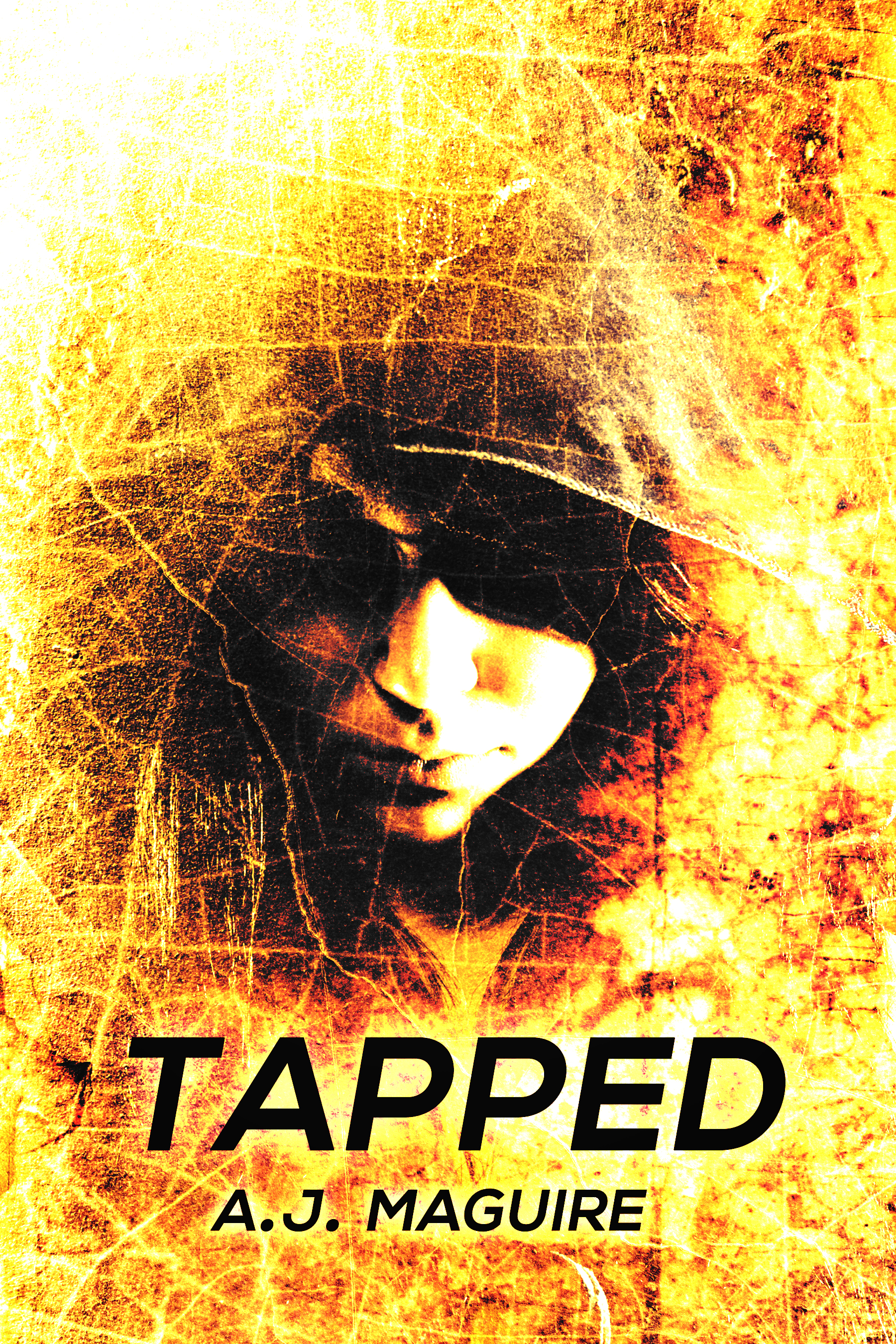
    That said, I’m still not doing much marketing-wise. I’ll submit Tapped to various review sites and all that, but Scornedotherwise I’m not going to stress this point. I made this decision way back when Sedition was first published and while it makes no “business sense” I’m sticking to it.

    I want to be a better storyteller. I want to tell stories that move people, even if it’s only a select number of people. I feel totally awesome about the readership I already have. (Hey, Readers! I uber loves you all!)

    4) This is fun.

    In spite of my fights with Scrivener and my frustration with Word and staring at documents for hours on end while trying to make the formatting right, I had a lot of fun doing this. Don’t ask me why. I think only writers can really understand it.

    To sum up, I will probably do this with more than just the Tapped series.

    Yes, I understand the stigma that comes with self-published authors but I’m going to lean back on the real tradition here; the tradition of storytellers wandering from place to place, giving their entertainment away for lodging or food. Celebrities for a night or a day, or a holiday week, and then they faded into the background directly after their job was done.

    They didn’t have publishers back then, just word of mouth and a distinct love for what they did.

  • Breathable Text

    Every book teaches me something. Even the books I hate teach me what I want to avoid in my personal writing.

    I might rage about certain aspects of the story or throw the book across the room when I’m done with it (if I have it on hard copy instead of Kindle, of course) but in the end I always learn something.

    Perhaps the most humbling moment is when I pick up a novel that I wrote years ago and see, quite clearly, everything I did wrong. There’s nothing more heartening or heartbreaking than that moment.

    Heartening because it means I’m growing as an author and my craft has improved. Heartbreaking because the text I loved so much back then … I kinda loathe now.

    I’ve come to expect this moment in the writing process so when I picked up Persona to begin editing I had myself braced for impact, you know? But sometimes the “impact” is really a “click” in the brain that recognizes a broader problem and I sit back and go … “Oh, I get it now!”

    The proverbial light coming on in the brain.

    The moment in school when algebra suddenly made sense.

    Or, in this particular case, the realization that my text isn’t breathable. It isn’t livable. The character might be sympathetic, a woman I admire and want to emulate in my real life sometimes because she is so kind and she does overcome her own fear while facing down terrible circumstances, but the narrative itself doesn’t breathe.

    I’ve identified this as a “lens” problem.

    A “lens” problem in the writing world is a matter of distance between the character and the narrative. In this case, my lens was too tight on Megan and I wasn’t taking into account the setting, tone, or secondary characters.

    On the one hand, this makes Megan very clear as a character but it also makes the world feel flat.

    So!

    I’m adding to my writing toolbox today and throwing the “narrative lens” in there as a means of bringing the world and setting to life. Don’t get tunnel-vision with the character because the character is informed and influenced by the world around them.

  • Creation Phase

    In answer to everyone who has ever looked at me and said; “I just don’t see how you do it.”

    It never starts with a blank page so let’s go ahead and toss that myth out the window. The blank page comes later, and it never stays blank for long because the moment pen meets paper or fingers meet keyboard things start to happen.

    There is a second as the writer’s brain gropes for the correct words where the undisturbed white of pen or screen is daunting, but eventually that right word, phrase, character or situation snaps into being and the story begins. Unless, of course, said writer gives up and walks away.

    Maybe they walk away for a day, maybe forever.

    It seems important to note that the one who comes back, the one who braves the glaring white of the unmarred page, is the real writer. The one who never comes back … well … Enough said there.

    But none of that really matters because this isn’t where the story starts.

    The story started ages ago with a flicker of an idea, a foggy dream barely remembered, or the name of a character who simply will not go away. That’s the beginning of the creation process, the start of a new, grand tale. It could be months or years before the story is physically written, but it is constantly being cultivated in the back of the mind.

    Notebooks or 3×5 cards or little documents are made with character thoughts, plot suggestions, and mental images that capture the mood of the story. These are all compiled, stored away for the moment when we finally find ourselves ready to take the plunge and begin writing.

    Maybe there’s an outline. Maybe there’s just a character with a problem.

    The creation phase for any book is beautiful and fragile and unpredictable. Most of us bemoan the drafts that come after, the editing and the synopsis and the querying and everything that has become synonymous with novel-writing, but the beginnings of a new story …

    That we seem to treasure.

  • Publishing Debates

    In January of 2011 my first book was published by Wings ePress, a small independent publishing house run by some very kind people. They put out a nice, professional book and I was over the moon about it. I liked the size, font, color, formatting, and everything.

    I was new to the whole publishing scene and didn’t really know the difference between Traditional and Independents/Small Presses/Whatever. I just knew my book was out there and people were liking it.

    Four years later and I am officially a self-published author.

    I know the stigma related to self-publishing. I’ve read article upon article upon article about Indie authors versus Traditional authors and the coveted-but-somehow-hated Big 5 and I’ve come to a major decision.

    I’m tired of reading about this.

    I’m tired of everyone saying that their way to the publishing business is the right way, that the old regime is coming to an end, that self-published novels are nowhere near the quality that traditional novels are, that the Big 5 have the monopoly on shelf-space in the major bookstores, or that people don’t really visit those bookstores anymore …

    The list goes on.

    And because I have decided that I am tired of reading these debates (the most recent one being how self-publishing is no longer a viable means to “hybrid author status”) I will politely pass them by.

    Knowing these things will not make me a better writer. Partaking of the debate might obliquely influence my sales, but it will not make my storytelling any better than it is today. And honestly, I don’t have the time or the energy for anything that does not add to my “writer’s toolbox” and help me master my craft.

    Harsh?

    Maybe.

    And I’m not saying all this as a condemnation to those who are actively engaged in the debate. If focusing on things in that light is what helps them put pen to paper at the end of the day then more power to them.

    I’m saying it doesn’t help me. It makes me indecisive. It makes me second-guess the risks I might otherwise take in my fiction. And fiction without risks is dull.

    Tapped is risky.

    I know it is.

    It’s the underground railroad in space. There are religious refugees and political issues and a mess ofScorned family secrets to wade through and if I had listened to certain blog sites and articles about what not to write or what to avoid I would never have finished the book.

    So this is me drawing a line in the sand.

    Maybe my books won’t sell as much as a traditional author. That’s fine. I’ll read their work and see if I can improve my own craft because in the end, that’s the only thing that really matters.

  • Handwriting vs. Typing Debate #1

    My first book was written almost completely on 3×5 cards that I stored in my cargo pockets while serving in the Army. I kept them in a Ziploc bag since … you know … Army stuff. Field exercises in Hawaii were murder on paper. If you’ve never been to Hawaii then let me tell you, they have this red dirt that can stain anything.

    I mean it.

    I took the advice of a more experienced soldier and purchased an extra uniform for the sole purpose of rolling around in reddish mud.

    Now then … I don’t recommend using 3×5 cards to write your whole novel on for several reasons.

    #1) Unless you’re in a situation where you absolutely must store your work in your cargo pocket, why would you want to?

    #2) 3×5 cards with numbers on them are still a pain in the batoosh to keep in order. Should you be crazy enough to do this, find an organization style very, very quickly.

    #3) 3×5 cards are easier to lose than full pages of paper. Again … some sort of filing system is absolutely necessary here.

    All that said, I do still use 3×5 cards. I just don’t write the whole stinking novel on them. I write blips, lines, descriptions, plot points, or anything that catches my attention that I think could be useful. The actual writing of the novel normally takes place in a notebook.

    I love the feel of pen on paper. Something about it just calls to me, sets my creative mind to wandering, and helps me focus on the novel at hand. And this was all well and good for my first several novels.

    However … looking at a series like Tapped, which at this juncture is approximately 7 books long with offshoots for novellas and short stories, it has become increasingly apparent that I need to adapt my writing techniques. The problem isn’t so much writing on the notebooks, but the editing process that comes after.

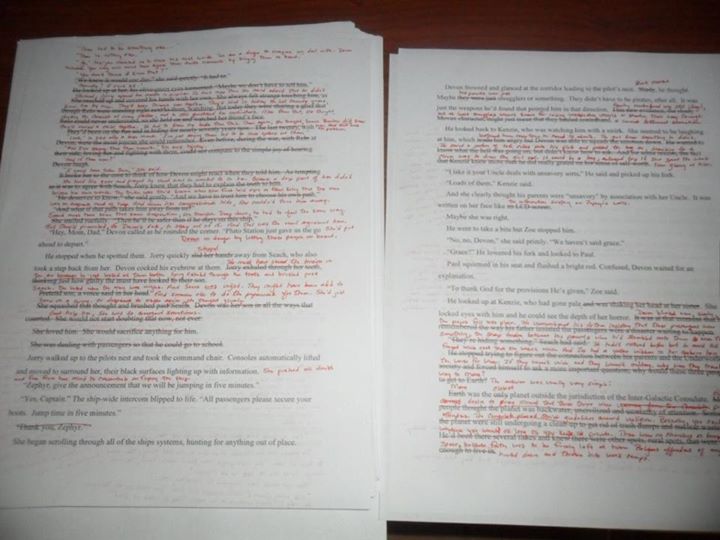
    You see, after I’ve transferred everything onto the computer and done at least 3 passes at the novel, I inevitably print the whole thing out and find myself handwriting EVERYWHERE.

    No, really. Everywhere. Margins, napkins, between lines, no place is safe.296311_500604823329356_837081728_n

    So in essence I’m handwriting the novel twice.

    This takes time.

    Trenna fans will agree with me here in saying it takes too much time. (I’m so very sorry. But I do promise Usurper will be out next year.)

    This is what inspired the Residual Haunting challenge. For those of you just joining us, Residual Haunting is the serialized novel I have been posting up on Wattpad and its own story blog. It has been written completely on the computer, which accounts for a slight lack of description but a very stylized flow to the narrative.

    Since I am over midway through the book now I figured I would do a bit of a Pro vs. Con update on this experiment.

    Pro — Character voices flow better.

    Con — I had to go back in and write descriptions of the characters.

    Pro — Timing for writing the rough draft has been cut in half.

    Con — Character depth is missing. Who are these people and what do they want? (Aside from not being eaten by the monster roaming the museum.)

    Conclusion — The rough draft will be rougher than normal when this is done. I will have to go in and add graphic detail to make the setting come alive. I will have to slow down and use the 1″ picture frame (thank you, Ann Lamont) on each of the characters. We will have to see at the end of the editing process if this actually saves time in the long run.

    Now, these are my experiences. Someone else will likely have different results. But as writers it is our duty to experiment and learn different ways to approach the craft. It’s the only way we’ll grow.

  • Self-Publishing

    After much deliberation, research, waffling, and picking the brains of several writers I know I have decided to try this self-publishing thing. This is not meant in any way to snub or look poorly upon the small presses who have so graciously published me over the last few years. Wings ePress and Double Dragon Publishing have both treated me very well and I’ve learned a lot about publishing as a business through them.

    And in fact, any and all works that I feel fit those two houses I will submit accordingly. (Yes, Trenna fans, this means Usurper will more than likely be coming out through Wings ePress next year. I have it scheduled for a clean-sweep editing pass and then Wings can decide whether or not they want to continue the series.)

    Why am I self-publishing my next novel?

    Several reasons.

    1) Creative Control

    Basically, I want control of this book and all its sequels. I want to be able to make novella’s on a whim — because I have several mapped out in this universe — and to let the series stretch from four books to seven. (Maybe, I’m still on the fence about that.)

    2) Price Control

    Because … sweet holy bananas on toast, people! Nearly twenty bucks for a print copy of my stuff? Even I don’t want to pay that.

    Plus, you know, this way I can do the sorts of things I’ve wanted to do since first getting published. Things like — Hey! For the month of November all proceeds go to the Office of Letters and Light!

    Which is something I currently can’t do.

    3) Schedule Control

    … Cause it’s nice to know exactly when I can do a cover reveal or book release party. Since I’ll be in charge of the galleys and what have you, I’ll be able to send out ARC copies with little to no fuss.

    (You know, this post is beginning to make me look like a control freak.)

    4) Audio Stuff

    Right now I don’t have the right to produce any of my books in audio form, but I’ve always wanted to. This way I can. (Likely several months after the print copies come out cause … you know … WORK.)

    5) Because It Scares Me

    When push comes to shove, I don’t like it when something scares me. In fact, I tend to get all sassy and confront said fear with bare fists and teeth.

    Which I suppose is exactly what I’m doing.

    So!

    Tapped is currently out on submission with an agency — has been for several weeks now, but it hasn’t passed the point of no return for a response yet. While I wait for its rejection letter — let’s be realistic here — I will be formatting and cleaning up the manuscript (yet again) to make the ARC copies.

    I have chosen Tuesday, January 13th as the tentative release date of this novel.

    … and now that I’ve written that down I might be panicking a little.

  • Vulgarity

    When friends ask where they can pick up one of my novels I always have to preface the conversation with; “I apologize in advance for the language.”

    This is because most of these friends are asking around the pot-luck table at church or something and I feel a need to cushion them from the reality of what I’ve written. I don’t want to shock them or make them feel uncomfortable, so I figure it’s best they know walking into the book that there will be some rough language.

    So why don’t I exclude vulgar language from my novels?

    Easy … because it’s not realistic.

    Let’s face it, we all know curse words. Some of us even pride ourselves in new and creative ways to utilize expletives. I had a Drill Sergeant in the Army who knew how to insert four letter words inside other four letter words — a feat that requires no small amount of talent, I assure you — and who woke us all in the early morning by flicking on the light switch and shouting; “Get the f**#* out of bed.”

    Charming, I know. But also quite effective.

    Cursing seems to be a staple of adult life. There are very few of us who can say they’ve never, ever used a curse word in their lives so it is unrealistic to exclude such language in fiction. That said, there is a difference between using said words naturally, and using them for shock factor.

    I’m just going to go ahead and admit that if I feel the words on the page are there deliberately to shock me, I’m putting the book down.

    Yes, I’m offended by that, but not because of the words themselves. I’m offended because the author thinks that’s the only way to get my attention.

    Trust me, there are better ways to shock and awe your audience.

    Cover Art by Chris Howard
    Cover Art by Chris Howard

    Residual Haunting (which just posted Chapter 2 this morning) has some swear words in it. Mostly there’s slang (frigging and freaking and all variations thereof) but the vulgar words are in there and I’m sure people will notice.

    Authors have to tread a fine line between keeping true to character voice and trying not to offend their readers. It’s awkward — especially around the pot-luck table — but I’ve noticed that every time I apologize in advance, my friends just chuckle and shrug.

    They get it.

    They live here too.