Tag: Science Fiction

  • Self-Publishing Journal Entry #4 (I think?) — AKA, “DANGIT, HYDRA!”

    Dear Diary,

    I spent New Years Eve sick on my couch. I did not have the joy of watching the infamous “potato drop” in my home town. I could not smell the glorious turkey breast as it was cooking in my crockpot (Thank you to my Grandmother and to my Aunt Debbie for passing along that recipe, it was good even though I couldn’t taste everything.) And in my NyQuil induced haze I decided it would be a perfect moment to get some final tweaks done to Tapped before my January 13th deadline …

    The Big Orange Beast warned me not to do this. He meowed and jumped onto the back of my chair andIMG_0238 bopped my head a few times and I, still in a medicated stupor, did not pay him any mind. I imagine he would be snickering at me but he’s too annoyed that the child has a friend over and is currently hiding under my desk.
    I know because he keeps chewing on my toes.

    After many a night pondering and working and trying things out I opted to use CreateSpace to help launch Tapped into the world. It was very easy to use.

    Too easy to use.

    I went through the Proof Copy, understanding that this was the phase my publishers would have called the “Galley Proof” but not understanding that once I approved said copy it would be IMMEDIATELY published to the CreateSpace store and … several hours later … to Amazon.

    I was 99% certain I had given a publication date of January 13th earlier in the process but it seems I missed something. I’m blaming the NyQuil on that one.

    After much scrambling and panicking and trying to figure out how to take down the novels suddenly out for sale I finally decided to roll with it.

    So this is me mimicking Marvel after the Avenger’s trailer was released … “Dangit, Hydra!”

    Tapped is on Amazon. You can find it in two different paperback sizes, the 6×9 (which is cheaper and Scornedlarger) or the 5.2×8 (which is two bucks more and smaller because I wanted something purse-size because I am totally the book-in-the-purse type … when I carry a purse.)

    And, of course, you can find it for Kindle.

    I recognize that this has the potential to hurt sales. Everything I’ve read about publishing and such says that the week before the book goes up (which should have been next week) I’m supposed to be running about cheerfully telling people about the upcoming release and building all the happy-vibes so that people will buy it and stuff.

    “Dangit, Hydra!”

    Now I’m on to Battle Plan Bravo.

    Why no, I did not have a plan B in place for this. But I’m like MacGyver and can figure a way through almost anything if I have a paperclip and a gum wrapper. (I really don’t care if I just dated myself either. MacGyver was totally my hero growing up and I maintain that he’s swoon-able.)

    Excuse me while I go make Battle Plan Bravo for next week. In the meantime, my very first ever self-published novel is up for sale. I’m sure I made every mistake known to the publishing world in it and apologize in advance.
  • Self-Publishing

    After much deliberation, research, waffling, and picking the brains of several writers I know I have decided to try this self-publishing thing. This is not meant in any way to snub or look poorly upon the small presses who have so graciously published me over the last few years. Wings ePress and Double Dragon Publishing have both treated me very well and I’ve learned a lot about publishing as a business through them.

    And in fact, any and all works that I feel fit those two houses I will submit accordingly. (Yes, Trenna fans, this means Usurper will more than likely be coming out through Wings ePress next year. I have it scheduled for a clean-sweep editing pass and then Wings can decide whether or not they want to continue the series.)

    Why am I self-publishing my next novel?

    Several reasons.

    1) Creative Control

    Basically, I want control of this book and all its sequels. I want to be able to make novella’s on a whim — because I have several mapped out in this universe — and to let the series stretch from four books to seven. (Maybe, I’m still on the fence about that.)

    2) Price Control

    Because … sweet holy bananas on toast, people! Nearly twenty bucks for a print copy of my stuff? Even I don’t want to pay that.

    Plus, you know, this way I can do the sorts of things I’ve wanted to do since first getting published. Things like — Hey! For the month of November all proceeds go to the Office of Letters and Light!

    Which is something I currently can’t do.

    3) Schedule Control

    … Cause it’s nice to know exactly when I can do a cover reveal or book release party. Since I’ll be in charge of the galleys and what have you, I’ll be able to send out ARC copies with little to no fuss.

    (You know, this post is beginning to make me look like a control freak.)

    4) Audio Stuff

    Right now I don’t have the right to produce any of my books in audio form, but I’ve always wanted to. This way I can. (Likely several months after the print copies come out cause … you know … WORK.)

    5) Because It Scares Me

    When push comes to shove, I don’t like it when something scares me. In fact, I tend to get all sassy and confront said fear with bare fists and teeth.

    Which I suppose is exactly what I’m doing.

    So!

    Tapped is currently out on submission with an agency — has been for several weeks now, but it hasn’t passed the point of no return for a response yet. While I wait for its rejection letter — let’s be realistic here — I will be formatting and cleaning up the manuscript (yet again) to make the ARC copies.

    I have chosen Tuesday, January 13th as the tentative release date of this novel.

    … and now that I’ve written that down I might be panicking a little.

  • Nearing “The End”

    By the close of this week I will have finished the edits on Tapped. I started this book two years ago for Camp NaNoWriMo and sent its second draft to a wonderful editor by the name of Gabriel Fitzpatrick. (Authors, if you ever see him advertising to do some work, take him up on it. He’s professional and he’ll infuse you with the belief that your book can conquer the world when it’s finished.)

    My original deadline for completing these edits was the beginning of May, but I was still in school and things got a trifle crazy and an avocado bested me during a salad-making contest.

    Yes, I’m talking about stabbing myself in the hand. And I’ll say it again — I really do know how to core an avocado. I was just in a hurry and wasn’t paying enough attention.

    Still, the damage done to my hand in that escapade was extensive enough to make typing (a core element of the writing craft) really frigging hard, thus throwing my deadline back even further.

    But I am not one to go quietly into the night.

    Which is why the draft will be complete this week.

    I’m not sure if I’m the only one who has this problem but sometimes, particularly in the last week of a novel, I want to finish so badly that I actually have to coach myself to slow down. So this week is all about taking my time to get it right. These last two chapters include a space battle where the ship we’ve been traveling on for several hundred pages now finally gets to show us what she’s capable of, and resolution moments for a couple of subplots.

    And if I don’t get both of them right then the entire book is a wash.

    So here’s me, rolling up my sleeves and preparing for the week-long plunge into all things “climax” and “conclusion.” I’ll see you all on the other side.

  • Writing Hard Scenes

    For the past several weeks I have agonized over one particular scene. It’s an important scene. Plot happens. Torture happens. Characters react in various ways to said torture, thus revealing more about who they are as people and making the book quite a bit more profound than it would have been otherwise. 

    One problem. 

    I don’t know how to torture someone. 

    Honestly, there’s a part of me that’s quite annoyed at having researched proper torture techniques. I mean, who wants to know that stuff?

    This scene was extremely difficult to write both because I didn’t know anything about torture and because I didn’t know how to properly convey someone being tortured. I almost tried scrap the scene, to just “fade to black” and let the Reader’s imagine what was going on, then come back later during the rescue. 

    But I couldn’t do that because the scene really does reveal more about the relationship between our hero and the antagonist. It shows how far both are willing to go to get what they want.

    And I knew that if I scrapped it, I would be cheating myself out of a growth moment as a writer.

    Writing the hard scenes is what helps challenge us as writers.

    Yes, we need editors to help us do that too. Yes, we need to read books that help us grasp story structure and characterization.

    But we also need to face those scenes that frighten us because it is only through those scenes or genres or points of view that we can truly take ownership of our craft.

    So.

    I wrote a torture scene.

    It took me several weeks and I cringed while I was doing it, but I know (and the Readers will know) just who these two people are because of it.  

  • Terraforming Mars

    Deviation, my newly released science fiction, lands smack dab on Mars.

    In spite of the massive amounts of research I had a lot of fun on Mars. Actually, scratch that.

    Because of the massive amounts of research I had to do, I had a lot of fun on Mars. Astronomy fascinates me. I think stars are cool and pictures of nebula are awesome and … yeah, I’m a nerd. So it’s only natural that my first science fiction novel actually features another planet.

    Mars is the planet we tend to like the most when it comes to the idea of relocating the human race. (Or at least branching out. Earth still needs our tender loving care.)

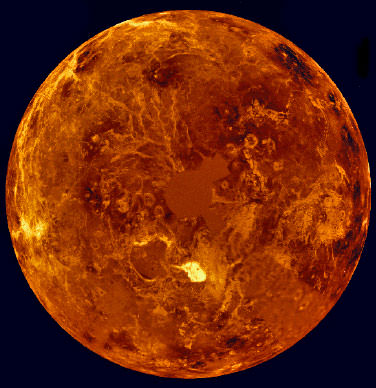
    planet-mars1There are many reasons for this but in the interest of this post I’m just going to direct you to HowStuffWorks.com because they already have an awesome article on the hows and the why’s of it. (Yay! Kevin Bonsor!)

    Now, I understand that I cheated a bit when it came to terraforming Mars in my book, but that all boils down to story. I wasn’t writing a guidebook to terraforming a planet, I was writing a story about redemption and grief and relationships.

    That said, I still wanted to make it believable.

    I also wanted to give the information without overwhelming readers with technical jargon. So I made a timeline with news articles. Readers will notice that there’s a snippet of a news article at the beginning of every chapter. That’s where I provided information both on what happened to the female race and how humanity reached Mars.

    First we bombed the core … cause Earth’s weird half-molten center is what gives us the tectonic plates, which is what gives us the magnetic field and atmosphere that keeps us … you know … alive and stuff. There’s probably a lot of things wrong with the theory of bombing the Martian core but the very concept made my creative brain go into hyper-drive, so I used it.

    Then, because things weren’t growing fast enough for us, we built a mirror-like greenhouse thing around Mars. (No, really, check out the HowStuffWorks.com article. It’s totally plausible.) Mars is further away from the sun so we needed to catch all that heat and redirect it to the planet’s surface.

    And then … and this is my favorite part … we “seed bombed” the planet’s surface.

    Yes, that’s right. Seed bombs. They are exactly what they sound like; bombs with seeds and fertilizer and all the good stuff plants need to get started.

    Add a little water, a little time, and a lot of luck and viola! Terraforming!

    Now then … scientists across the globe are likely to slaughter me for turning Mars purple and genetically altering animals to live on the planet. Those are all story elements. I rely heavily on the fact that I am not a scientist, I am a novelist. In those instances I would hope that people remember they are reading a work of fiction and focus instead on the characters rather than the mechanics.

    Deviation-510Honestly, I think we’ll live on Mars one day. It won’t be tomorrow, but some day.

  • Deviation Release!

    If I had spaceship shaped confetti I would totally be throwing it everywhere right now!

    My first ever science fiction, Deviation, has been released by Double Dragon Publishing. For right now I only have the publisher’s purchase link but as soon as it becomes available on Amazon and Barnes&Noble I’ll be certain to shove those links up everywhere.

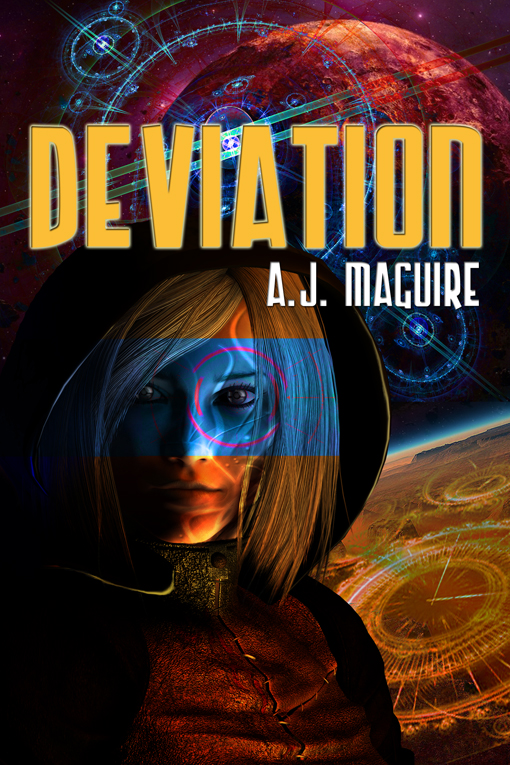
    Look at the pretty, shiny cover!

    Look at all the pretty colors!

    See the pretty shiny blurby thingy! (OK, so this is the longer version. You can see the shorter version everywhere else.)

    On the brink of a religious war between Makeem and Novo Femina, Celeocia Prosser’s struggle for gender equality leads her to Reesa Zimms; the one woman in all of history who can identify the first Mavirus victim. Believing the information surrounding this patient zero to be pivotal in the fight against the Makeem, Celeocia sets her sights on Reesa Zimms, also known as Caresse Zimmerman.

    There’s just one problem; Reesa Zimms is a science fiction novelist who lived and died hundreds of years in the past.

    Utilizing wormhole travel and antimatter discs, Celeocia sends her son Hedric and the crew of the Lothogy careening through time. When Hedric finds Reesa, the novelist is accompanied by her best friend Kate, who just happens to look like his recently murdered wife.

    Stunned and reeling, Hedric abducts both women, bringing Reesa and Kate on a not­so­gentle ride into the future.

    Time travel might be easier for Reesa to accept because Hedric Prosser, the High Priestess, and the very ship they’re traveling on, all belong in Reesa’s novels. Confused and pretty sure she’s going insane; Reesa tries to prepare her friend Kate for the very male­dominated society they’ve been dumped into. When she finds herself abandoned by Hedric, Reesa must rely on Matthew Borden, the villain of her books, to rescue Kate and fight their way home.

    Hear my squeal of delight to finally see this work out in the open!

    No, seriously, Deviation and I have a rather long history. I started writing it in 2008 through Lazette Gifford’s Two Year Novel Course — which I highly recommend for anyone who has been toying with the idea of writing a novel but feels they don’t have the time.

    I actually took the class, which started the first week of January so when I say I started writing it in 2008 I really mean I started writing it in 2008. Which means I’ve been working on/editing/shopping this book around to various publishers for six years now.

    Six!

    I could blame this on the fact that I was in school for three of those years, but the truth is that I was just nervous. This is my first science fiction ever and I wanted to at least try to get it right.

    So … I did a lot of research. Granted, I deliberately ignored some of said research because … you know … FICTION … and I needed things to work with the story. But still, I did a LOT of research.

    Mars in particular was fun but I’ll make a whole post dedicated to Mars and all the things I broke while trying to make the planet habitable.

    Not today, though.

    Today I’m throwing confetti and marveling at the artistic talents of my publisher and enjoying general revelry.

  • Favorite Scenes — Deviation Edition

    Someone asked me what my favorite part of Sedition was the other day and I sort of stood there, struggling for an answer. I finally said that Trenna was my favorite part of the book, but she shook her head and asked for a specific scene and then proceeded to tell me hers.

    Which, let’s be honest, flattered me beyond all hope because Sedition has been out for several years now and she’s still gushing to me about it. (And berating me for not having Usurper in her hot little hands yet. I promise, it’ll be out next year.) It was a nice little ego-stroke and I’m trying hard not to let it get to my head.

    At the risk of spoiling the beginning of the novel I’m going to go ahead and say what my favorite scene of Sedition is. Well, it’s not much of a spoiler because it is so early in the book and it doesn’t give much away. My favorite scene is when Trenna gets knighted and tells Nelek he’s going to regret it.

    But I have loads of favorite scenes in all of my books. It’s why I keep writing, these scenes just keep cropping up. (I think that’s normal, actually. If I didn’t have a ton of favorite scenes then I wouldn’t be able to write the books.)

    Since Deviation and Dead Magic will be coming out this month I’ve decided to post snippets of my favorite scenes from both. We’ll start with Deviation today. I’m not going to give any setup for the scene because that might spoil the book, and I’m not going to explain why I love this scene so much because honestly … I’m not sure myself.

    Deviation:

    Reesa swallowed hard and forced herself to look him in the face.

    He had read the book.

    His blunt jaw was held tight, his lips pressed so hard that the edges went white with strain, and there was the tell-tale tick at the corner of his left eye.  God help her, she knew him well enough to know that her life was in danger.  Flawed characters made the best characters, so she’d made Hedric a mess of reckless behavior.  He was an unstable, quixotic, volatile, walking bringer of death.  Mesa had been his saving grace, a counterbalance, and now she was gone.

    For long minutes he just stood there, probably hoping she would fall over dead with the way he was looking at her.  Misery and torment contorted the long, jackal-like features she’d made him famous for.  She needed to do something, explain herself, apologize, anything to ease him before he struck her.

    When he finally spoke, hoarse and low, she felt fear like a rod of lightening in her spine. “You did this,” he said.

    Because she didn’t know what to say, Reesa lifted her chin and fought for a brave glare.

    “How could you?” he asked.  When she still didn’t respond he closed the gap between them, slamming a fist into the wall behind her with enough force to make it dent. “How could you?” he shouted again.

    “It was a book! Fiction!”

    Hedric gripped her tank-top and lifted until she lost footing, levering her body against the wall and bringing his face inches from her own. “Does this feel like fiction to you?”

    ***

    And … I’ll stop you right there, because I’m cheeky like that. When the book comes out you’ll get to see where in the story that scene is.


  • Space Ships and The Suspension of Disbelief

    Who would win in a space battle; the Millennium Falcon or the U.S.S. Enterprise?

    I know, I know, that’s basically asking if a smuggler can best an explorer when the guns are drawn. Not to mention it dives headlong into the rift of animosity between Star Wars and Star Trek fans. (Personally I enjoy both, but whatever.)

    Whichever space ship you believe would win they both bring to mind a particular structure, a particular image that has become iconic in the science fiction industry. And one of the unique challenges of writing science fiction (space travel science fiction, anyway) is making sure that you don’t copy what has already been done.

    Plus … you know … maintaining some form of realism within the book.

    This requires answering a list of questions from “how does your ship have gravity” (if it has it, of course) to “where’s the restroom” and “what powers the ship” and … The list goes on.

    In the movies we don’t really get those questions answered. Not in specifics anyway.

    Does the Millennium Falcon have gravity? Well, they’re walking normal and there are no floating Wookies so … yeah, it does.

    In books we aren’t given quite as much freedom. While there are some assumptions that can be made, relying on those assumptions too heavily can be seen as lazy writing. Now there are arguments to be made between “soft” and “hard” science fiction, but no matter how “soft” your novel is you still have to walk the tightrope between fiction and reality here.

    There’s only so much a Reader can take before their “suspension of disbelief” is irrevocably lost. Don’t insult their intelligence. They know people can’t breathe in the vacuum of space without some help. They know another planet is going to have a difference in gravity. And they know a space ship has to be uniquely designed for space travel.

    When beginning work on Deviation I knew I was going to have to build a space ship. A ship capable of flight both in the atmosphere and out of it. Thus was born the Lothogy. I do all sorts of things wrong with it and I know it. (I even take the silly thing under water, though in my defense I do address how wrong it is for the ship to go there.)

    I will confess to cheating. My two main characters (Reesa and Kate) are not scientists and are fairly thrown into the world against their will. Most scenes dealing with how the ship functions are done through their point of view because they are really clueless.

    And when things got really tough and my research was making me twitch and I didn’t know how to explain it all, I went back to Kate’s core motivation — getting home to her son alive — which meant she really didn’t care how it worked so long as it didn’t explode around her.

    (Writer’s Cheat #1 — when all else fails, focus on your character instead.)


  • About Deviation

    Every writer has to ask themselves the question of what makes their book different from everyone else’s work. What makes their style stand out, or why should anyone get interested in the book they’ve written.

    Bear in mind that I do not mean the internal critic that is always saying the work isn’t good enough. Every writer has this irritating voice in their head saying that their work is crap and needs to be burned in the nearest available metal container.

    No, what I mean is the honest, professional question; What makes this story different?

    Well, for Deviation I’m going to have to say the characters.

    We have time travel and space travel and terraformed Mars and big beasties trying to eat people, but the core of this story is about two women. (That in and of itself might be different from the typical science fiction novels out there since much of science fiction seems to revolve around men and their exploits across galaxies. Or at least, that’s the science fiction I have encountered. I would be happy and excited if someone could point me to some stories that hedge outside of this stereotype.)

    So what makes Reesa and Kate different from other science fiction heroines?

    Well, they’re both kind of anti-heroes. Reesa is a novelist on the brink of a nervous breakdown and Kate is mother desperately trying to get home to her son. Neither wanted adventure, nor were they prepared for it, and yet they find themselves ripped out of time and space into a dramatically different world.

    But if we’re completely honest then we can see that most books have anti-hero’s in them; people who did not go out seeking whatever trouble they happen to be in, but are dealing with it just the same. (That’s using a very loose definition of the word “anti-hero” and I know it, but you get what I mean.)

    Still, even with character tropes and stereotypes I think it’s the characters on the page that make every story different. I hope that’s what sets Deviation apart in readers minds. There’s plot-stuff like the male versus female war going on, genocide, business morals conflicting with humanity, and the bottomless pit of grief in the book, but when push comes to shove it’s all about two women trying to get home.

    So for any writers out there I would ask you the same question; What makes your story different? Are you concentrating on that aspect of the book? If not, I think you might be missing the whole point of writing it in the first place.

  • Science Fiction vs. Fantasy Take 1

    My first official Science Fiction will be released next month through Double Dragon Publishing. (That’s Deviation, for those of you just joining us.) Also, the sequel to Witch-Born will be released next month as well through the same publisher. (That’s Dead Magic.)

    One science fiction, one fantasy. (Yes, I count Dead Magic as fantasy even though it has steampunk tendencies in it. I mean, it deals with witches and magic, it just makes sense.)

    It’s interesting to me to see the differences between Science Fiction and Fantasy. I know that you can find both right next to each other in the bookstore. They’re categorized as Speculative Fiction and in some cases you can find them all on the same shelf/shelves.

    But they are very, very different to write.

    That’s probably obvious since they’re also very different when you’re reading them. Still, there are unique challenges in both genres when you’re writing. For example, you have a little more leeway in Fantasy. Everything still has to make sense, you can’t just explain everything away through magic. Magic itself should have rules and everything in your fantasy world reacts to those rules.

    However, the cultures, lands, people and other aspects of a fantasy world are primarily yours to decide. You just have to stick to your set of rules.

    With Science Fiction — or at least the science fiction I found myself writing — there are already rules and parameters that you have to stick to. Such as our planetary system. I only visit one other planet, Mars, but trust me … the research involved in knowing that planet well enough to put people on it was astronomical.  (You can kill me for the pun later.)

    Mars is a real place. It has terrain. It has features. (It has Mount Olympus. Seriously. Look it up. It’s this volcano that just kept erupting and grew to a major height. I totally swiped it for the book.) But because Mars is a real place all those features, all that terrain, had to be taken into account. I did terraform the planet to sustain life in the book, which altered the terrain a bit (aka — gave it plant life) but the mountains and the ridges and the canyons are all still there.

    This isn’t to say that you can be lax in Fantasy. If you build a world and put The Lonely Mountain on one section of the map, you certainly cannot go relocating that mountain halfway through the book.

    It’s more like this; in Fantasy you’re creating everything. In Science Fiction you’re finding ways to break or otherwise mold what already exists.