Tag: Star Trek

  • Star Trek – Picard – Review

    So!

    For those who haven’t been following along, I have a book titled Nora and the Werewolf Wedding that is due to hit bookshelves on August 9th. Nora Grayson’s character was born of a desire to see someone like Deanna Troi from the Star Trek universe stand center stage rather than as a background character. Because I love her. Because she was strong and gentle and complex and she challenged me to pay attention to the emotions around me.

    I have been doing a re-watch of all of the Star Trek Next Generation movies, but Season 3 of Picard came out and to my delight, Deanna Troi had a lot of screentime in it.

    I don’t want to give spoilers, so I am going to steer away from the main plotline and look at the Riker/Deanna marriage for a moment. Without giving too much detail here, they are having a rough time of things. Tragedy hit their family and they all had to deal with it. Deanna and Riker still love one another – which, let’s be frank, is refreshing to see in a world where relationships get treated like winter coats – but they are deeply hurt and not communicating.

    There is a point in the storyline where Deanna and Riker are able to talk about this and it is lovely. Granted, they are also in a lot of danger and the talk is only able to last a minute, but Deanna makes a valid and wonderful point in that you cannot skip to the healing part. Grief has its place. We cannot ignore it, no matter how much we want to.

    It’s become cliche to have a “strong” character shove their grief aside as though they will deal with it later so that they can “get the job done” on the screen or page. I know I have at least two characters in my own fiction that do exactly this – Trenna and Jorry, if you’re wondering – but there is always a reckoning for this behavior. And to be frank, Picard as a character is precisely this cliche. He has just had Deanna nudging him from the corner since Season One of Next Generation.

    Grief comes to everyone. We all learn to carry it until one day we look back and realize we have a scar instead of an open wound.

    I suppose this doesn’t seem like much of a Review for the show, so I had better make some quick notes.

    #1 – I loved it.

    My mother raised me on Star Trek. So I must say that I am 100% pleased with how they handled this final chapter of Picard’s journey. They treated the characters with respect. They gave us a grown up conversation about grief and parenthood and what it means to have true human connection. (Again, I don’t want to give spoilers this soon, so maybe I will dissect that last statement in full after a year has gone by.)

    #2 – I am sad to say goodbye.

    But the ending was lovely and they are in a good place. I want them to stay in that good place.

    #3 – I do hope a particular Crusher gets a spinoff because he was fantastic.

    Nope. No details there. Go watch the show.
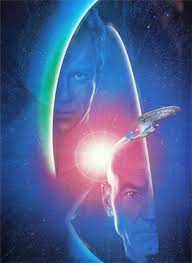
  • Star Trek Generations Rewatch

    Why am I rewatching old Star Trek movies?

    So glad you asked!

    My upcoming novel Nora and the Werewolf Wedding was partially inspired by the character of Deanna Troi in Star Trek the Next Generation. Now, if you think it’s strange that a science fiction character could inspire a series of urban fantasy novels… Well, you’re probably right, but I never claimed to be normal. And really, we have my mother to blame here because she was the Star Trek fan.

    I fondly remember weekends with Star Trek marathons when my mother unfolded that super-heavy and not-quite-comfortable sofa bed so that we could all camp out in the living room. She was a single mom for the majority of my childhood, so she was asleep by 10PM, but it was fun watching her pretend like she could stay awake long enough to get the full experience.

    So it makes sense that an impressionable young woman like me would become captivated by a television show where a woman sat on the bridge of a starship. But Deanna Troi was not just “a woman sitting on the bridge” either. We got to see a lot of women strutting their strengths in the movies and tv shows when I was growing up, such as Ripley (Aliens), Sarah Conner (Terminator), and Princess Leia (Star Wars).

    Deanna Troi stands out because her strengths are gentleness, intelligence, and empathy.

    I know that there are some conversations about her costumes on the show, but I don’t want to get into that debate. We’ve all heard it before. Suffice to say, she had a major role to play in keeping tabs on the emotions of a wide variety of races living inside that fragile spaceship. So while I’m rewatching these movies – and yes, I chose the movies instead of the actual show because of time constraints, but I’ll obviously be rewatching the show as well – I am paying particular attention to Deanna.

    With that in mind, let’s dive in!

    Star Trek Generations Plot Blurb from IMDb: With the help of long presumed dead Captain Kirk, Captain Picard must stop a deranged scientist willing to murder on a planetary scale in order to enter a space matrix.

    First observation, I forgot Malcolm McDowell was in this movie. He has a captivating voice and makes for a fun villain, even if not the cleverest scientist. Knowing what he does about the matrix and all of its strange time travel, you would think he could have anticipated resistance from Picard and Kirk.

    Now, on to Deanna’s role.

    Troi’s involvement at the very beginning was quite satisfying. Being the empath that she is, she’s the one who knows immediately that her Captain has been given bad news. SPOILER ALERT – His brother and nephew have died and the grief that brings to the table forces him to confront his own mortality. However, she also senses that he needs some time to grapple with the shock on his own, so it is several scenes later before she walks herself into his room to ask him if she can help.

    The scene is quite lovely and while they are interrupted by PLOT happenings, it is a nice reminder that she has a true position and job to do on this ship. Her captain was in distress and she met that distress. When he tries to brush off the deaths as, “It’s alright, these things happen.” She confronts him – gently – by saying that no, it is not alright.

    We as a society often believe that grieving is a weakness of some kind, but it isn’t. Grief is a part of life. It’s one more thing that reminds us we are human and alive, and while it is painful it shouldn’t be ignored. Deanna’s presence at that moment in the storyline highlights that it is not only okay to grieve, but necessary. Even for the captain of a starship.

    The rest of the movie has Deanna doing starship things. She takes the helm when the helmsman gets injured during the space battle and is understandably busy while the ship (SPOILER ALERT) goes down. The one thing I do wish the movie had more time to explore was Data and his emotion chip. Deanna was an obvious choice for him to go to while wrestling with human emotions for the first time, but I suspect the pacing of the movie would have been dramatically hindered by adding such a scene.

    All in all, I deeply enjoyed this rewatch. William Shatner’s Kirk was a delight from start to finish, and while there were a couple of things that made me squint – such as Klingons bothering to take Picard prisoner only to throw him right down where he wanted to be instead of, you know, holding him prisoner as a bargaining chip, and the aforementioned shortsightedness of the villain – I am enough of a fan of the characters themselves to brush these off.

    Next month, Star Trek First Contact.

    Live long and prosper, dudes.

  • Space Ships and The Suspension of Disbelief

    Who would win in a space battle; the Millennium Falcon or the U.S.S. Enterprise?

    I know, I know, that’s basically asking if a smuggler can best an explorer when the guns are drawn. Not to mention it dives headlong into the rift of animosity between Star Wars and Star Trek fans. (Personally I enjoy both, but whatever.)

    Whichever space ship you believe would win they both bring to mind a particular structure, a particular image that has become iconic in the science fiction industry. And one of the unique challenges of writing science fiction (space travel science fiction, anyway) is making sure that you don’t copy what has already been done.

    Plus … you know … maintaining some form of realism within the book.

    This requires answering a list of questions from “how does your ship have gravity” (if it has it, of course) to “where’s the restroom” and “what powers the ship” and … The list goes on.

    In the movies we don’t really get those questions answered. Not in specifics anyway.

    Does the Millennium Falcon have gravity? Well, they’re walking normal and there are no floating Wookies so … yeah, it does.

    In books we aren’t given quite as much freedom. While there are some assumptions that can be made, relying on those assumptions too heavily can be seen as lazy writing. Now there are arguments to be made between “soft” and “hard” science fiction, but no matter how “soft” your novel is you still have to walk the tightrope between fiction and reality here.

    There’s only so much a Reader can take before their “suspension of disbelief” is irrevocably lost. Don’t insult their intelligence. They know people can’t breathe in the vacuum of space without some help. They know another planet is going to have a difference in gravity. And they know a space ship has to be uniquely designed for space travel.

    When beginning work on Deviation I knew I was going to have to build a space ship. A ship capable of flight both in the atmosphere and out of it. Thus was born the Lothogy. I do all sorts of things wrong with it and I know it. (I even take the silly thing under water, though in my defense I do address how wrong it is for the ship to go there.)

    I will confess to cheating. My two main characters (Reesa and Kate) are not scientists and are fairly thrown into the world against their will. Most scenes dealing with how the ship functions are done through their point of view because they are really clueless.

    And when things got really tough and my research was making me twitch and I didn’t know how to explain it all, I went back to Kate’s core motivation — getting home to her son alive — which meant she really didn’t care how it worked so long as it didn’t explode around her.

    (Writer’s Cheat #1 — when all else fails, focus on your character instead.)


  • Bad TV

    I can’t literally watch television because I’m in school and all that, but I do have Netflix so I can watch various shows.

    (Alas, no Castle on there at the moment.)  So I decided to watch some Star Trek.  There are lots of choices out there for me, but I picked Star Trek: Enterprise because the concept interested me and I liked Scott Bakula.

    Now, my mother always taught me that if I didn’t have anything nice to say then I shouldn’t say anything at all.  So … while I can’t say that the show was awesome and go wildly fan-spastic about it … I can say that it taught me a lot.  And since anything that teaches me how to be a better writer is awesome in my book, this show falls into a strange category of “So Much Potential, So Little Follow Through.”

    (That’s a new category I just made up for stories that fall short of greatness.)

    So here’s what I learned from Star Trek: Enterprise …

    1) You cannot make a hero look good by making all the supporting characters look bad.  

    Captain Archer was repeatedly put into positions where he had to save his senior staff from certain doom, thus weakening his senior staff until one had to wonder how these people got chosen for the first space exploration mission.

    Point in case, an early episode where his tactical officer – Lieutenant Reed (who really wasn’t given enough screen time, by the way) – gets pinned by a mine on the outside of the hull.  And because it makes TOTAL sense that the Captain would be the right man for the job, Archer goes out to have a heart-to-heart with Reed while he tries to disarm the mine.

    It was a blatant appeal to the audience that Archer was supposed to be “the man” on this trip and the story could have been so much better if Reed had been given the opportunity to show what he was made of.

    And that isn’t even the first time a supporting character had been undercut.  I can’t count how many times poor Commander Tucker was made to look stupid.  I get the “good ol’ boy” thing he had going for him, but “good ol’ boy’s” aren’t necessarily weak.  In fact, I could have loved this show so much more if Tucker had been allowed to really be as brilliant as he could have been.

    By the middle of the first season I actually waited to see which character was going to be sacrificed on the altar of Archer’s Awesomeness in every episode.  And in fact, by season three we still don’t know anything more about Archer as a character than what was revealed in the first four episodes of the show; he has a beagle, he likes water-polo, and his dad built the engine.

    Which brings me to point number two;

    2)  Pets do not a character make.   

    Yes, Porthos is cute.  In fact, my son thought he was the best little puppy in the world.  And yes, you can reveal a lot about a person by putting them in the room with an animal.

    Do they pet the animal?

    Do they talk to the animal?

    Do they show compassion and get gushy?

    Or do they run in fear?

    However likable a pet might make a character, you cannot rely on the audience to make a connection with them based solely on this likability.  A hero needs to have more oomph to them.

    3)  Flaws!  Gimme some flaws, please!

    As much as I love Scott Bakula, Archer needed some flaws.  And I don’t mean his over-fraternization with his senior staff.  That’s not a flaw.  That’s a non-military man in command of something that has distinct military aspects (come on, Navy).

    For as much as I hated the way Tucker was massacred in season one, he’s my favorite character in the show.  Why?  Because for every weak moment he had with the Captain, he had some tremendously wonderful moments on his own.  I loved him because he had flaws that I could relate to, moments of indecision and moments of strength that made him who he was.

    4)  When working in a known and beloved Universe tread carefully. 

    I say this because of the weird way the show dealt with Vulcans.  Any Trekkie worth their salt knows that Vulcans are the most repressed beings in the universe.  Yet this show … I mean … it just …

    Ugh.

    Don’t mess with beloved tropes.  If you use them at all, respect the audience you’re going to be using them on.  You’d better have a very, very good reason for turning a culture on its head in a show like this.  And make sure you make it right again when you’re done.

    Because fans will murder you.

    And that’s it.  That’s what I gleaned from watching Star Trek: Enterprise.  Honestly, I did enjoy Tucker’s character.  I didn’t think I would because his accent drove me nuts the first couple of episodes, but after a while I fell in love with him.  In fact, he and Reed made the show bearable for me.  I wish it could have been Archer, but that just wasn’t in the cards for this one.

  • Star Trek Into Darkness Review

    That’s right.  This science fiction geek totally went to see Star Trek this weekend. I’ll admit that I sorta knew what was coming because I follow Tor.com and they had some reviews up there (they said not to read the bottom comments due to spoilers, but I read them anyway because … yeah … I just couldn’t help myself.)

    Anyway, I enjoyed the movie.  No, scratch that, I loved the movie.  My mother and I had several debates about it because she is … Well, let’s just say I’m a Trekkie because she was a Trekkie first.  I was sort of born into it.

    She was not so happy about certain plot elements that mirrored the old movies.  Me, I liked the fact that they did this.  As a storyteller myself I can see why they did it and where they were going.  My mother, on the other hand, was hoping for something new.

    And, let’s face it, the whole point of Star Trek is to see something new.  They “boldly go where no man has gone before” and encounter “new life and new civilizations.”  So I do see where she is coming from.

    (Mild spoiler: the very end of the movie seemed to suggest that any future movies within the Star Trek genre were going to head out into unexplored territory.  At least I hope that’s what that whole sequence meant.)

    That said, I’m going to have to agree with some of the other reviews I’ve read on this subject and that is on the matter of James T. Kirk himself.  The last movie left his character rather smug.  I mean … of course, they were going to make him Captain.  He basically saved Earth.

    This movie ripped that smugness away from him.  It helped him grow up.  The Captain Kirk that is now at the helm of our beloved Enterprise is one we can rally behind more fully.

    So!

    I loved the movie.  I loved the character growth within the movie.  I even loved all the tongue-in-cheek brushes we had with the older films.

  • Costumes

    Last weekend I had the pleasure of riding the Thunder Mountain Railroad train to the pumpkin patch with my mother and my son.  It was great fun and my son got to pick out two pumpkins — both of which have been properly carved and set outside our door.  Then, because we had a bit of time before my mother had to go home, we went costume shopping.

    It’s been a while since I’ve done that and I was more than a little startled at some of the costumes they had out there.  In particular, costumes for women that were blatantly meant for sex appeal.  I’m not going to rant and rave about that.  Honestly, if you feel comfortable in something like that, then have fun.

    However, there are many of us who would prefer to wear something fun without freezing in the late October weather.  There was only one small section of costumes that fit this bill and one of them included a Gumbi outfit.  (There was also a cute wizard costume but it was over a hundred dollars and I’m afraid I’m too cheap to permit myself such a purchase.)  I ended up purchasing a Star Trek costume even though it was made for a man and twice my size.

    Since I am a geek, this made me happy.  Even if I did choose to forego the Spock ears and just get a phaser (which has been commandeered by my son as one of the coolest toys we own).  In retrospect, however, I would have been three times as happy with a female Star Trek costume.  I can’t imagine this costume store had run out of such a thing since its shelves were full to bursting.  Which means they just didn’t think to put it in stock.  As if every woman in the world wants to wear fishnet pantyhose and above-the-thigh skirts.

    Like I said before, if you enjoy wearing those things then that’s fine.  I just wish they had a little more variety for those of us who don’t.    And I should probably qualify that statement with the fact that this was a family costume store, not just an odd-ball store.  My son is going to be Bumblebee from Transformers and they had plenty of stuff in there for him as well.

    But I’ll have fun on Halloween anyway, dwarfed in my Star Trek outfit and using my phaser every time my son does something silly.  I’m sure I could have found something online that fit me, but half the fun of Halloween is hunting for that costume and rifling through the stuff in the store.  As much as I love doing things online, using my Kindle, and rating books on Goodreads, there are still some things that you have to do physically — if only to get out of the house now and then.

  • Parenting

    After spending the day crawling in and out of our homemade “fort” (aka: the bunk bed, lots of blankets and a flashlight) I opted to spend about an hour on Sunday night playing a video game with my son.  There are some nice learning websites that you can take young kids to go play, but Hazen decided he wanted to play Mommy’s game.  And at the risk of sounding like the biggest geek …

    Well … I really am a big geek, so there’s no risk here.  So I’ll just tell you — It was Star Trek.

    Hazen got to fly the space ship, which made me a little dizzy but he was giggling so I just let him go for it.  I mean, I love Star Trek.  It’s relatively safe as a game because it has no blood and gore to splatter across the screen, and if you look back on the show you see how it really highlighted the core elements of humanity whilst coming into contact with “new life and new civilization.”

    I suppose I should thank my Mom for pretty much forcing me to see every episode of Star Trek there ever was.  I might have grumbled about it for a year or two, but I grew to really love it.  (Especially the Next Generation.  I never really liked the girlie Troy’s character — too vulnerable and wimpy for my tastes — but Data was absolutely fascinating.  And when I was young I had a crush on Wesley.)

    Anyway!

    So I caught Hazen saying we were going to “kill” the Klingon’s and alarm bells rang, so I told him; “No.  We don’t kill.  We have stun-phaser’s, so they’re not really hurt.  They’re just … forcibly sleeping.”

    *cough*

    Then he caught me cheering when we blew up an enemy ship and he said; “No, Mamma, we don’t kill.”

    Thoroughly chagrined, I agreed.  “No, we didn’t kill them.  We just destroyed them.”

    …. And in the back of my head I was like; ooooh, that is so not better.

    So I tried to compensate; “The ship was empty.  It was just a computer.  A robot.”

    And Hazen said; “Like a Borg!”

    Ah, parenting.  I think the game is rated “PG” or something like that.  All I have to say is … this “Parental Guidance” certainly failed.