Tag: write

  • The Wattpad Experiment So Far

    All right, I’m a month into the serialization of Persona and I have to admit that I’m loving it.  There is a lot more work involved given that I’m having to write and edit all in the same week, but for some reason this process is really working for me.

    A typical week goes something like this;

    Monday – Review/edit the chapter meant to go up on Tuesday.  Write 1k words on the new chapter.  (I have a 6 chapter buffer so I’ll never be late.)

    Tuesday – Stagger out of bed around 5:45 AM, review the chapter to go up one more time.  Post on Blogger and Wattpad.  Announce on Facebook, Google+ and Twitter.  The rest of the writing day (I do have a full time job I have to go to) is spent writing on the newest chapter.

    Wednesday – Type up new chapter and print it out.

    Thursday – Edit.

    Friday – Edit and then save in several places (because I’m terrified of something happening and then not having the post up on time.)

    Saturday and Sunday I don’t write at all.  I enjoy time with my son.  (We’re totally going to the Zoo today.)

    Now, I’m going to go ahead and admit that this process would not work if I hadn’t made an outline of the book months ago.  That outline has been edited and revamped several times due to research — my character gets to survive a bombing in the town she’s residing that I didn’t know about when I first wrote the outline — so it looks kind of messy.

    But this outline is also far different from anything I’ve ever used before.

    Instead of using plot points to guide me through the chapters, I’ve used character arc points.  Remember that Persona is my “Who am I?” story, so every scene is following Megan as she grows and learns more about who she really is.

    Much of Chapters 1 – 4 are things happening to Megan that are beyond her control, such as the boat sinking and who picked her up, but her reactions to these problems are just as important as when she finally gets to start taking action.

    And, in truth, she started taking action in Chapter 3 when she chose to lie.  But she doesn’t really see that in herself yet.

    Anyway, the outline has two columns.  The first column is the normal process.  (And for some reason I still use Roman Numerals when I’m doing this.)  It shows physical action, things that need to happen or things I need to point to that have already happened to help keep a sense of fluidity within the book.

    The second column is all about the arc.  Such as Megan’s confusion of loyalties.  Her mother was German, after all, and she’s not the sort of person to go picking up a gun and choosing one side over another.  She sees too many real people in front of her to allow for that.  This causes a lot of conflict for her.

    When she’s confronted by the POW — Sam Layton, by the way.  If you’re following the serialization then you’ll get to meet him soon — she is also confronted by the fact that she has to choose a side.

    That’s a major arc point.

    Anyway, so far it is a lot of fun.  I’m a little nervous for next month since I have a couple of new classes starting.  Yay for summer school!  But I do have that 6 chapter buffer to sustain me.

  • Fact vs. Fiction — Chapter Three (Persona)

    For those following along with the serialization of Persona, here is the Fact vs. Fiction page for Chapter Three.

    So far this whole experience has been incredibly fun!  If you’re just hearing about it, Persona is my WWII novel that is currently being serialized online for free.  You can find it at its Wattpad address or at its story blog.

    But here’s the battle of Fact vs. Fiction in Chapter Three!


    Chapter Three – Fact vs. Fiction


    Fact:  When I was in high school I took German as my second language.  (We totally watched The Sound of Music and The Great Escape during school.  It was awesome.)  But I remember our teacher Mr. Vanburen (yes, I totally snagged his name because he was one of my favorite teachers and I wanted to immortalize him somehow) said that there were different dialects in the German language.  It is much like anywhere else, I imagine, with different accents coming out.


    Doctor Who fans will remember the Ninth Doctor being accused of coming from the north (of Britain) and his response was; “Lots of places have a north!”


    So!  The idea of Uncle George’s “language game” isn’t too far-fetched.  It’s a little weird, but that gets explained as time goes on.  Uncle George isn’t the most honest of fellows, after all.


    Fiction:  I shoved Megan into a converted storage room on board the ship because I really didn’t know where they would keep a stranded girl on board.  I always imagined it was positioned just beside or inside the sick bay so that Herr Schuler could see to her.  Let’s face it, this sequence of events is very fictional and I doubt they had a manual for what to do when they picked up a half-drowned woman.


    Fact:  There really is a place called the Jade Bight.  In Germany it’s called Jadebusen and it’s a bay just south of Wilhelmshaven.  I had to mention it somewhere because, quite frankly, that’s the coolest sounding name in the world.


    Fiction:  This is only a quasi-issue because Megan isn’t in the military and really doesn’t know what’s going on, but in the event someone was taken on board a ship like this they would most likely be kept alive.  The whole “remand her into custody of the port authority” is semi-realistic.  VanBuren would need to give her to his superiors, who would then direct her to military intelligence for interrogation and then relocation to a camp.  (More about this in Chapter Four.)


    Fact:  My original draft of this story had four other POW’s on board the ship, which Megan was kind of interrogated through because Wycoff forced her into the same room with them and then listened to see if she revealed anything.  She then set about trying to help rescue these four men, which she managed during a bit of a battle, but she still got stuck going to Germany because she had to act as a distraction in order for the men to run.


    It was a fun sequence, but after quite a bit of research I dug up the fact that it was very unlikely for prisoners to be taken on board ships like this.  Which meant if I had Megan rescued then I had to dump the other four guys.  I mean, I was already stretching the whole suspension of disbelief, so I needed to trim it down.


  • Story Bibles (aka – Consistency, People!)

    A friend of mine uses a Wiki to keep all her files straight while she’s writing a book.  I’ve seen software designed to help maintain little “sticky-notes” to help authors as they’re in the middle of creating their fiction.  Both would fall under what I define as a “story bible”.

    Basically, that’s the spot the author goes to in order to remember all the crap … uh … I mean brilliant details … they have written to help keep their story feeling real.  Because those details are important.  Details are what keep us grounded in a particular work.

    (I heard a rumor George R.R. Martin got skewered for renaming a beloved horse in one of his books.)

    Easy example … Harry Potter’s round-framed glasses.  If those glasses had changed at any point in the books I think Rowling would have been deep-fried by her fans.  You see those glasses and immediately you’re on the lookout for jumping chocolate frogs (also a detail) and people running for a brick pillar, heading for Hogwart’s train (yet another detail).

    Now then … Until I started writing sequels to my books I never kept a story bible.  The characters and worlds were fairly clear in my head and I was stupid enough to think I wouldn’t really need one.

    Saboteur isn’t really a good example of my needing a story bible because it took place in a part of the Dyngannon world that I’d never visited before.  But as I am currently writing the third book in the series (Usurper) and I am revisiting places both in Saboteur and Sedition

    Yeah.

    I’m wishing I’d went ahead and written one out.

    It’s not so much the characters that worry me — I know who I want to show up where and why and what impact that’s going to have on the story — but the descriptions, the landmarks … those I might have some trouble with.

    My solution?  A notebook.

    I love that people can use technology to make Wiki’s and such, but there is just something about having my scribbles in weird margins, writing running vertical across the page, and using multiple colors that just appeals to me.

    What can I say?  It’s a jumbled mess in my head, it’s going to come out bizarre on the page, too.

    The only exception I have here is the notebook for Tapped.  That story bible is far more organized than any of my others.

    Then again, it does have the outlines and big plot points for 7 novels and novellas in it.  That’s right.  I said 7.  There might even be more than that.  I’m not sure.  I think I could do it in 6 but the whole series has a very episodic feel to it.

    And I’m looking forward to the novellas.  There are at least two of them.  So, technically, I could do the series in 4 books with 2 novellas tacked on.

    I think.

    But really, who wants to put a limit on a series about rescuing refugees?

  • Fact vs. Fiction Chapter Two – Persona

    Chapter Two – Fact vs. Fiction


    Fiction:  I have Megan on board the SS Ceramic and for all intents and purposes she’s headed for London to meet her Uncle George.  However the SS Ceramic was actually headed toward Australia, not England.  Which, of course, is a bit of a problem.  But because I wanted to highlight the tragedy of the Ceramic I went ahead and kept it.

    Fact:  The SS Ceramic had just gone past the Azores when it was hit.  Here’s another little site about this event in history — It even has a big picture for you.


    Fiction:  Here in Chapter Two I have Megan picked up by the Germans.  Let’s go ahead and admit that this was unlikely to happen.  Granted, Henke of the U-515 did pick up Mr. Munday, but that wasn’t a normal scenario.  (Note that in Chapter One Denton does mention to Megan that prisoners were not often taken on board a ship.)  But as this is a fiction book, I went ahead with this section in the hopes that readers could suspend their disbelief long enough to get Megan into Germany.

    Author’s Note:  Because of how controversial the whole sinking scenario felt to me as the writer, I do have a draft of this novel where Megan is shown already in Germany when the war starts.  I have her in a big rush for the border but by the time she gets there everything has closed down.  However, I like this opening better  and since I’m giving it away for free it I decided to keep it.  

    Fact:  The fate of Sapper Eric Munday!  After being rescued from the sea by the enemy, Sapper Munday was interrogated and then taken as a Prisoner of War, where he remained until the end of the war.  There are some books out there about him (which I admit I have not read but fully intend to.)

    Fiction:  The timeline of the sinking is off.  Apparently Ceramic sustained its first hit somewhere around 8 PM but didn’t actually sink until the final torpedo’s struck it around midnight.  Also, here in the second chapter I have the storm abating in the morning when in fact it was around 8 AM when the really big winds started up and the stranded passengers started capsizing.

  • Quests

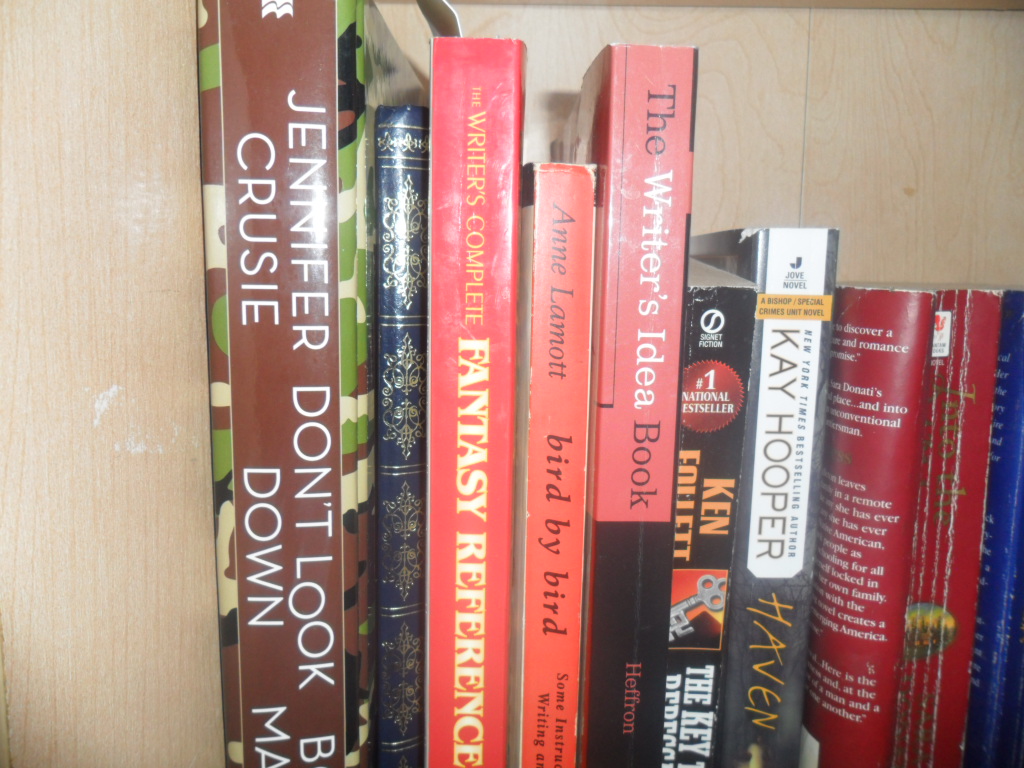
    So there I was trying to take a nap because I’m either coming down with something nasty or have finally developed allergies — Hopefully I’m just getting sick.  I really don’t want to look forward to a seasonal allergy every year — when I opened my eyes and saw something strange on my bookshelf.

    Image

    Do you see it there?  Right between Jennifer Crusie and the Fantasy Reference Guide …

    It’s an old hardback notebook.  I kept squinting at it, trying to figure it out what in blazes it was when it hit me; it was the first notebook my mother ever gave me.  I’d already shown an interest in writing with “Noises Next Door” and “Noises in the Night” so she bought me this notebook to write in.

    Author’s note:  I was like twelve when I wrote those stories, people.  The titles are bound to suck.  And trust me, the stories were awful, too. 

    So I got up and pulled out that book and started reading the whole six chapter story I wrote in the sixth grade.

    It’s title?  Quest for Bravery … (with “bravery” spelled wrong, no less.)

    I used far too much punctuation and too many people were shouting, and for reasons I can’t understand I actually chose to write in cursive.  (I don’t think anyone writes in cursive anymore.  Not straight cursive, anyway.  I use a bastardized cursive-plain-text-print myself because I know that nobody else has a chance of understanding it.  It’s called author security.)

    The story was about a girl — yes, I’ve always written strong female fighters — who, for reasons I don’t explain in the story, is beholden to a wizard.  Said Wizard’s name was Henry because that was the oldest sounding name I could come up with at the time.  (Again, I was twelve.  And anyway, aside from Prince Henry how many “Henry’s” do you know that aren’t getting up there in years?)

    So anyway, the girl in the story was named Amanda Forcalmer (points to me for not using my own name that time) and she basically served Wizard Henry.  And for six whole chapters she got to meet a prince, fight a dragon, save a princess and then leave said prince.  (Again, points to me for not writing a romance.)

    It was really horrible writing-wise and I laughed as I read it.

    And then I started thinking about how many quests I have been privileged to go on both in my real life and in my writing life.  In real life I have jumped in the ocean in Alaska (that’s cold, by the way), swam in the Caribbean twice, lived in Hawaii, traveled from coast to coast, and been in the Army.  While none of those can be categorized as a “quest” per se, it has been an adventure in learning who I am as a person.

    In my writing life I’ve quested for the Ebony Blade in Sedition, fought against prejudice and for the safety of family in Saboteur.  I’ve hunted for nobility in Witch-Born and learned how fickle Fate can be in Dead Magic.  I confronted the demons of inner self in Deviation and am neck-deep in the quest for self-understanding in Persona as we speak.

    And I’m only 34 years old.

    We writers tend to bemoan how lonely our jobs can be.  We set out to tell a tale that no one else can.  We might get research and inspiration from the people around us, but in the end we’re alone as we write it.  And yes, the solitary act of writing can be hard sometimes.  But it is totally worth it.

    Because we writers are uniquely blessed.  We have quests like no one else in the world.  We create worlds in order to draw out and pinpoint certain aspects of human character.  We see reality differently.  We see people and what motivates them because we understand that the underlying motivation is what dictates what we do as human beings.

    So if you’re a writer then embrace that solitary time.  Take that quest that no one else can and share it.

  • Persona is Live!

    That’s right!  You can now read Chapter One of Persona at either its Wattpad link or the Story Blog.

    And just as I promised, I’m going to post the Fact vs. Fiction rundown for the story here.  You can find it on a separate page on the story blog as well, but for those who prefer Wattpad I thought I’d smack it up here as well.

    Fact Vs. Fiction

    Chapter One – Fact vs. FictionFiction:  Persona’s original draft had Megan in an airplane and getting shot down into the sea.  Obviously that changed because it wasn’t really normal for a passenger like Megan to be on an airplane going from place to place back then.  So!  I decided to let her get sunk instead.

    Fact:  The SS Ceramic was a real ship.  If you take a look at Uboat.net you can find the SS Ceramic.  When it sunk just after midnight on the 7th of December, 1942 (yes I made the date the same) it actually had 133 fare paying passengers on board, which is exactly what I needed for my fictional Megan Crossweathers to be there.

    That’s just the fare paying passengers, there were actually many more people on board, to include nurses in Queen Alexandria’s Imperial Nursing Service.  You’ll notice I put that in the chapter as well.

    I chose not to mention the 12 reported children on board the ship for several reasons.  First, it breaks my heart.  I’m a parent myself and I just can’t read/write books that highlight the death of a child.  Second, there just wasn’t enough time between Megan’s seasickness and the sinking.

    Fiction:  Regardless of whatever Captain Denton Gray might have been up to, there’s no way one man and one woman would have taken a boat on their own.  With so many people abandoning the ship they would have likely joined in with one of the other boats.  However, for the purposes of the book I needed to get Denton and Megan away from everybody else.

    Fact:  The sole survivor of the SS Ceramic was Sapper Eric Munday of the Royal Engineers.  The only reason he survived is because Henke — the dude in charge of U-515, the U-boat who sunk the Ceramic — surfaced at around midday to find many of the lifeboats had capsized in the massive storm.  He ordered for the first survivor who reached the U-Boat to be taken on board, which happened to be Munday.

  • The Countdown is On!

    That’s right!  In just four days I’ll start posting Persona as a serialized novel online for free.  I have to admit, I’m excited.  I’ve got a seven week buffer, which means I have seven chapters edited and prepped so that if life gets in the way, or if I just need a little break, I can take one and not miss the weekly deadline.

    I’m considering an audio version but I’ve only got the one little microphone and, let’s be frank, the idea of anyone listening to my voice nonstop for twenty minutes makes me a little self-conscious.  For now I’m only guaranteeing the story blog, which you can find here and the Wattpad version.

    I can’t give the Wattpad link yet because it hasn’t been created, but early Tuesday morning it’ll be here.

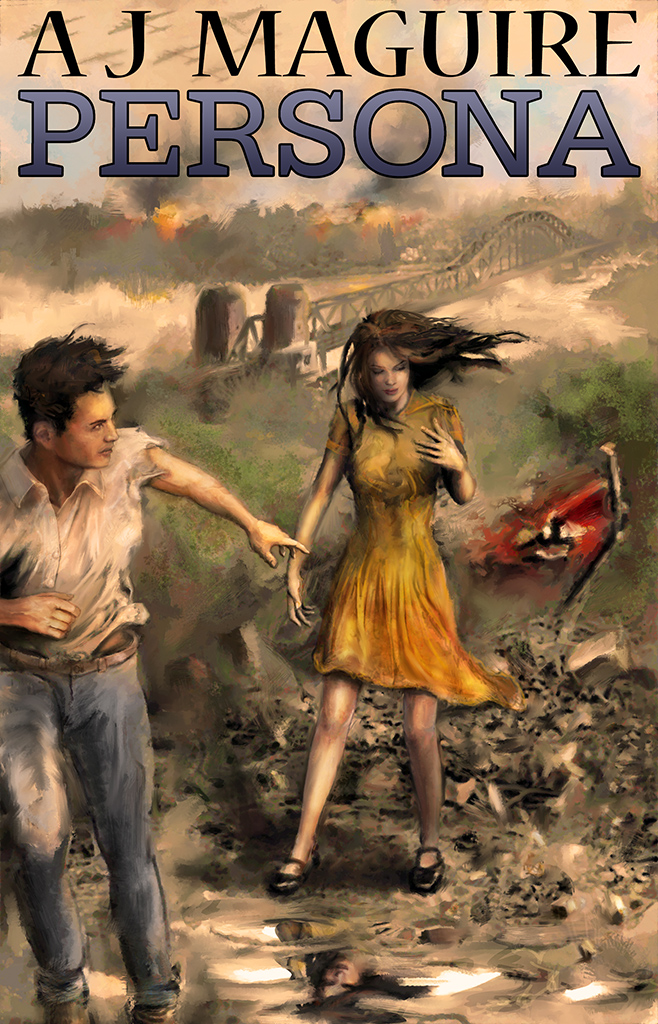
    The amazing Chris Howard has been hard at work on the cover art for Persona and here’s what we’ve got so far …

    Cover Art by Chris Howard
    Cover Art by Chris Howard

    Honestly, I love it.  It absolutely captures the tone and heart of the book.  This guy is amazing.  You should really check out his stuff.

    And now I have to confess that I’ve decided this blog will be echoing the Fact vs. Fiction page on the story blog for the duration of Persona’s serialization.  The reason I’ve decided this is because I am a single parent who works full-time and goes to school full-time.

    Time is tight and while I have a seven chapter buffer, I don’t have a blog buffer.  If I want to get the fact vs. fiction stuff up at all, I have to sacrifice something.  And trust me, I can’t sacrifice lego playtime with my kid.

    Besides, it’s still a blog post about writing so I’m not really cheating here.

    So!  Here we are with four days left to go.  The story blog is already set up so if you want to sign up via email it’s ready to go.  That just means you’ll get the story delivered directly to your email every Tuesday.

    I’m still working on how to upload a PDF version that can be downloaded and delivered to your eReader of choice.  (If anyone knows how to do that, please say so.  I’m a little lost myself.)

    See you all in four days!

  • Serializing Novels via R.J. Blain

    Just as I promised, I have a guest post from R.J. Blain today on serializing novels.  For those of my awesome, wonderful, perfect Readers who don’t know what it means to serialize a novel I’ll go ahead and explain.  Serializing a novel would be sorta like when stories were posted in the newspaper week after week.  (Think Jo in Little Women, she did that for a while.)

    Since I’ll be serializing Persona (that’s the WWII project I’ve been talking about and yes, I know I changed the title like five different times.  I’m a writer.  Until it’s published it’s subject to change.) But because I’ll be serializing Persona starting in June I asked the lovely and talented (and slightly crazy) R.J. Blain to talk a little bit about her experience serializing novels.  

    R.J. Blain has not one but TWO novels being serialized at present (which really blows my mind), and she has some great things to share.  

    So!

    Meet R.J. Blain — 

    Art by Chris Howard

    There are a lot of things a writer needs in order to be successful. Having the ability to put words on the page is just the start of the journey. Reaching out and connecting with those who want to read your stories is almost as important as the words that you’ve put on the page.

    It’s also a lot harder.

    Let’s face facts: Most writers are introverts. Some of us are introverts with extrovert tendencies, and there is a reason for this – those who spend their time writing aren’t spending their time socializing. An extrovert often finds this process uncomfortable. Introverts find this process uplifting.

    For some of us, it just caters to our special brand of insane, but that’s a different story altogether.

    I have two different novel serializations on my website, and AJ asked me to step up to the plate and talk about the process of preparing and releasing a serialized story.

    I might have winced a little when AJ told me of her plans to serialize a piece. A hundred and one thoughts fluttered through my head, and each subsequent one unsettled me even more. Then, after going through a gauntlet of eulogies for her sanity, I started to grin.

    A post on the process of serialization? I can so work with that.

    My name is R.J. Blain. If you spot my sanity anywhere, please return it to Montreal, Quebec. I’m sure someone from my household will retrieve it. Eventually.

    I started serializing my story, Zero, (http://rjblain.com/zero-a-science-fiction-web-serial/) in January of 2013. Almost six months in, I was 5-10 minutes late on two updates, flirted with the devil many more times than that, and had posted two bonus scenes. I update every Wednesday.

    When I set out to write Zero, I went in trying to accomplish three things: High-quality writing, consistent updates (every Wednesday), and telling a good story. That last point is important: It’s the manifestation of wanting to connect with people who want to read things I write.

    The rule of three quickly crashed down on me. I had the updates in the bag. I’m pretty good about sitting down and doing what I need to do. I don’t work with a buffer, and I get quite the adrenaline rush when I realize it is 5 pm on a Wednesday afternoon and I haven’t even started my update for Zero.

    I drove myself to epic-levels of stress trying to accomplish the quality I wanted. I want to write a story that people enjoy reading, and the requirement and desire to produce quality writing was equivalent to wearing concrete shoes while skydiving over the Hudson.

    So, I admitted defeat and crossed high-quality off of the list. I just couldn’t spend the amount of time editing fresh draft. In exchange, I am having a lot more fun with the story now that I’m not as worried about the quality. Knowing myself as well as I do, I’ll never be able to totally abandon my desire for quality.

    This is a good thing.

    Songbird (http://rjblain.com/serial-a-romantic-fantasy/) is another experimental piece I’m serializing because of a dare. Terrible reason, but a fun story, and one that plays by different rules than Zero. When I went into Zero, I knew I wouldn’t be updating Songbird consistently. It’s a fly-by-night, pop out of a dark corner and shout, “I’m BATMAN!” at unsuspecting victims type of story. Like Zero, it’s an experiment: Could I write a traditional fantasy with strong romantic elements?

    On the surface, these two stories aren’t that much different. Zero is a soft science fiction. Songbird is a romantic fantasy. One uses political sciences and some futuristic tech, the other includes magic. To me, most science is magic because I don’t understand it more than half of the time.

    Realistically, these two stories are completely different. I don’t write them the same way. I don’t prepare them for serialization the same way. I didn’t even conceptualize them the same way. The most valuable lesson I’ve learned as a writer over the years is that while there are a few elements of my method that carry over from project to project, no one novel is the same as another, and these two stories are my proof of it. (Every writer is different, so this is commentary about me and me alone.)

    Zero started with three days of plotting, planning, prepping, and world building. When I started scene 1, I had a good idea where I was going. I even had some ideas on how to get there. I had the main characters, and I had a rough idea of how they’d meet despite coming from such different worlds. I had Easter eggs prepared, puns planned, and a roadmap complete with a set of directions.

    Songbird started with nothing. I sat down, picked up my pen, and I started to write. I knew nothing of Kara, even less about Ranik, and I really don’t know where they’re going or if they’ll make it to the same destination at the same time.

    It took me three or four updates before I started loathing Zero due to how I was writing it.

    I never fell out of love with Songbird.

    I feel back into love with Zero, and I feel that the story has a whole-new dynamic because of it.

    I don’t get to write on Songbird even a quarter of how often I’d like to.

    Zero is a patient friend and companion, showing up for a date every 7 days, whether or not the weather is nice. It’s that guy, you know. The one that sits outside at a café on a rainy day waiting for his girl, who shows up disheveled and several hours late.

    I’m convinced Songbird is staging a revolt as the result of neglect.

    Zero is drafted directly to the computer. Songbird is written by hand in a moleskine journal and transcribed to the computer scene by scene.

    One author, two stories, and two very different writing processes to bring these stories to life.

    If you’re planning on releasing a serial, I strongly recommend that you do so knowing what you’re getting into. If you’re going in without a buffer, expect stress. Expect needing a hellish amount of dedication and enthusiasm to push through the bad days. Expect the strong desire to burn the project with fire when you are forced to work on it when you don’t want to.

    Don’t expect the process to be easy. Don’t expect a high number of people coming back to your site week after week. Even if they do, most of them aren’t going to comment, aren’t going to notice you, and they aren’t going to hold your hand. Expect to have a silent audience, one that you engage only through the words you’ve written.

    Expect to get a glimpse of the world of publication, where you are forced to forge connections with people without ever having the chance to talk to them directly.

    Even if you only have one person who sees the story through to the end, that is one more person you have supporting you, even if you aren’t aware that they are there in the shadows. This was one of the hardest things for me when I started serializing Zero and Songbird. I’m an introvert with extrovert tendencies. I want to be noticed. I want my readers to reach out to me. I want to forge those connections.

    I want people to read my stories.

    For me, this was the most valuable lesson I’ve learned so far serializing my stories: I write because I want to be read. I want to entertain someone.

    I want to forge connections with people.

    The hardest lesson I’ve learned so far serializing my stories is that most of the time I’ll never know for certain if I succeeded at making these connections.

    That’s okay, though. It’s okay because I don’t need to know that it’s happening to be aware of the fact that it is, even if I’m not told this is the case to my face.

    In a way, novel serialization is a leap of faith. It’s a risk. It’s a challenge. Success is hinged on the will of others and my ability to connect with people I’ve never met.

    Is novel serialization right for you?

    Only you can answer that question. Just don’t make the mistake of thinking that knowing one person’s method (or lack thereof) will give you the keys to the universe and to success. It won’t.

    If you decide to serialize, make your own way. Forge your own path, and never stop writing.

    Good Luck.

    ~R.J. Blain (http://rjblain.com)

    (Special thanks to R.J. Blain for luring me into a guest post with chocolate.  I totally dove into the trap when she promised Godiva’s.  And, just as a side note, I’m sooo glad I’m not crazy enough to jump into serialization without a buffer.  I have no idea how she does it, but I would have slammed my head into a wall by now.)


  • Dead Magic Coming Soon!

    In preparation for Dead Magic’s release … which is apparently coming sooner than I’d imagined … I’ve decided to start adding some content.  You’ll noticed on the top bar that I’ve added a new page called “Magnellum” which is the world in which Dead Magic is centered.

    Also, on the sidebar (under the title Blogroll) you can see a link to a teaser/snippet page.  That will actually take you to a page with ALL my books on it.  You can click through and read teasers of each one that has been published to date.  Including a small teaser page for Dead Magic, which I will edit and make bigger after its release.  (Right now you can read the very first scene of the book.)

    When I have an actual date for its release I will start another release party.  (I can’t believe it’s been a whole year since I’ve done one of those.)  And I’ll do some Giveaway’s and throw out a bunch of free content delving deeper into the world of Magnellum.

    In the meantime, the Magnellum page on the top bar goes through a list of the noble Houses in Magnellum.  I won’t lie, the political spectrum of Magnellum was difficult to create.  We get to see the noble society at its peak in Witch- Born, but in Dead Magic I got to dive into the history behind Magnellum and really work on the mythology behind what created the Witch-Born race in the first place.

    It actually took me several passes at the manuscript before I was able to settle on something that both made sense and entertained me as a writer.  (I mean, if I don’t find it entertaining then who else will?)  I’m not going to spoil the book before it’s even come out, so don’t worry.  We all know how I feel about spoilers.

    However, as an author, mythology and world building are the two most enjoyable and most frustrating parts of the writing process.  During the first draft I’m just having fun with the characters and running through what I call the “bare bones” of the plot.  So at that point world building and mythology are a ton of fun.

    When I get into the second pass of the book and start really looking at the mythology is when I get frustrated because it almost always needs to be fixed.  That’s when the real work happens for me as a creator.  I may know the characters of the story but I don’t really know the story yet, you know?  So there are weeks and weeks of brainstorming what parts of the mythology need rewriting and — most importantly — how I can take that mythology and turn it into something intimate for the characters on the page.

    Because a neat mythology doesn’t necessarily make a great story.  That mythology has to work with the characters.  It has to shake them up somehow, and that’s what I was looking to do in Dead Magic.  I’m hoping I managed it.  We’ll see what readers say.

    As with everything I write, I wouldn’t ever publish anything because I always think something needs to be improved.

  • The Importance of Positive Reinforcement

    Dead Magic is officially in the hands of my publisher.  (Woo!  Happy confetti is getting tossed about my apartment right now!)  I’ve also started poking around review sites to see about getting the book out there … and there will probably be Giveaways and all that jazz when it’s time for the release.

    But as a special treat for myself for finishing the edits and meeting the deadline, I totally got my hair done.  First time getting it professionally highlighted and all that jazz.  It was definitely an experience.

    Is it morbid that the first thing I thought about when they put me under the dryer thing was that episode of Supernatural where the lady totally got fried under one?  (Relax, those machines can’t really do that to you.  The Winchester boy’s were hunting a witch at that point.)

    Anyway, that was my positive reinforcement for meeting the deadline.  Rewards are so very important for writers.  Yes, we love good reviews (and by that I mean our hearts flutter) and finishing a book in itself can be a reward, but physical rewards are important too.

    Let’s face it, the act of writing is a solitary event.  It requires that we agonize over verbs and nouns and fighting between active versus passive voice, and it’s really frigging hard.  And most of us never really think what we’ve written is worth the paper to print it out, even if the marketing people insist that we pretend it’s incredible.

    So after weeks and months of self-imposed solitary confinement, staring at words until they burn into our retinas, struggling to make a clear statement out of messy plot complications, and fighting tooth and nail to make a believable character arc appear on the page … we writers really do deserve a reward.

    It’s all about the positive reinforcement, people!