Tag: writing life

  • A Brave New COVID World

    You would think with COVID sending people into quarantine all over the world that it would be a writer’s dream come true.

    No commute to eat up writing time?

    Maybe I can carve out writing time in between all the going’s on for “working at home” and whatnot?

    Look at all that TIME!

    Sadly, this has not been my experience with COVID.

    For those of you writers who have managed to knock out a novel or two in the last months, I salute you. I also envy you.

    I am not among those who found themselves quarantined at home. My day job rescuing animals and finding them new homes with a local no-kill shelter is considered essential. Remarkably, our shelter has managed to keep trucking along with new policies that limit the number of adopters allowed in the building, which means that I have been employed this entire time.

    I might have been able to eek a few extra words in here or there when we were short on adoptable pets, but I’m afraid there has been one other time-eater on my plate; my son.
    Don’t get me wrong, I love my kid.

    Love him to the moon and back again.

    But I am not a teacher.

    In fact, if COVID has taught me anything, it’s that I made the right decision when I shied away from an education major in college. I get impatient with the poor boy when he doesn’t understand what’s on the page, and then impatient with myself when I can’t figure out a clearer way to explain it to him.

    Teachers, you are lovely and wonderful people. I don’t know how you do it. It must be a kind of passion to keep working at such an under-appreciated job. For all of you who have worked tirelessly to adapt with COVID, creating lesson plans that can be done online and maintaining remote learning meetings, you’re heroes.

    Thank you for what you do.

    Now that school is officially out, where does that leave me writing-wise? Many of my deadlines for the year drifted by in the COVID haze, and my unfinished works seem to mock me every time I glance at my laptop.

    Still, I suppose it is the habit of every writer to brush off such mocking, roll up their sleeves, and get back to work.

    So here’s me, rolling up my sleeves.

    Stay safe out there.
  • Faking Originality – June Round Robin 2018

    IMG_1806Slogging through the middle of my current work in progress I ran into a wall.
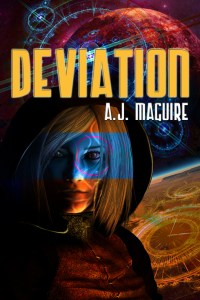
    Not just a wall, but a fortress insurmountable complete with lichen-covered stones and drizzles of what is likely the dumpings of the privy pot. I think my Muse lives up in that tower and takes great pleasure in the fact that I keep smacking my nose into her waste.

    The book that I have loved for twelve chapters suddenly feels bland, lacking all sense of originality, and it is a chore to sit down and open the document every day.

    Wherein we come to the tragic but predictable plight of the author and I begin to wonder why I bother with this writing thing. What could I possibly have to offer the world by way of this story, or any story ever?

    This is a normal thing and I thank every author who has revealed their own insecurities regarding the writing life. You give me hope.

    I actually just got to spend some time with a local author (L.J. Cohen who writes amazing science fiction and you should totally check her out) and we discussed this very issue. Most authors hit this wall in the writing process and, for some of us, it only seems to get worse with each project.

    So what do I do when I hit this wall?

    Well, to be honest, this wall was different from the others. All the other walls I’ve hit have been about the language and the writing style and all those things I knew I could clean up in the next draft.

    This one…

    This refuse-drizzling, moldy fortress wall barring my path insists that medieval fantasy novels are so last century.

    “Nobody wants to read another Kid in King Arthur’s Court. Ugh, everything is so grey and blah and already done, and there’s no amount of editing that’s going to cure this thing. ”

    It is possibly the hardest wall I’ve ever come up against.

    And the only way I have been able to barrel through is my outline.

    That’s right, my outline saved my butt. Because I put my headphones on and pulled my manuscript up and read through the whole of my outline, start to finish, and it made me remember why I started writing this thing in the first place.

    Because I love Kevin and I want him to survive. And I want him to come to that moment in the end where he confronts his own grief and learns how to live with it. Because the genre may be tired and maybe some people will groan at the idea of another medieval fantasy, but there’s enough new in it to breathe life into the setting.

    And if, when I’m revising, I feel like it needs something more to set it apart, then yes, I can still do that.

    Check out what my fellow authors do to keep moving forward in those tough moments…

    Dr. Bob Rich https://wp.me/p3Xihq-1gQ
    Marie Laval http://marielaval.blogspot.co.uk/
    Connie Vines http://mizging.blogspot.com/
    Beverley Bateman http://beverleybateman.blogspot.ca/
    Marci Baun  http://www.marcibaun.com/blog/
    A.J. Maguire  https://ajmaguire.wordpress.com/ (YOU ARE HERE)
    Helena Fairfax http://www.helenafairfax.com/blog
    Anne Stenhouse  http://annestenhousenovelist.wordpress.com/
    Diane Bator http://dbator.blogspot.ca/
    Fiona McGier http://www.fionamcgier.com/
    Skye Taylor http://www.skye-writer.com/blogging_by_the_sea
    Margaret Fieland http://margaretfieland.wordpress.com
    Rhobin L Courtright http://www.rhobinleecourtright.com


  • The Hateful Synopsis

    Nearly every author I know bemoans synopsis writing. This is the part of our job that isn’t the red-headed stepchild, but rather the creature we keep locked in a closet, too ashamed to call it ours.

    Which I know is a horrible analogy, but we’re trying to be honest here.

    None of us enjoy this part of the process.

    We skirt around that closet door for as long as possible. Sometimes we even skip submitting to certain places that require the synopsis and move on. (Though I suggest you take a long hard look at places that do not require it before hitting that “send” button.)

    In the end, most legitimate agents and publishing houses require this 1 to 3 page summary of your 75 to 120 thousand word novel. So we find ourselves cracking the door open on that dreaded closet to try wrangling the beast that is our synopsis.

    This is not for the faint of heart.

    There are any number of agents and editors out there that have examples of synopsis writing to help us along the way. In particular, I like to frequent Writer’s Digest. They have a whole section of this stuff. Go check them out.

    Now then – assuming you’ve glanced through the sundry of articles Writer’s Digest has to offer and you’re still intimidated by the roar emitting from your personal synopsis closet – I do have one or two tips that have helped me in the past.

    Before you write the synopsis, have a separate sheet of paper (or Word document) with the following information clearly defined:

    1. Main character, their motivation, and something that marks them as unique. EXAMPLE: Tessa Pines is a veteran trying to overcome the trauma she endured in Afghanistan. 
    2. Major characters and how they intersect the main character’s life. EXAMPLE: CORDON MORANT is Tessa’s ex-fiancee and high school sweetheart. He shows up unannounced at the bookstore Tessa has been frequenting since her return home and forces her to confront both the distant past of their relationship and her more recent losses. MARISOL WILLIAMS is Tessa’s roommate at the university and a psychology student who seems to have chosen Tessa as a subject to observe and learn from. 
    3. Inciting incident. AKA – What pushes your character out of status quo and into the main story. EXAMPLE: When Marisol’s lab partner leaves her hanging with a large paranormal investigating project, Tessa finds herself volunteering to help. 
    4. Twist moments/Game Changers/Major Plot Moments. Call them what you want, there should be two or three of these in the book. These are the moments in the story that push us toward the ending. EXAMPLE: Oops, this place is really haunted and now everyone is in danger. 
    5. Climax. I’m pretty sure we all know what that means. EXAMPLE: Tessa faces off against a possessed former comrade in the middle of the investigation, who is rightly upset by her avoidance tactics throughout the book. (If this were the real thing, I’d explain exactly what happens here. No cheap withholding of information, agents/editors want to know that everything makes sense.)
    6. Resolution. EXAMPLE: Tessa admits that she needs some help facing everything that has happened – from Afghanistan to the incident at the investigation – and prepares to move forward. 

    OK. With all that information already scribbled on a separate piece of paper, you know the bare bones of what your synopsis needs. Different agents and editors want different lengths, so I write three; a one page, a two page, and a three page.

    The bare bones I have on the sheet can pretty much boil down to the one page synopsis already, so that one is easy. I just have to go in and clean it up. For the two and three pages I go in and add pertinent elements and important character moments, which tends to fill up the extra space.

    Anyway, that’s my tip. The bare bones sheet has helped me in recent years so maybe it can help you too.

    Don’t sweat the beast in the closet, guys. As hard as it is, writing a full novel is harder and you already got through that. I promise, you’ll get through this too.

  • What I Learn from my Characters – February 2018 Round Robin

    Characters are a bit like the writer’s pox. Instead of itchy red dots all over our skin, we have itchy personalities peppering our minds. Some are louder than others and we end up scratching those first because no matter how many times we’re told we shouldn’t scratch, the itch cannot be ignored.

    As we scratch, fleshing that character out on the page, their voice becomes clearer and their story apparent. Often the process draws blood, a mix of fiction and fact that bleeds onto the page until it is difficult to distinguish between character and author. Neither would exist without the other, after all.

    In my novel Deviation I have two women abducted through space and time, one a writerdeviation-510.jpg and one a mother. The writer finds herself being hailed as a prophet for things she wrote in her fiction, which was a horrifying thought for both the character and me, the author.

    If you’ve read any of my work, you’ve seen the horrible things I put my characters through. I’m pretty sure most would want to kill me if they were real and standing in my apartment.

    The other character, the mother, is desperate to get home to her family. She has a young son who needs her and she has to get back.

    Midway through my revision of the novel I realized I had written my real life struggle into the plot. You see, at the time I was a new mother. My son was only months old and I felt like I was two people – a devoted mother who wanted nothing more than to see to the needs of my son, and an author who needed to carve out time to write.

    As I completed my revision of the novel, I came to an understanding that has carried me through the last ten years of my son’s life; both the writer and the mother are essential parts of who I am as a person.

    While the novel never addresses this personal journey, the ending still reminds me of the lesson Reesa and Kate taught me. I will always find a way to write, and I will always be a mother.

    See what lessons my fellow authors have discovered through their characters in this month’s round robin…

    Skye Taylor http://www.skye-writer.com/blogging_by_the_sea
    A.J. Maguire  https://ajmaguire.wordpress.com/  (YOU ARE HERE)
    Marci Baun  http://www.marcibaun.com/blog/
    Marie Laval http://marielaval.blogspot.co.uk/
    Judith Copek http://lynx-sis.blogspot.com/
    Dr. Bob Rich https://wp.me/p3Xihq-1c1
    Rachael Kosinski http://rachaelkosinski.weebly.com/
    http://rachaelkosinski.weebly.com
    Beverley Bateman http://beverleybateman.blogspot.ca/
    Rhobin L Courtright http://www.rhobinleecourtright.com

    Fiona McGier http://www.fionamcgier.com/

  • Book Release Mayhem!

    UC front cover-sample-2Usurper has made its way to virtual shelves! You can find it on Amazon in both eBook and paperback.
    This is the third installment in the Sedition series that follows Trenna Dyngannon and her husband Nelek as they struggle to find peace between humankind and the Eldur nation.

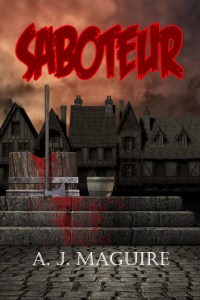
    Fans of the novels – who may or may not have threatened to hunt me down if I didn’t stop writing other things and finish this book – will be pleased to find Nelek and Trenna in fighting shape. The quirky pair were left in exile in the second book (Saboteur) so I know a lot of you were left hanging.

    In my defense, the reason this book took so long was because I discovered that I was Saboteur-WEBtrying to fit two books into one.

    Why yes, this means there is a fourth book.

    And yes, that book is already underway. It is in the outlining phase and I’ll be rolling up my sleeves to work on it later this year.

    Sedition was my first published work so it holds a special place in my heart. I remember floundering with that first draft, trying to piece together things on 3×5 cards and make a sensible plot out of the personalities on the page.

    Sedition-WEBWell, I remember coming to terms with what a plot was in general. When I started it was just a bunch of characters doing different things that occasionally intersected. It wasn’t until I joined a writers group (The Dreamers from the Forward Motion for Writers website) that I was able to see the work as a bigger picture.
    At the time I had no idea there would be more books coming. Now, as I begin the process of ending this series, there is a part of me that dreads coming to the last page. Trenna and Nelek, and now their children, have become a part of my daily life.

    As strange as it sounds, it will be difficult to say goodbye, no matter how the story ends.


  • Year in Review – 2017

    img_0444Can you believe we’re almost into the year 2018? It’s like I blinked and suddenly my year was gone!

    2017 was a flurry of activity for me, both in my writing life and in my personal life. However, as this is my writing blog, I will concentrate on my writing victories. My friend L.J. Cohen, author of some awesome YA Science fiction (Derelict is my favorite), got me started on this annual assessment of my writing time.

    For those who don’t know the rules, this is where I look at what I projected to have done in 2017 and see what flopped and what managed to get finished. So! What did I say I wanted done in 2017?

    1)  Final edits on Usurper – Not only was this done, I got it in to the publisher and it

    UC front cover-sample-2
    Cover Art by Richard Stroud

    went through 2 more edits with in-house editors and is scheduled for release on February 1st.


    2)  2nd Edit of Dead Weight – A big green check mark here.

    3)  Begin Song of Swans – I am slowly making my way through this novel. It has been started and I am looking at a longer timeframe to get it completed in because the story is so big.

    4) 1st Edit of Ashwood – Currently I am neck-deep in revisions for this novel. A lot is changing so this is the more intensive edit and I believe I will be working on it well into 2018.

    5) Outline Inmate 87101 – Nope. Not a jot. Double Red XX Marks on this one. I didn’t even think about this novel.

    OK… So 4 out of 5 of my goals were met. I’m going to call that a win.

    What’s in store for 2018?

    Well, in the Spring I am looking at a big move and once that happens I will be looking at a lot more writing time. With that in mind, I have big plans for 2018.

    Big, intimidating plans.

    Plans that might bite me in the batoosh before the year is over, but I will do my best to get them done.

    1) Complete Ashwood edits 1-3 and begin shopping it around. This is my paranormal romance ghost story… thing. I wrote it for NaNoWriMo 2016 and enjoyed telling a love story amidst all that weird ghosty-mayhem.

    Scorned2) Complete Dead Weight and release it the Fall. This is the sequel to Tapped. It follows our hodge-podge family of military deserters and religious refugees introduced in the first book.

    Also, there will be a 2nd Edition of the original Tapped novel released sometime in the summer. My intention is to give a Fact vs. Fiction version that has some of the research for Pluto/Europa and our solar system in the back. This is purely for fun. Nothing major will change in the story.

    3) First Draft – Song of Swans. I am calling this my long project because it is so big, but I hope to have it finished by the end of April.

    4) First Draft – The 13th Month. I cannot wait to get my hands on this book. It has been simmering in the back of my head for a while now and I will begin it June.

    5) First Draft – Inmate. This is the third installment of the Tapped Series. I will begin work on it in October and finish out the year with it.

    Also! In relation to the Tapped Series, I have begun outlining and exploring books/novellas that will span the Galactic Wars and show our intrepid Tango Five in action. I’ll know more about these as I work.

    Essentially, I’m looking at 3 first drafts and 3 completed novels, giving me a total of 6 projects done by the end of the year.

    Bring it on, 2018.


  • About Writing Different Genre’s


    Sedition-WEB
    First Fantasy Novel – Oh, noo’s I can’t write anything else EVER!

    A long time ago someone told me that if I started as a fantasy author, I would always be a fantasy author. It was stressed that I had to pick one field to master and then go with it, limiting myself to that field.


    Being the young, easily swayed person I was back then, I believed them … for about a minute and a half.

    My current list of titles includes science fiction, fantasy, and historical fiction. While it could be argued that science fiction and fantasy are the same genres (they’re often in the same section of a bookstore) we’re going to go ahead and draw a big dividing line between them.

    I’m sorry, but science fiction is NOT fantasy. Some books might cross the borders between the two, but when push comes to shove you know the difference when you’re reading them.

    So it’s safe to say that I dabble in several different genres at this point.

    Now, the argument still stands that if you stick with one genre you will eventually “master” it. I use the word “master” lightly because writing is a craft that very few people

    Deviation-510
    Oh, Snap! My first Science Fiction novel! Eat that, nay-sayers!

    master. We all just work hard at pretending like we’ve got it down.


    What I mean by “master” in this situation is that you will have written so many that you’ve trained your writing brain to create new and enticing material precisely because you have written so much of it. Your mind stretches harder for newer, fresher plot twists and characters and worlds because you’ve already used many of the tropes before.

    However, the same can be said even if you cross genre borders. Just because I used a trick in a fantasy novel does not make it free to use in one of my science fiction books. So I still end up stretching my creativity in any given book and that “mastery” is still being developed.

    Now then …

    There is the issue of “brand.”

    If you’ve been in this business for any amount of time, you’ve heard that an author has to have a particular “brand” to sell. James Patterson sells fast-paced thrillers and mysteries. Stephen King sells intricate horror stories. Jennifer Crusie sells quirky romances.


    AJMaguire-PersonaCover-1280h
    Sweet Holy banana’s, Batman! Here comes a Historical Fiction! I’m out of control now!

    How then, do you have a “brand” when you sell books in different genres? I addressed the issue of a brand in another blog post but didn’t really answer how I meant to brand myself.


    I have admitted to being awful about marketing. It feels so pretentious to wave my books around. My marketing tends to sound more like; “Hey! I wrote this book and I think it’s kinda decent so maybe you could read it? Maybe? I mean, only if you want to. Or if you have the time. Or … whatever.”

    Super wimpy, I know. My only defense is that I’d rather be writing.

    You know … “mastering” my craft. Trying to get better.

    Trying to tell a good story. The sort of story that will hit you in the gut and stick with you for a while. The kind that challenges your point of view and makes you think about how other people live and how you might be able to help those who need it.

    I want positive relevance with my books.

    For the record, I actually had to hunt for what I wanted my books to be and pinpoint why it is I bother with all the work writing is to figure this out. But in the end, once I had answered the question of “why do I write?” I was able to find my so-called brand.

    “Positive Relevance” is what I’m striving for here and what I want my books to represent and be. So … I believe that is what my brand is.  And it should reach across all genres that I write in.

    tumblr_m7pf6xepgw1r5mah4