Tag: Writing

  • The Versatile Writer

    One of the most important traits a good writer has is versatility. And I don’t just mean in life, but in the writing itself.

    Yes, authors who want to see their books completed have to be versatile in their lives just to squeeze writing time into a day. Parents have to find times that don’t clash with the whole parenting regime (get ready for school, take child to such-and-such event, help child with homework, get child ready for bed.)

    Those of us with day jobs obviously can’t write while at work, so there’s that obstacle to get around. And then most of us with children also have a day job, compounding the aforementioned things that take up our 24 hours.

    So yes … writers have to be versatile.

    But that’s not what I’m really talking about today.

    You see, once upon a time I did a lot of interviews with a lot of different writers and I started to notice a somewhat alarming trait in most of them.

    A lot of them, not all of them but the vast majority, were very stuck in one particular genre. It’s all they read. All they write. All they pay attention to.

    I can only imagine that this mindset comes from the “If it’s not broke, don’t fix it” or “Why mess with a good thing” mantra that we’ve all heard. They found one genre that works for them. They like it. And they don’t see a need to expand further than that.

    They “know what they like” and it made me just a little sad.

    A book is a whole world, a whole life for the reader to live. By limiting yourself in your reading and writing habits, you’re limiting your readers too. Not only that, but you’re missing out on some really awesome learning experiences in regards to your craft.

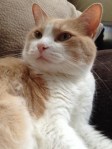
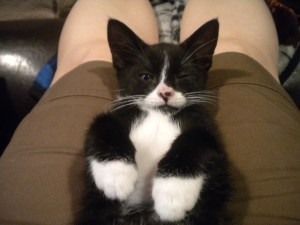
    Every book is like a cat. They have different personalities and different needs. Such as my cat versus my son’s new kitten.

    IMG_0051
    Pest. The Grandpa Cat.

    My old grandpa cat (Pest) likes to laze around, talks to me while I’m on the phone, and lets me know I’ve been on the computer too long by attacking my head.

    My son’s kitten (Nuisance) has a lot more energy, runs about, attacks anything that moves and recently chewed right through my headphone cord because apparently it looked really tasty. (Bad Kitty.)

    I can’t approach Nuisance they way I do Pest. He attacks my hand when I do. I have to wait for him to come to me, curl up on my neck in the middle of the night and start to purr before I can really pet the creature.

    It’s the same with books. You have to adapt to each one.
    DSCN5896
    Nuisance. The Kitten.

    It’s alright if you really love writing in just one genre, but every genre has elements of the others in it. There’s mystery, romance, crime, adventure, and history in just about every single book you pick up. So if you’re not reading those genres, you’re missing out on seeing it done really well. (Or really poorly, depending on which book you pick up.)

    So … versatility is more than just how you manage your time and adapt to your life, it’s about how you approach your craft. Are you willing to try something new?

    Read a book you normally wouldn’t.

    If you normally write in first person, try third. And vice versa.

    Be a chameleon, you know? Your book is going to be versatile, or it should be, and how you approach it should change to match.
  • Kindle Scout

    Alright, so we’re sort of in a mid-way point with the Kindle Scout campaign for Persona and I figured I’d do a little update to give you the sense I’m getting of this thing.

    If you didn’t know already, I’m pretty awful at marketing.

    Let’s just be honest with that one. I’d rather go to the dentist and have teeth pulled sans Novocaine than market myself. I do the bare minimum by announcing book releases and sales on FaceBook and here on this Blog.

    I don’t know why that is, it just is, which makes this Kindle Scout campaign significantly harder for me.

    Why?

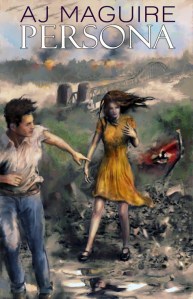
    AJMaguire-PersonaCoverArt-ChrisHoward_rev28_ART_ONLY
    Cover Art by Chris Howard, who is absolutely amazing.

    Well, because if you want to win this campaign, you’ve got to market it. You have to blast your friends, neighbors, strangers on the street, EVERYONE with news about the campaign for the entirety of the 30 days your stuff is running.

    30 days of me shouting to check out my campaign and please, please, pretty please vote for it?

    Yeah, no. I can’t do that.

    It’s not that I’m not confident in Persona.

    I love this book. I love where it started and I adore where it ended. It is a solid book. My style has grown and my understanding of the craft has become such that I know it’s better than anything I’ve written in the past.

    So it’s not that I don’t think the book is good enough to be marketed. It is. It really, really is.

    The problem is that, in our virtual society today, shouting at everyone for 30 whole days to nominate your campaign is … well … rude.

    I know I get annoyed when someone is telling me the same thing over and over again. That little snarky judge that needles at my brain says; “Geez, vain much?” Or … “Ugh, I heard you the first time.” Or … “There’s a fine line between confidence and arrogance, my friend. Be careful cause I think you’ve crossed it.”

    She’s a mean voice. I really try not to listen to her.

    But she’s also a voice that I’m pretty sure exists in everyone’s head. So if I’m thinking that about other people … well … Obviously other people are going to think that about me should I start following suit.

    Which leaves us to the problem at hand …

    How do you market a Kindle Scout campaign for 30 whole days, keeping it fresh in everyone’s heads while not becoming that annoying, arrogant voice that everyone wants to shut out?

    …….. I have no idea.

    But then, I also have no idea how to really market my books either. So if you, brave author, already have a marketing plan in place and know how to use it, then Kindle Scout might actually work for you.

    Because I’m like … 95% sure it’s not working for me.

    Doesn’t mean I won’t try it again in the future, just means that next time I’ll know what I’m walking into and how to prepare for it.

    Oh … and … um … here’s the campaign again. (See? Told you I was bad at this.)


  • Novel, Novella, Novelette

    In 6 days my novelette “Torven” will be released for sale. (That’s August 2, 2016 for anyone wondering.)

    For those unfamiliar, this is my little fairy tale about a man named Torven who has been cursed into the form of a wolf and how he defeats that curse. It was written primarily for my son but given that it is a story and I am an author, I have opted to put it out for sale for as cheap as I possibly can.

    Readers will be able to get it for .99 cents on Kindle OR for those who really like the feel of paper under their fingers, the paperback will be 3.99.

    However, I feel the need to warn everyone that it really IS a novelette. Which means it’s a mini-book. A baby book. A teensy-tiny book.

    Seriously.

    It’s only eight chapters long.

    Which brings me to my discussion of lengths.

    You see, my original intention was to write a novella. 25-30 thousand words at the most, nice and easy for an eight-year old to consume.

    But as I was working on the Outline -since I took James Patterson’s Master Class and have been playing around with the way I do this writing thing – I began to realize just how much of the story I had planned out was fluff.

    So I started cutting scenes.

    I started focusing on making sure each chapter drove the story forward, on eliminating all those scenes that only showed character development or world building, and then combining all that character development and world building into the chapters that were essential to the story itself.

    15 chapters fell to 10 … which then fell to 8.

    By the time I had finished the first draft I knew I wasn’t looking at a real Novella.

    But it wasn’t a short story either.

    So what the heck was it?

    As embarrassing as this may sound, I actually had to research it. I’d never heard the term “novelette” before so it was a fun little surprise to learn that these little stories actually exist. (Well, maybe I did hear it in High School once but I obviously forgot.)

    In any case, writing this little novelette taught me some extremely important things. You see, I’ve had a lot of editors over the years and there’s always been this fight between wanting to “live in the work” and to “experience life on a space ship” and therefore to have those extra scenes in a novel that create color and perspective … versus the need to drive a story forward and make sure your pace doesn’t snag.

    It’s … really hard.

    (No, seriously. Writing is hard. Don’t ever let anyone tell you different.)

    In working with Torven’s outline and then watching that outline come to life on the page, I was able to understand how every chapter and every scene really CAN drive a plot forward while still allowing me to live in the work and showcase the world. And I could do it without sacrificing forward momentum.

    So for any writers/authors out there, I recommend trying to write a novelette. Limit yourself to 10 chapters or less. Cut out the “fluff” chapters and add all that color and perspective to the essential moments of the story. Believe it or not, it works.


  • Kindle Scout Campaign

    So! I did a new thing!

    And it’s a little bit of a scary thing, but I’m trying it anyway.

    Persona, the WWII novel that I have scheduled to publish in December, has been submitted into a Kindle Scout campaign. Basically what this means is that, if I get enough nominations, Kindle Scout will publish the book for me instead.

    The process was relatively painless considering the book is already edited and edited and edited some more, as well as formatted and prepped for its launch in December. All I had to do was answer some questions and upload the book.

    Well … that and now I have to come out and shout from every virtual rooftop I’ve got that the campaign is now open, that you can find it HERE and that if you like what you see there I would really, really, really love it if you’d click the little “nominate” button.

    We’re going to see how this whole thing works and then I’ll give a more critical response to the process and things. I can say that, barring the actual writing process that you have to go through anyway, submitting to Kindle Scout was terribly easy. I got invited to Kindle Scout some time ago, I just hadn’t given it a shot until today.


  • Let’s Talk About Brand

    So there’s this thing in the writing business where people say writers need to have a “brand” to rely on. Something to shove at a reader so that the reader knows what to expect whenever they pick up a book written by that author.

    James Patterson readers know that the plot is going to move fast and it’s going to twist in ways you don’t expect. I remember from his class that he said he wanted people to know when they picked up a book of his that “the pages would turn themselves.”

    And considering how many books of his frequent the bestsellers lists I think we all can attest that he’s definitely made his name a brand.

    Brandon Sanderson also has a brand name to him. When I pick up a Sanderson novel I expect unique magic, intricate plots, and deep fantasy that can transport me.

    When I read Diana Gabaldon I expect rich characters and enlightening history and a more visceral reading experience than I can get anywhere else.

    Now then … as an author I have to ask myself exactly what “brand” I might be presenting. I find this highly annoying because, as much as I can recognize the trademarks of other authors, I’m really clueless as to my own. And from what I’ve heard from other authors, they feel the same way.

    On my website I have “Writing Mayhem” as the tagline.

    Why?

    Well … because I love the word “mayhem” and wanted to use it. And because my life as an author feels full of mayhem. I write everything from Science Fiction to Historical Fiction. My Fantasies range from Epic to Steam Punk.

    My muse just can’t seem to commit to any one genre, which makes “branding” me quite difficult.

    I could try finding that one common denominator between all the books and banking on that … Which would be the characters. In all my books to date, the focus is always on the individual character on the page and the struggles they face.

    But again … how do you “brand” that?

    A.J. Maguire – Character Tormentor … A.J. Maguire – “The characters will grab you by the throat and demand you free them.”

    … Yeah … No thanks.

    In all seriousness, and after many years of trial and error, I’ve come to understand that “brand” is a conscious decision.

    I have two releases scheduled for this year; the novelette “Torven” and the historical fiction Persona.

    One is a fairy tale.

    One is a “who am I” story based in WWII.

    What “brand” do I hope to attach to them both?

    I want readers to trust that if they pick up one of these books they’re going to get a good story.

    How do you brand that?

    Well, I’m still not sure. But when I find out, you’ll be the first to know.


  • Prepping for Launch

    Gutter space and margins … check.

    Cover art … check. (FYI, Chris Howard is still a genius.)

    Back blurb … hmmm … that’s gonna change a couple more times, I’m sure.

    (Pause to remove new kitten from the desk. He’s too curious for his own good and he’s constantly attacking my hands while I’m using the mouse. I’ve decided to call him Nuisance even though he’s my son’s pet.)

    Font size and spacing for both print and ebook versions … check and check.

    Re-read the manuscript for the zillionth time and STILL find a typo on page 96 … ugh, check.

    Dedication … aw, that’s easy … totally check. DSCN5894

    Acknowledgements … er … hmn. That one’s a little more tricky. I’ll probably add a few people before the December launch date.

    IMG_0051(Pause again because kitten is now attacking my ankle and his little kitten claws hurt. Try to convince him that he should be playing with Pest, my cat, who eyes me with frank disgust but … everyone’s gotta compromise here.)

    Go back to my regularly scheduled writing … I’m on chapter 10 of Dead Weight now, so it’s coming along nicely. I’m not sure I’ll make the three month deadline for a first draft, but I’ve had to swap between writing on the computer and writing by hand a couple of times so I won’t feel bad if I stretch it for another month.

    Four months to write a rough draft isn’t too bad.

    And really, I’m not JUST writing a rough draft, as evidenced by all the book preparation I’m doing. Persona will be my second attempt at launching a book on my own and I’m trying to remember all the mistakes I made last time — such as working while under the influence of cold medication and accidentally launching the book 2 weeks early.

    And forgetting to adjust line spacing for the print version, leaving one truly massive novel that cost an arm and a leg to ship.

    And not justifying the text.

    And … er … so many other things.

    Here in the next couple of weeks I’m supposed to start marketing for Persona, letting people know the exact date it will be out (December 6th 2016) and what the book is about (historical fiction/romance/women’s fiction/ … this one I probably need to narrow down a bit more).

    Which means that, on top of all of the above, I have to research venues (blogs, magazines, etc.) that might be willing to host me and give me a second to promote the novel before it comes out and during the first two weeks of its launch.

    … I think I’d rather have the kitten attack my ankles some more.


  • Research and Fiction

    Way back at the beginning of the year I participated in James Patterson’s Master Writing Class, which I recommend to all writers out there. I promise, you’ll glean at least one thing from that class that’s worth the admission price.

    Such as the Outlining process, which has been golden for me. I took a whole month and did nothing but edit the outline, layer the outline, add character notes and reminders and subplot things in the margins of the outline … And yes, the product I am working with today to get this new project done is 100% better than if I’d just done it my usual way.

    And I’m enjoying every chapter. Nothing feels dry. I’m excited to get out of bed and start my writing every day.

    So!

    Where does that leave me today?

    Well, it leaves me smack in the middle of Chapter 7 where, in the middle of my outlining craze, I decided I wanted to have Devon stumble over a Hacker news report. The original idea was to have illegal or “underground” podcasters.

    I enjoy podcasts/webcasts that are educational and such, so why not add them to my fiction? And while I’m at it, why not add social activism as part of the reason these guys are illegal?

    Seriously.

    I was so excited, I started building this little social activist underground podcast/hacker thing and began dragging in historical elements to help cement them in the novel. And for creative flavor, I chose to make them fans of Victor Hugo’s Les Miserables …

    And now we have to put on the brakes.

    Because I realized after having plotted all this out that I might need permission to use anything from that book. So in the middle of researching Saturn (where much of this book takes place) I suddenly had to look up copyrights and public domain.

    Happily, Les Miserables is a public domain work, meaning I can quote and reference and tip my hat to it all I want without worrying about people coming after me.

    For anyone out there who might want to know, a very easy rule of thumb is that anything published before 1923 is public domain. You can use it. There are other rules and such, but that’s the easiest one to understand. The rest require a bit more leg work on your part to find out. If you want more information, this website was very helpful.


  • Confronting Reality

    In the last couple of weeks I’ve revisited Les Miserables. I do this every now and then because the story is rich and the music is beautiful and, while supremely tragic, it confronts a profound reality that forces me to stop and think about my life.

    Each time I revisit the story I find myself connecting with a different character, be it the greedy inn-keeper or the criminal on the run or the single-minded officer, and each time I sit back and ask myself how I can make such vivid, real characters in my own fiction.

    This time, however, I came to the conclusion that I can’t make such characters because I am unwilling to break my own heart.

    For example, Fantine and Cosette.

    As a mother, I can’t imagine being separated from my child for any real length of time. The very idea squeezes something in my chest and I have to shove it away. Moreover, as a daughter I cannot imagine losing my mother while she is so far away.

    It hurts to even think about it.

    Comparatively speaking, I have lived a very charmed life. My parents may be divorced, but they are both alive. I may be a single parent, but my son is healthy and strong and full of adventure.

    How then does someone whose life has been so blessed even begin to settle into the mindset of a character who has had none of these things? How do I push past the heartbreak to really hear the character and what they have to say?

    Beyond my own cowardice at living in so dark a place for the length of time it will take to write this sort of character, there is a fear that I will get it wrong.

    Rather than writing a character whose tragedy draws readers into the same introspective state that Les Miserables manages to give me, I fear that if I attempt writing this way that my own pity for these characters will shine through and thus cheapen the whole experience.

    Yes, what happens to Fantine is pitiable, but you never lose sight of who she is in the story.

    And that’s the balance I am trying hard to find as an author. I need to be able to confront the ugliness of the world without losing the beauty in the people. And in order to do that, I have to put my big-girl pants on and be brave enough to break my own heart.


  • Killing the Hero

    I’ve killed off characters in my books. There are several in particular who I mourned as the author, and still others who I really hadn’t noticed. It seems to be a popular past-time in fiction to strategically murder personalities that we, the readers or viewers, have fallen in love with.

    I know everyone hated to see Coulson go in Marvel Avengers, myself included. But then, Joss Whedon has made a name for himself as one of those directors who has no qualms offing a beloved character for the sake of driving up tension. But, of course it’s more than that.

    Yes, the tension goes up, but it also has a profound effect on all the other characters on either the page or the screen. As storytellers, we’re told this is good. And in part it is. Life is not without loss, and storytelling is an art that is at its heart about life in all its gritty, beautiful detail.

    However …

    It’s becoming a cheap trick.

    Without spoiling dozens of popular stories across several venues (TV, Movies, Novels) I can say that I have seen no less than 7 traumatic deaths in the last couple of years alone. Some of them I even knew were coming at the very start of the story, which is a problem in and of itself.

    As a storyteller myself I have to sit up and take notice. While I understand the impact a death like that has on the story-line and on the other characters, I have found myself sitting back as a reader/viewer feeling cheated and manipulated by the author/director.

    This should alarm us.

    We are becoming desensitized to this sort of story mechanic. That’s not to say we can’t keep using it, but more to say that we must be very, very careful when we do. If we must kill off a beloved character, then it has to hit our emotional buttons on every level. It has to mean something both to us as authors and to the story itself, or our readers will feel the cheapness of it.


  • Art vs Craft

    Next week is my last week going through Dead Weight’s outline. The last three weeks have been a fun exploration of this story and what I want it to say and I’ve learned a great deal. I highly doubt James Patterson will ever peek at this blog, but if he does he should know he has my eternal gratitude. That section of his class alone was worth the admission price.

    Exactly what have I learned in this process?

    Well … I’m sure we all know that every writer is different and the way they get words onto paper is going to be personal at some level. There are people who shun outlines completely and there are people who can’t start a novel without them.

    Personally, I couldn’t start a novel with an outline but at around the three quarter mark in the book, I couldn’t finish one without an outline either. So at that point I would stop, go back and make a complete outline of the book so that all the subplots and things could tie together.

    There’s nothing wrong with any of that.

    But somewhere in the middle of this process with the outlines I took a new ownership of this story. It was always mine. The characters and the plot and the theme I had in there was all my content, but I only had a flimsy handle on it. Like it was driving itself and I was just interpreting what needed to be said (or misinterpreting in some places.)

    Going through the outline again and again, challenging myself to tighten chapters, to focus on what is actually supposed to be revealed through each scene and character and twist, not only made my understanding of the story better but gave me a sense of control that wasn’t there before.

    Writers walk a fine line between Art and Craft and I think sometimes we lean too heavily on “art.”

    “Art” is when you just can’t find the inspiration to get words on paper. Yes, of course we need inspiration. The problem is that we bum around and say we just don’t have the right “mindset” to work that day instead of actively seeking that inspiration.

    “Craft” is when you sit down at your computer at your given writing time and, shocker, you start writing. It’s better if you have inspiration and art on your side when you sit down to craft, but it’s not a guarantee.

    The trick is getting “craft” to really direct your “art” and, in my case at least, this experiment with outlines has done that.